IQM, Europe’s First Public Quantum Company, Admits the Future of Quantum Tech is Uncertain
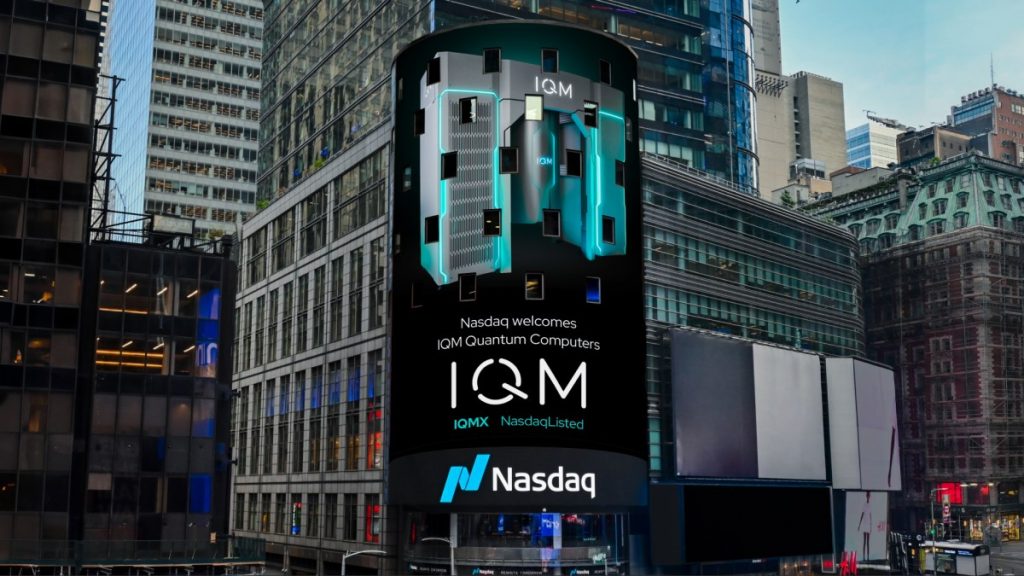
IQM, a full-stack quantum company based in Finland, made history by becoming the first European quantum company to list on the Nasdaq via a SPAC merger, valuing the company at approximately $1.9 billion. However, the listing did not quite live up to expectations, with the company’s share prices struggling to gain traction.
The lukewarm welcome can be attributed, in part, to IQM’s own admission in its prospectus that ‘large-scale commercial traction of quantum computing technology may never occur.’ While this warning applies to all quantum companies, it hasn’t stopped the industry from making significant strides in recent years.
IQM has been at the forefront of this revolution, selling actual physical computers as well as a cloud service to customers such as VTT Technical Research Centre of Finland and Leibniz Supercomputing Centre in Germany. According to CEO and co-founder Jan Goetz, the company sells computers into advanced supercomputing centers and data centers, while also offering computing time through the cloud.
Despite growing from just eight customers in 2024 to 22 in 2025, IQM acknowledges that demand won’t scale until the ‘quantum advantage’ is achieved. This refers to the point at which quantum chips start outperforming classical computers for a larger range of complex and lengthy tasks, unlocking use cases in biotech, fintech, and beyond.
However, no one can predict when this might happen. ‘We can’t say when that might be,’ Goetz admits, highlighting the uncertainty surrounding the future of quantum technology.
Despite this, investors remain optimistic about the potential of quantum companies, with IQM’s recent Series B funding round raising a whopping $300 million in September. The company is now poised to generate new liquidity, with approximately €198 million in new funds available after costs.
IQM’s story is inextricably linked with Finland, where the company was founded in 2018 as a spinout from Aalto University. Today, the company boasts a global presence, with staff based in Finland, Munich, and other locations around the world. As IQM continues to push the boundaries of quantum technology, it’s clear that the company’s success will have far-reaching implications for the industry as a whole.
In its prospectus, IQM noted that its duality – operating both in Europe and globally – appealed to RAAQ, the blank check company that helped IQM go public via a SPAC. ‘As evidenced by over €200 million in public support for IQM, European sovereign states and companies have supported IQM’s emergence as a prominent quantum computing company in Europe,’ according to the RAAQ board.
For Goetz, IQM’s listing on the Nasdaq represents a major milestone for the company. ‘It always feels good to be first and to be a pioneer, but ultimately it’s about long-term success,’ he says.
As IQM looks to the future, it’s clear that the company’s success will be closely tied to the development of quantum technology. While the road ahead may be uncertain, one thing is clear: IQM is at the forefront of a revolution that will shape the world of technology for generations to come.
Key Takeaways:
- IQM, a full-stack quantum company, listed on the Nasdaq via a SPAC merger, valuing the company at approximately $1.9 billion.
- The company’s share prices struggled to gain traction, with IQM’s own admission in its prospectus that ‘large-scale commercial traction of quantum computing technology may never occur’ contributing to the lukewarm welcome.
- IQM has grown from just eight customers in 2024 to 22 in 2025, but acknowledges that demand won’t scale until the ‘quantum advantage’ is achieved.
- The company has raised $300 million in recent funding rounds and is poised to generate new liquidity, with approximately €198 million in new funds available after costs.