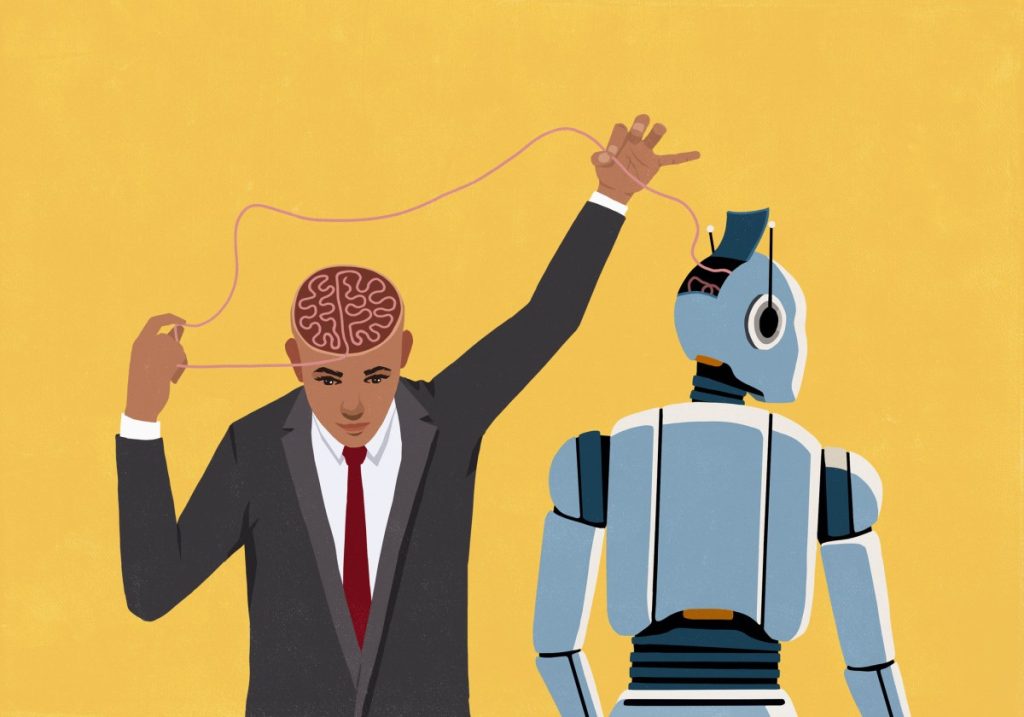
The End of an Era: Amazon’s Mechanical Turk Nears Its Final Days
As the world of artificial intelligence continues to evolve, a significant blow has been dealt to the crowdsourcing service that was once at the forefront of human-AI collaboration. Amazon’s Mechanical Turk, a platform where individuals were paid to complete simple tasks that resisted full automation, has announced that it will no longer accept new customers as of July 30, 2026.
This decision, according to Amazon Web Services, was made after careful consideration, with the company stating that existing customers can continue to use the service as normal. However, it’s clear that the service is on life support, with AWS also confirming that it will not introduce new features in the future.
Launched in 2005, Mechanical Turk was a marketplace where people were paid to perform tasks such as completing CAPTCHA challenges, identifying sentiment in sentences, and more. The service was at the center of debates around the ethics of crowdsourced labor, with some arguing that it exploited workers for minimal pay.
One of the key issues surrounding Mechanical Turk was its use as a way for companies to annotate data for training neural networks. Beginning in 2018, Amazon billed the service as a way to support its SageMaker AI service, which allows companies to build and deploy AI models.
However, over time, the relationship between Mechanical Turk and AI models grew increasingly complicated. A 2023 analysis found that between 33% and 46% of workers on the platform were using large language models to complete their tasks, raising questions about the reliability of data annotated on the platform and whether humans needed to be in the loop at all.
As the platform’s usage declined, so did the number of workers and researchers who contributed to it. In a Reddit post, one user suggested that the platform died ‘years ago,’ with bots and fraud driving away legitimate workers and researchers.
While Amazon’s decision to stop accepting new customers for Mechanical Turk may seem like a minor issue, it highlights the shifting landscape of AI development. As AI models become increasingly sophisticated, the need for human annotation and data labeling is decreasing, making platforms like Mechanical Turk less relevant.
In the end, Mechanical Turk’s fate serves as a reminder that even the most innovative technologies can become outdated and obsolete. As the world continues to evolve, it’s essential to stay ahead of the curve and adapt to changing needs and technologies.
For those who have been a part of the Mechanical Turk community, this news may be a blow. However, it also presents an opportunity for innovators and researchers to explore new and more effective ways of developing AI models.
As the AI landscape continues to shift, one thing is clear: the future of AI development is uncertain, and only time will tell what the next chapter holds.