Sudan War Escalates, Leaving Children Vulnerable to Drone Strikes and Violence
As the conflict in Sudan continues to intensify, the U.N. children’s agency, UNICEF, has reported a staggering number of children killed or injured in the war-torn country over the past six months. According to UNICEF, more than 300 children have been caught in the crossfire, with the majority of casualties resulting from drone strikes.
The Sudanese military and the paramilitary Rapid Support Forces (RSF) have been engaged in a fierce battle since April 2023, with the war now concentrated in the Kordofan, Darfur, and Blue Nile states. The RSF and its allies have been accused of escalating violence in the region, particularly in the strategic city of el-Obeid in North Kordofan.
Drone warfare has emerged as a significant contributor to the high number of casualties, with UNICEF estimating that 60% of the total casualties have resulted from aerial attacks. The U.N., U.S., U.K., and other international organizations have expressed alarm over the potential for atrocities as the RSF and the military fight for control of the city.
In a recent move, the U.N.-backed Human Rights Council approved a measure condemning the escalating violence by the RSF and its allies in and around el-Obeid. The measure, brought by five European countries, also encourages greater support for countries hosting refugees from Sudan and condemns ‘all forms of external interference’ in the war.
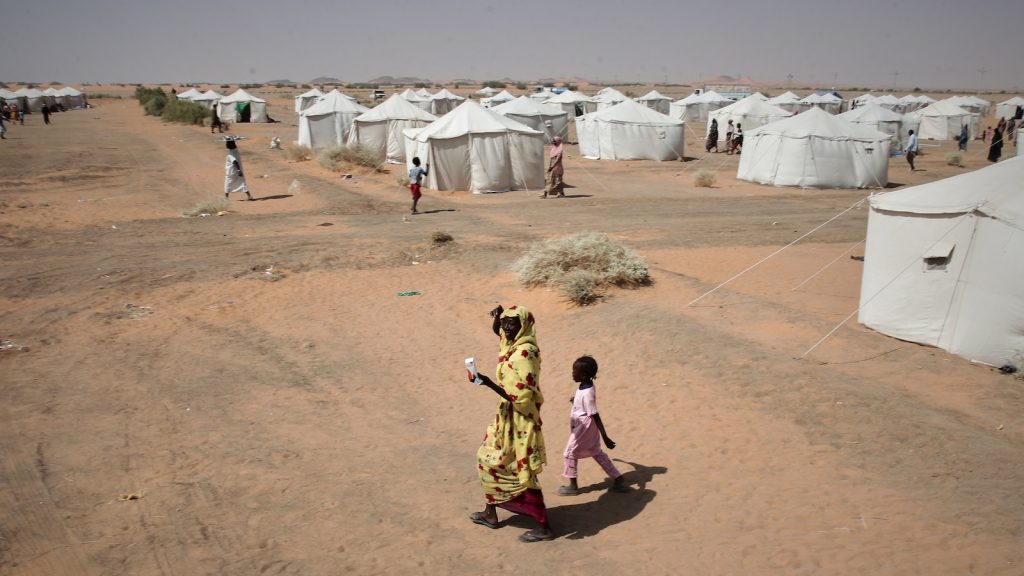
The conflict has had a devastating impact on the civilian population, with at least 59,000 people killed, over 13 million displaced, and many parts of Sudan pushed into famine. More than 30 million people are in need of humanitarian assistance, with civilians in some areas facing siegelike conditions for over a year.
UNICEF representative for Sudan, Sheldon Yett, expressed his concern over the dire situation, stating, ‘Children are being caught in a relentless cycle of violence, displacement, and deprivation.’ He emphasized the need for parties to protect civilians and civilian infrastructure, allow safe and unimpeded humanitarian access, and take all possible measures to protect children from harm.
In light of these developments, the international community must come together to address the humanitarian crisis unfolding in Sudan. It is imperative that all parties prioritize the safety and well-being of civilians, particularly children, who are disproportionately affected by the conflict.
The world cannot afford to turn a blind eye to this unfolding humanitarian disaster. It is our collective responsibility to act and ensure that the rights and dignity of all individuals, especially children, are protected.
Humanitarian Crisis in Sudan: Key Statistics and Facts
- More than 300 children killed or injured in the past six months
- 60% of casualties resulted from drone strikes
- At least 59,000 people killed in the conflict
- Over 13 million displaced
- Many parts of Sudan pushed into famine
- More than 30 million people in need of humanitarian assistance
International Community’s Response to the Crisis
The U.N., U.S., U.K., and other international organizations have expressed alarm over the escalating violence in Sudan. The U.N.-backed Human Rights Council has approved a measure condemning the RSF and its allies for their actions in the region.
The international community must come together to address the humanitarian crisis unfolding in Sudan. It is imperative that all parties prioritize the safety and well-being of civilians, particularly children, who are disproportionately affected by the conflict.
We must not turn a blind eye to this unfolding humanitarian disaster. It is our collective responsibility to act and ensure that the rights and dignity of all individuals, especially children, are protected.
As the world watches the crisis unfold, it is essential that we take immediate action to address the humanitarian needs of the affected population. We must work together to ensure that the rights and dignity of all individuals, especially children, are protected.