China Allocates Millions in Relief Funding
China has allocated millions of dollars in additional relief funding for disaster-hit areas after severe storms destroyed homes and displaced thousands of people, and a landslide killed 21 forestry workers.
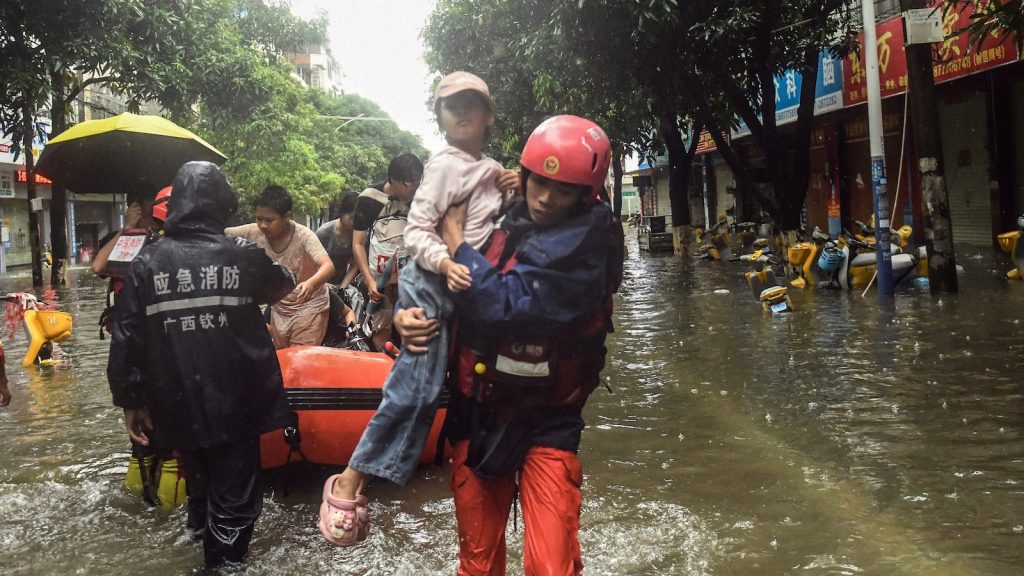
The central government allocated 50 million yuan ($7.4 million) to restore roads, schools, and other facilities in central China’s Hubei province and another 20 million yuan to help rebuild homes and resettle residents there, according to state media. This allocation is in addition to the 100 million yuan ($14.7 million) allocated earlier for schools, hospitals, transport, and other infrastructure in southern China’s Guangxi region, where severe flooding inundated cities and stranded residents after heavier-than-expected rainfall from a tropical storm.
The government also allocated 30 million yuan ($4.4 million) to Gansu province, where the landslide buried the forestry workers. This funding will be used to provide relief and support to the affected communities and help them recover from the devastating effects of the disaster.
In an interview with The Associated Press, Lu Xiaofei, who works in Shenzhen, a tech hub near Hong Kong, shared the dire situation her brother’s family was facing in Lu village in Qintang district. Her brother’s family was stuck at his house, with the water level rising and reaching over one person’s height, forcing them to move to the second floor. The power had been out since yesterday morning, and now they didn’t have running water either.
Lu said her brother told her that the water level rose last night, and their situation was so dire that drinkable water would be running out soon. Local authorities had not reached out to them, and many villagers nearby were facing the same challenges. Others called for help on social media, showing videos of their flooded surroundings and highlighting their lack of resources.
Reservoirs were breached or burst after Tropical Storm Maysak hit Guangxi, sending torrents of water into towns and cities. Six people were reported dead, and about 130,000 have been evacuated. More than 8,000 people and about 5,700 boats have been deployed in the rescue operation, according to the official Xinhua News Agency.
Heavy rain has been battering parts of Guangxi since last Saturday, with cumulative rainfall of 10 to 40 centimeters (4 to 16 inches) in some areas and more than 90 centimeters (35 inches) in hard-hit areas, the national meteorological center said. Another storm, Super Typhoon Bavi, is forecast to hit southeastern China over the weekend. In Taiwan, some farmers rushed to harvest their rice ahead of the storm, which was expected late Friday.
Elsewhere in Asia, severe weather also caused deaths. Landslides triggered by heavy monsoon rains in southeastern Bangladesh killed several Rohingya refugees, including five children. Heavy monsoon rains battered parts of neighboring India, leaving over a dozen of people dead over the past few days.
As the situation continues to unfold, it is essential to provide support and aid to those affected by the disaster. The allocated funding will help restore essential services and provide relief to the affected communities.
Disaster Relief Efforts
The Chinese government’s swift response to allocate millions in relief funding demonstrates its commitment to supporting those affected by the disaster. The allocation of funds will enable the government to provide essential services, such as food, water, and shelter, to those in need.
The rescue operation is ongoing, with thousands of people and boats deployed to assist in the relief efforts. The situation is being closely monitored, and the government is working tirelessly to provide aid and support to those affected.
As the situation continues to unfold, it is essential to stay informed and provide support to those affected by the disaster. The Chinese government’s efforts to allocate millions in relief funding demonstrate its commitment to supporting those affected by the disaster.