Healthcare Workers in Congo’s Ebola Epicenter Go on Strike Over Delayed Payments
In a devastating turn of events, healthcare workers at the epicenter of Congo’s Ebola outbreak have gone on strike due to delayed payments, threatening to further exacerbate the outbreak that has already claimed 580 lives.
The strike, which began in the Ituri province, affects the hardest-hit area among the three provinces in eastern Congo affected by the outbreak. The healthcare workers, who are the backbone of the response efforts, have not been paid their wages and bonuses since the outbreak was declared on May 15.
According to Dr. Biensi Kano, a member of the epidemiological surveillance committee in Ituri’s capital, Bunia, the delay in payments has left them and their families facing significant socio-economic difficulties. ‘Since the Ebola virus disease outbreak was declared, we’ve been demanding payment for our work,’ Dr. Kano said.
The latest government data shows that 1,708 cases of Ebola have been recorded, with 580 deaths reported. This number represents the worst month on record for the outbreak, with the virus continuing to spread rapidly due to population movements and insecurity. Some treatment centers are even at near-full capacity, further complicating the response efforts.
Dr. Anne Ancia, the World Health Organization representative in Congo, expressed concern over the spread of the virus, stating that the population movements and insecurity are fueling the outbreak. ‘The non-payment of benefits exposes us and our families to significant socio-economic difficulties and seriously undermines our living conditions,’ Dr. Kano emphasized.
In an official notice to national and provincial authorities, front-line workers in Ituri threatened to strike if their wages were not paid within 24 hours. Although no official strike has been declared, some workers have already stopped working, citing the lack of payment as a major reason for their action.
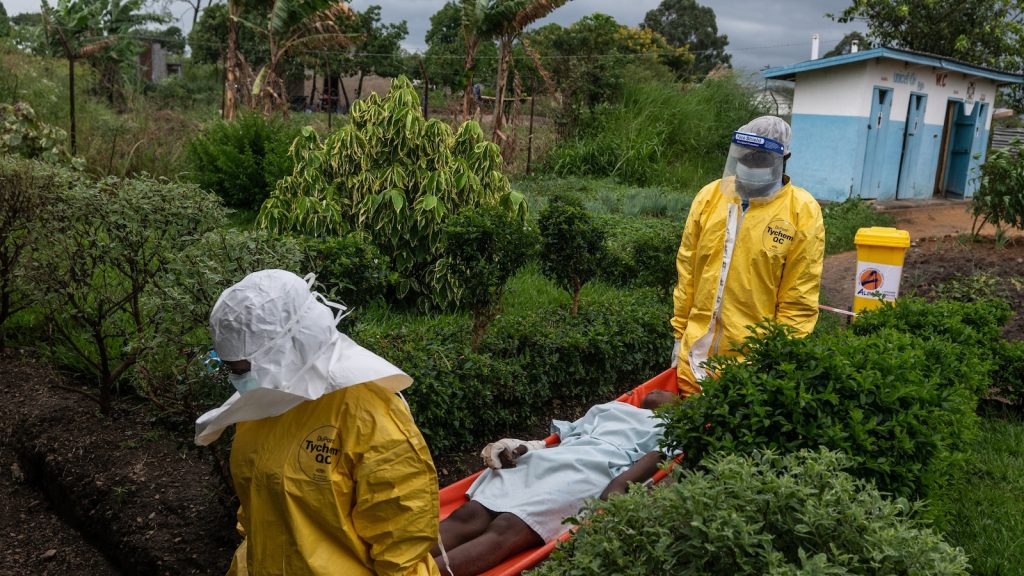
The aggrieved front-line workers also include safety and security teams, community outreach teams, and those responsible for burying patients who have died from Ebola. Their concerns are not being addressed, with some even facing attacks from angry residents and skepticism about the virus.
Dr. Ben Bakule, a community investigator, shared his harrowing experience of being attacked by a group of angry young men while tracing contacts of a confirmed Ebola case in the village of Tutu, in Djugu territory. ‘We spend money on transport to get to work. We thought we’d be rewarded. At the moment, nothing is going right because we’re not being paid. We don’t deserve this sort of treatment,’ Dr. Bakule said.
The situation is dire, with the World Health Organization representative in Congo, Dr. Anne Ancia, stating that the virus continues to spread, fueled by population movements and insecurity. The government’s response has been criticized for being slow and inadequate, with some even accusing them of prioritizing the response over the welfare of the front-line workers.
The strike by healthcare workers has caused concern among residents in Ituri, where measures to slow the outbreak have resulted in economic hardship. ‘I would ask the authorities to resolve this situation before things get any worse,’ said Bunia resident Anifa Kito, standing in front of her tomato stall.
The situation is a stark reminder of the challenges faced by healthcare workers in responding to outbreaks, particularly in resource-poor settings. The delay in payments has not only affected the morale of the workers but also compromised the effectiveness of the response efforts.