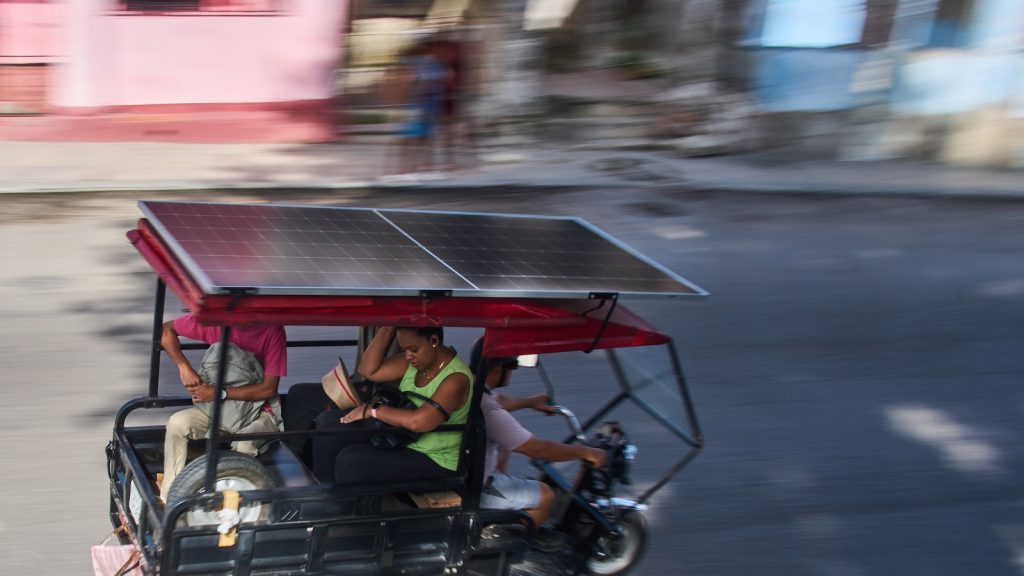
Cuba’s Transportation Landscape Transforms Amid Fuel Crisis
Cuba, a nation known for its vintage cars, has witnessed a significant shift in its transportation landscape. The iconic vintage cars have largely disappeared, replaced by small electric tricycles, primarily made in China. These three-wheelers have become the primary means of transportation for hundreds of thousands of Cubans struggling with a prolonged fuel crisis.
The electric tricycles, with a price range of $2,000 to $4,000, are used to transport goods and serve fixed routes once covered by buses. While their price is out of reach for most Cubans, many have sold their older gasoline-powered cars to purchase the tricycles. Others have received them from relatives abroad, where they are generally cheaper. Some small-business owners have even invested in them, expecting to recoup the cost.
Adapting to Cuba’s Energy Crisis
Since U.S. President Donald Trump threatened to impose tariffs on countries selling oil to Cuba in January, the island nation has experienced a significant impact on its daily life. Rolling blackouts have worsened, exacerbating hardships in a country whose economy has been in crisis for five years. Shortages of food and medicine have deepened, and public transportation has been sharply reduced.
Amid the crisis, electric tricycles have become indispensable. They transport goods, serve fixed routes once covered by buses, and in some Havana neighborhoods, they are used to collect garbage. People with heavy shopping bags can catch rides on the tricycles, a slow, hot, and uncomfortable ride, but it’s better than walking.
Berta Ferrer, a 52-year-old clerk at a store in central Havana, pays about 500 Cuban pesos (less than $1) for the ride, a significant expense in a country where monthly salaries average about $10 for state workers and roughly $40 for private-sector employees.
Solar-Powered Tricycles: A Solution to Cuba’s Energy Crisis
Some owners have installed solar panels on the awnings over the seats of the tricycle, allowing them to recharge on the go and keep operating despite the island’s energy crisis. The solar panels are a cost-effective solution, with a price tag of around $500, but they pay off quickly as they help owners cope with fuel shortages and blackouts.
Ricardo Quintero, an engineer who owns one of the tricycles, uses it to transport produce to the vegetable stand he runs with his family. He believes that the solar-powered tricycles are here to stay, a testament to Cuba’s resourcefulness and adaptability in the face of adversity.
As the Cuban people continue to navigate the challenges of fuel shortages and blackouts, the solar-powered tricycles have become an essential part of their daily lives. These three-wheelers have transformed the way people move around the island, providing a sustainable and reliable means of transportation.