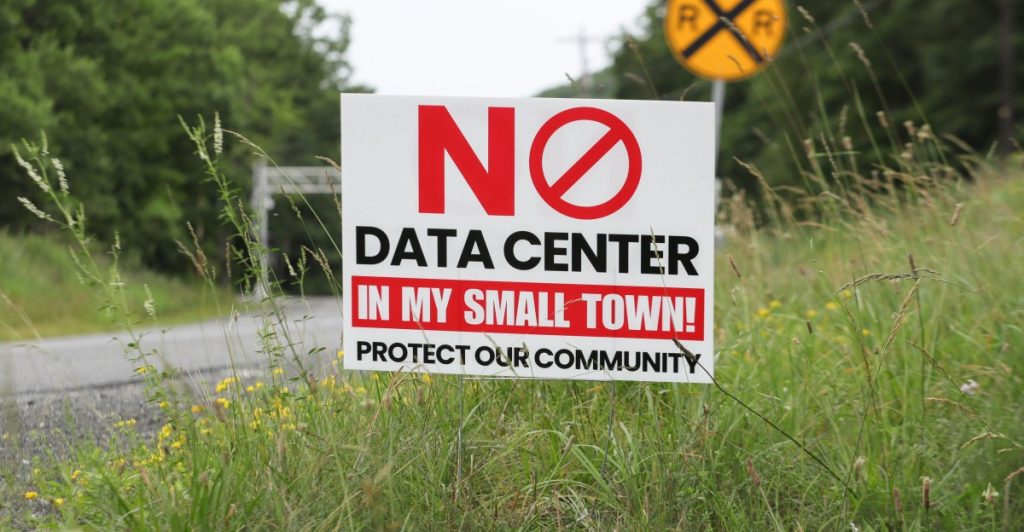
The Fight Against AI Data Centers Heats Up: A Growing Resistance
As the world grapples with the rapid growth of artificial intelligence, a new front is emerging in the battle against AI data centers. From the sleepy town of Athenry in Ireland to communities across the US, residents are speaking out against the massive energy consumption, noise pollution, and environmental concerns associated with these sprawling facilities.
In 2015, Apple announced plans to build a $1 billion data center in Athenry, which would power its services in Europe. However, local residents quickly lodged complaints about the expected noise, light pollution, flooding, traffic, and impact on local wildlife. Despite the Irish government’s approval, Apple’s plans were eventually derailed after a lengthy battle with residents.
The fight against AI data centers is far from over. In fact, it’s gaining momentum. According to a study by Data Center Watch, at least 75 AI data center projects valued at $130 billion have been blocked or delayed in the US between January and March 2026. The number of active opposition groups has more than doubled, with over 235,000 petition signatures collected in the same period.
From Wisconsin to Delaware, residents are fighting back against the buildout of AI data centers. In January, the Blackstone-owned data center company QTS dropped plans to build a $12 billion campus in DeForest, Wisconsin, following protests from community members. Meanwhile, a planned data center on a 580-acre campus in Delaware City is facing roadblocks after local regulators determined that the facility is prohibited under the state’s Coastal Zone Act.
The battle against AI data centers is not just a local issue; it’s a national concern. With the US Energy Information Administration predicting that commercial energy demand will surpass residential demand for the first time this year due to the AI data center buildout, residents are speaking out against the environmental impact and rising energy costs.
As the fight against AI data centers continues to gain momentum, lawmakers are taking notice. Sen. Bernie Sanders (D-VT) and Rep. Alexandria Ocasio-Cortez (D-NY) have introduced a bill that would pause the construction of new AI data centers until Congress passes laws that would prevent the facilities from raising utility prices or harming the environment.
The Ratepayer Protection Act, a set of laws backed by lawmakers from both sides of the aisle, aims to codify an agreement signed by Google, Meta, Microsoft, and other tech giants to pay for their own data center energy costs. The Guaranteeing Rate Insulation from Data Centers (GRID) Act would force data centers to use energy sources separate from the US electric grid in an effort to protect residents from utility bill increases.
As the battle against AI data centers heats up, it’s clear that this is a fight that’s far from over. With residents, lawmakers, and even tech giants taking sides, the future of AI data centers hangs in the balance.
From Wyoming to Mississippi, the environmental impact of AI data centers is a growing concern. In Wyoming, officials recently found that a contractor linked to Meta’s data center flushed bacteria-contaminated water into public sewers. Meanwhile, factories across the Midwest are facing rising electricity costs due to nearby data centers. Plans to build 74 gas-fired plants to power data centers across the US could release as much greenhouse gas pollution as all of Australia, according to the Environmental Integrity Project.
The Verge’s Lauren Feiner has a great write-up about how Google plans to replenish more water than it uses at its data centers. You might’ve heard about plans to put AI data centers in space, but you might want to read UPI’s report about how Samsung and Hyundai want to put data centers on boats. Check out Erin Brockovich’s map of the planned data centers across the US.