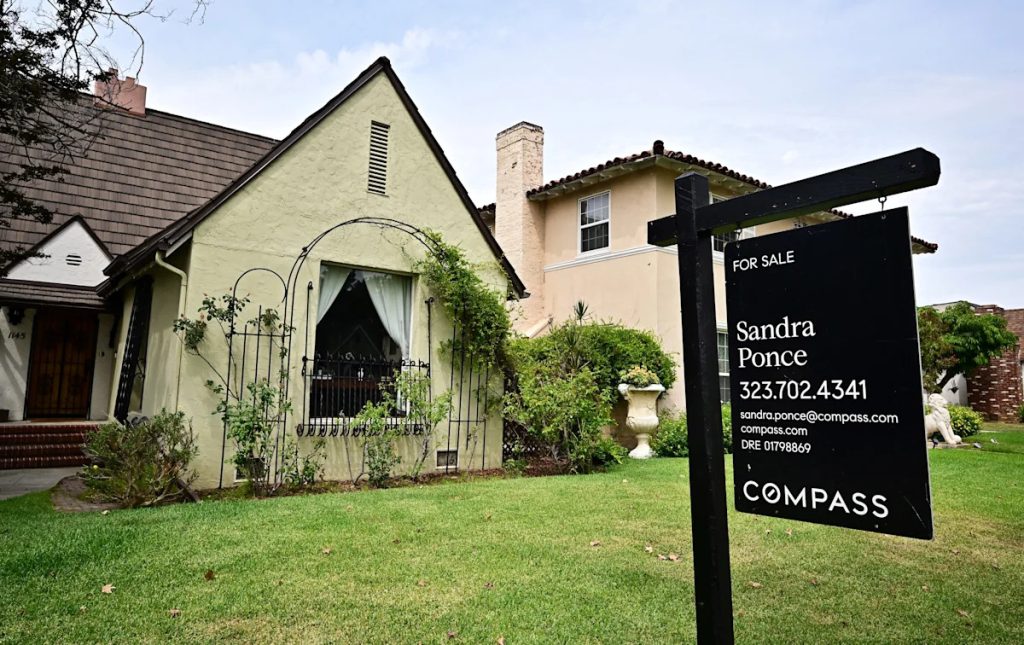
Homebuying and Selling Remain Underwhelming Despite Slightly Lower Mortgage Rates
The traditional peak season for homebuying and selling has come to a close, with another underwhelming performance.
For the fourth consecutive year, high home prices and elevated mortgage rates have discouraged many buyers from entering the market, despite slightly lower mortgage rates, solid wage growth, and higher inventory levels of for-sale homes.
Home sales so far this year have increased by less than 1 percentage point compared to 2025 levels, according to data from the National Association of Realtors, a particularly modest improvement given that sales last year tied for a three-decade low.
Mortgage rates are likely to be the primary culprit behind this lackluster performance. A brief dip below 6% in late February was quickly undone when the US attacked Iran, causing oil prices and inflation to spike. Rates spent most of the spring hovering around 6.5%, a number that, while lower than last year’s 6.7% to 6.8% average, still discouraged buyers and sellers alike.
Sean Zanganeh, a real estate agent in San Diego, believes that the market is ‘just crying’ for a 5%-ish interest rate. He had a busy start to the year when rates were lower, but said sales activity, especially in the middle tier of the market, slowed down after they rose.
The median list price for a home in the San Diego metro area is nearly $1 million, meaning even small increases in mortgage rates can have a significant effect on monthly payments.
For example, an extra $500 a month on a $1 million loan in San Diego would be a substantial increase in carrying costs for many buyers.
Despite persistently higher rates, housing market watchers say the numbers aren’t all doom and gloom. Sales staying in positive territory even as higher rates eroded affordability is ‘a testament to some of the resiliency in the housing market, but also some of the pent-up demand,’ said Odeta Kushi, deputy chief economist at First American Financial Corporation.
Many homebuyers who did enter the market this year were able to take advantage of more favorable conditions. For-sale inventory levels rose in much of the country, giving buyers more options, and home price appreciation on average trailed wage growth. In some parts of the country, especially cities in Florida, the Southeast, and the Mountain West, prices are now down from the peaks of a few years ago.
Ashley McPoland, 28, bought her first home earlier this year in Gilbert, Ariz., an area she selected for its up-and-coming feel and approachable entry-level home prices. Relocating from California, she periodically flew in to scout new listings and found she had plenty of options.
McPoland said she felt like she wasn’t rushed in her homebuying process, which was a welcome change from the usual frenzied pace of the housing market. Her below-list-price offer was accepted, and the sellers offered her a $15,000 credit to cover her closing costs.
Ultimately, McPoland landed on a three-bedroom, three-bathroom home that had been lingering on the market. Her experience highlights the challenges that first-time homebuyers continue to face in the current market.
However, despite the difficulties, some progress has been made. Home prices are not as expensive as they were a year ago, and buyers are still able to find deals in certain parts of the country.
As the housing market continues to evolve, it’s clear that buyers and sellers alike are crying out for lower interest rates to make the market more accessible and affordable for all.