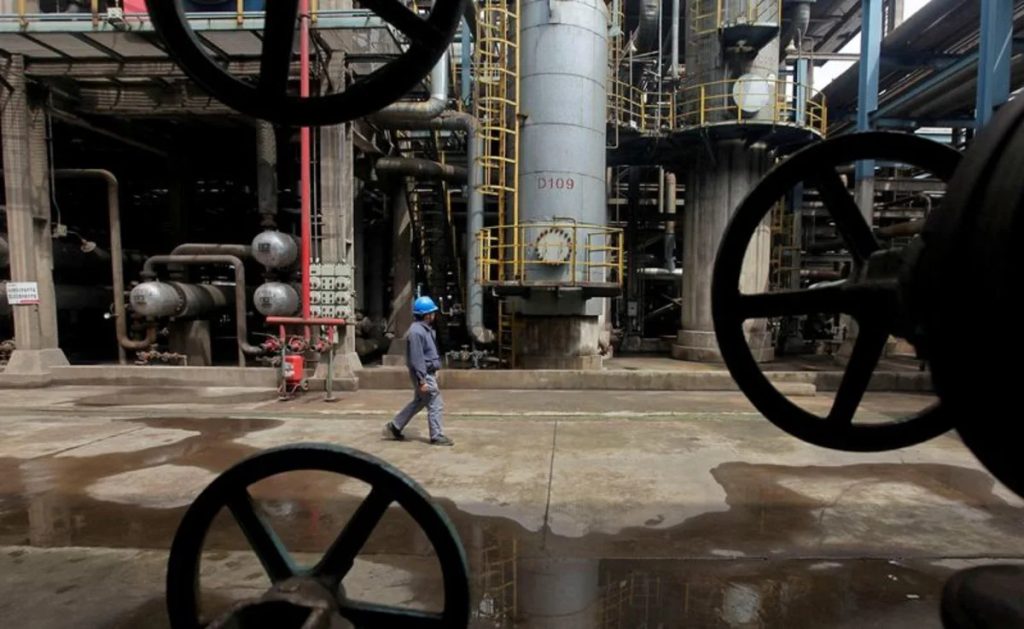
China’s Oil Imports Have Plunged Since the Iran War
For five years, China imported an average of 11.5 million barrels of oil per day. However, since April, this number has decreased to an average of just 8 million barrels per day. The speed at which China has reduced its oil imports has kept a lid on global prices and freed up cargoes for other countries.
Market observers are puzzled over how China achieved this reduction and are eager to know how permanent the drop in demand is. ‘It’s the million-dollar question,’ said Michal Meidan, head of China Energy Research at the Oxford Institute for Energy Studies. ‘There’s a massive level of uncertainty because we don’t fully understand what has happened.’
The uncertainty reflects the lack of visibility into China’s oil market. The size of China’s stockpile is a state secret, its oil companies are opaque, and its data is patchy. This makes it difficult for analysts to predict how China’s oil imports will recover after the war.
Factors Affecting Chinese Fuel Demand
The war has revealed a Chinese transport system that is able to run on less fuel than thought possible. This has significant implications for crude imports, as roughly half are refined into transport fuels. However, it is unclear whether the war will accelerate electric car sales, especially as petrol prices have fallen back to pre-war levels after surging by more than a quarter.
Electric and hybrid cars rose to a record 62% of new car sales in June. However, hundreds of thousands fewer cars have been sold this year due to a weak Chinese economy and slowing electrification of a fleet that is still 87% petrol-powered. Nevertheless, it does look like the war will accelerate the destruction of diesel demand after the government launched a plan in June to electrify trucking, aiming to have some busy short-haul routes 80% electrified by 2030.
Consultancy Rystad expects Chinese gasoline and diesel use to drop 6.6% and 6.9%, respectively, versus their forecasts of 3.5% and 3% before the war. ‘The crisis has acted as a trigger,’ says Ye Lin, an analyst at Rystad. ‘It helped consumers build more confidence in electric cars and trucks.’
Industrial Demand and Stockpiling
If the Iran war further slows China’s domestic growth or its export markets, it poses further risk for the country’s oil demand, says Meidan from the Oxford Institute for Energy Studies. China’s property crisis has battered the construction industry, which has dented diesel demand for several years, and property prices are still falling.
A structurally weaker economy could also hit demand for plastics and other petrochemicals, hurting refiners and reducing oil use as the sector faces competition from coal-based alternatives. ‘Something we’re not thinking enough about is the broader economic story,’ Meidan said. ‘That is a really big question that will impact Chinese oil demand and industrial activity.’
Beijing’s reserve-building campaign last year, which positioned China well to absorb the shock of the closure of the Strait of Hormuz, inflated crude imports. However, determining when, and to what degree, China might resume stock-building is complicated by uncertainty over Beijing’s aims and the size of its reserves, say analysts.
Beijing does not publish targets for its reserves nor how much is stored. Reuters reported last year that China was building a series of new storage tanks. In May, Premier Li Qiang called for even more capacity during a visit to a reserve site.
‘Although there is demand destruction, there will still be incremental crude oil imports that China will use to fill its strategic petroleum reserves,’ said June Goh, senior analyst at Sparta Commodities. While structural changes including electrification could lower monthly crude imports to somewhere between 8 million to 9 million barrels per day once the Gulf normalises, Goh says another stockpiling campaign could lift them back to the 9.5-million to 11-million-bpd range.
During China’s stockpiling campaign last year, Brent crude was trading between $58 and $83 per barrel, versus the current price of about $85. Analysts say it could resume again should prices fall below $70.
Will the Fuel Export Valve Revive Oil Demand?
Whatever the new normal, getting there requires certainty about supply from the Gulf and an end to Beijing’s wartime restriction on fuel exports, say analysts. Without exports to absorb surplus gasoline, diesel, and jet fuel, Chinese refiners have little incentive to buy more crude and raise output.
Beijing lifted those curbs for July but could reimpose them for August now that fighting has resumed in the Gulf. Longer term, exports will also help determine where China’s crude imports settle. If overseas sales absorb excess fuel and petrochemicals, refineries may need more oil imports. China tightly manages fuel shipments under a fuel export quota system.