Nicaragua’s President Daniel Ortega Announces No Elections in Sight
Mexico City, Mexico – In a move that has left many in the opposition scrambling for answers, Nicaragua’s President Daniel Ortega has announced that the country will not be holding elections anytime soon. This statement effectively cancels Nicaragua’s next elections, which were originally scheduled for November 2027.
Ortega made the announcement on Sunday at the anniversary of the Sandinista Revolution, which toppled the Somoza dictatorship in 1979 and first brought him to power. He returned to the presidency in 2007 and has since rewritten the constitution, crushed political opposition, and solidified his control over virtually all branches of the Nicaraguan government.
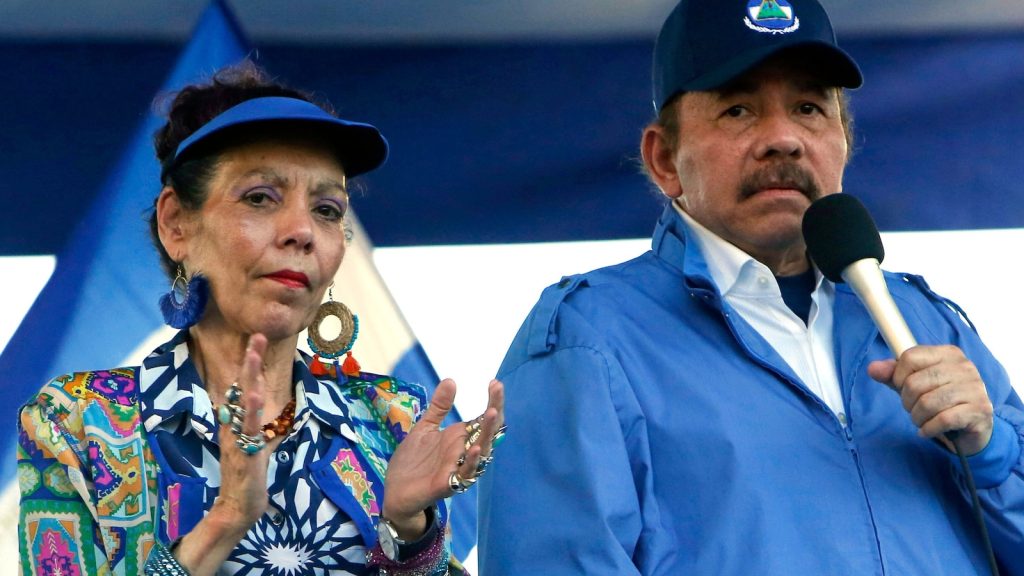
Since mass protests in 2018, which led to a bloody government crackdown that killed hundreds, Ortega and his wife and co-President Rosario Murillo have been holding on to power. Ortega declared himself the winner of the 2021 election, a vote widely viewed as illegitimate by the international community, after jailing all the candidates who could have possibly beaten him. The U.S. does not recognize Ortega’s presidency.
Opponents and rights groups have condemned the announcement, saying it represents an escalation of Ortega’s efforts to consolidate power in the hands of the Sandinista party. Juan Sebastián Chamorro, a 2021 candidate who was behind bars until he was released to the U.S. in 2023 with more than 200 other political prisoners, said the announcement reveals Ortega’s longstanding plan to eliminate electoral competition altogether.
“Ortega and Murillo are evidently afraid at the idea that the slightest political opening could create the conditions for dissent to manifest and threaten their grip on power,” said Tiziano Breda, a senior Latin America analyst at independent conflict monitor ACLED.
At least 46 people are behind bars in Nicaragua for political reasons, according to the Mechanism for Recognition of Political Prisoners group, which tracks the cases. Nicaragua denies holding political prisoners. In recent years, the government has released hundreds of imprisoned activists, religious leaders, and politicians to the U.S. and Guatemala, stripping many of their Nicaraguan citizenship and belongings.
Those freed described being held in isolation and said they were subjected to physical and psychological torture. Since 2018, Nicaragua has also shuttered more than 5,000 organizations, largely religious, and forced thousands to flee the country. Earlier in July, the Ortega-Murillo government stripped masses of lawyers of their licenses to practice in what U.N. experts called a ‘purge of the legal profession.’
Ortega’s Efforts to Consolidate Power
Ortega has been in power for nearly 20 years, and his efforts to consolidate power have been met with widespread condemnation from the international community. His announcement that there will be no elections anytime soon has left many in the opposition scrambling for answers.
The U.S. has long been critical of Ortega’s government, and the announcement has been met with concern from the international community. The U.S. does not recognize Ortega’s presidency, and the announcement has only served to further solidify his grip on power.
Ortega’s announcement has been met with widespread condemnation from rights groups and opponents, who say it represents an escalation of his efforts to consolidate power. The international community has called for greater transparency and accountability from the Nicaraguan government, but so far, there has been little response.
Nicaragua’s Human Rights Crisis
Nicaragua has been plagued by a human rights crisis for years, with the government cracking down on opposition and dissent. The country has been criticized for its treatment of political prisoners, who have been held in isolation and subjected to physical and psychological torture.
At least 46 people are behind bars in Nicaragua for political reasons, according to the Mechanism for Recognition of Political Prisoners group. Nicaragua denies holding political prisoners, but the group has tracked the cases and found that many of those imprisoned are being held without charge or trial.
The government has also been criticized for its treatment of lawyers, who have been stripped of their licenses to practice. This has been seen as a purge of the legal profession, and has only served to further consolidate Ortega’s grip on power.
The international community has called for greater transparency and accountability from the Nicaraguan government, but so far, there has been little response. The situation in Nicaragua remains dire, and the international community is watching with concern.