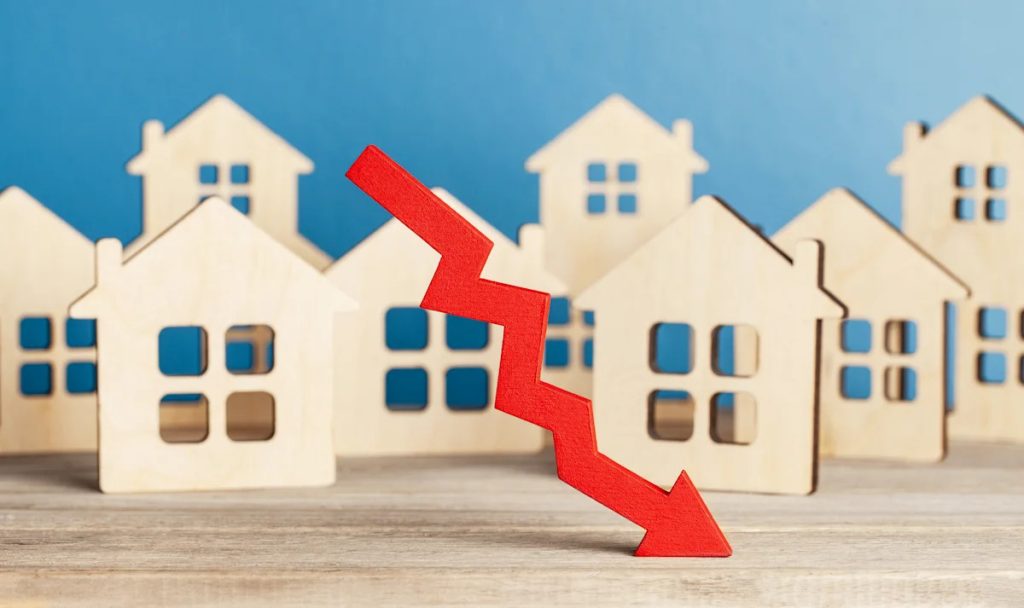
Will the Housing Market Crash in 2026?
A housing market crash occurs when home values plummet due to a lack of demand for or an oversupply of homes. The factors leading to a housing market crash are varied, ranging from economic recessions to high mortgage rates that make it less affordable to buy a home. A housing crash can have both positive and negative effects, including low home prices and the potential loss of built-up equity and tighter finances.
Source: s.yimg.com
So, what’s ahead for the housing market in 2026? According to experts, a housing market crash is not on the horizon. Instead, they see a market correction defined by stability and not volatility.
Source: s.yimg.com
Expert Insights
Hoby Hanna, CEO of Howard Hanna Real Estate Services, stated that ‘we’re not heading toward a housing crash; we’re in a market correction defined by stability, not volatility.’ He noted that today’s housing environment is fundamentally different from 2008, with homeowners having record levels of equity, sound lending standards, and a constrained inventory. This, he said, is a market filled with opportunity and resilience, not instability or uncertainty.

Source: s.yimg.com
Jobs Data: A Mixed Bag
While the economy may have lost 966,000 job openings last year, the May Job Openings and Labor Turnover Survey (JOLTS) showed that the number of job openings and hires were unchanged at 7.6 million and 5.2 million, respectively. The ADP National Employment Report also beat expectations, with the private sector adding 98,000 jobs in June 2026, and pay up 4.4% year-over-year.
Home Prices: A Slow Rise
Home prices continue to slowly rise, but at a rate that is not as rapid as seen in early 2025. The U.S. annual home price growth was 0.8% in May 2026, picking up the pace from 0.4% year-over-year growth in April, according to real estate data company Cotality.
Housing Market Crashes: Supply and Demand Dynamics
For the housing market to crash, supply and demand must be drastically out of balance, favoring supply. While supply is tight, the discrepancy is not as drastic as it was in 2008. As of May 2026, the National Association of REALTORS® showed a housing supply of 4.5 months, compared to a six-month supply in a normal market balanced between buyers and sellers.
Lessons from the Past
The housing crash that started in 2007 and contributed to the global financial crisis continues to weigh heavily on the minds of many economists and consumers. However, the factors that led to that crash are not in place today. Not only are housing supply levels and home equity levels vastly different, but mortgages are also a different animal. Lending practices have tightened significantly since 2007, making for a wildly different scenario today than we faced back then.
The lowest down payments are typically with VA loans, which offer 0% down, and FHA loans, which offer down payments as low as 3.5%. Both loans still require income, asset, and employment verification. Today, homeowners also have significantly more home equity than those from the early 2000s, with the average American having just under $300,000 in home equity.
Signs of a Housing Market Crash
An economic shock, such as a significant stock market crash or a prolonged period of job cuts, could signal the start of a housing market crash. If unemployment rose rapidly and homeowners couldn’t afford their mortgage payments, they could lose their homes to foreclosure if they couldn’t sell them. A large increase in foreclosures would bring home values down, potentially triggering a housing crash.
Preparing for a Potential Housing Market Crash
If you’re worried about when the housing market will crash again, you can take steps to protect your financial well-being. Build an emergency fund, experts recommend having three to six months’ expenses in the bank. Pay down your debt, try to prioritize high-interest debt, like credit card debt. Consider diversifying your investments and building a portfolio that is less dependent on the housing market.