Why Sleep Matters
As a sleep scientist, I’ve seen firsthand how sleep affects our bodies and minds. It’s not just a matter of personal responsibility, but a fundamental biological necessity that’s often overlooked in public policy. Even one night of disrupted sleep can impair attention, reaction time, and decision-making. Good public policy shouldn’t force a choice between achieving societal goals and protecting healthy sleep.
The Tour de France Incident
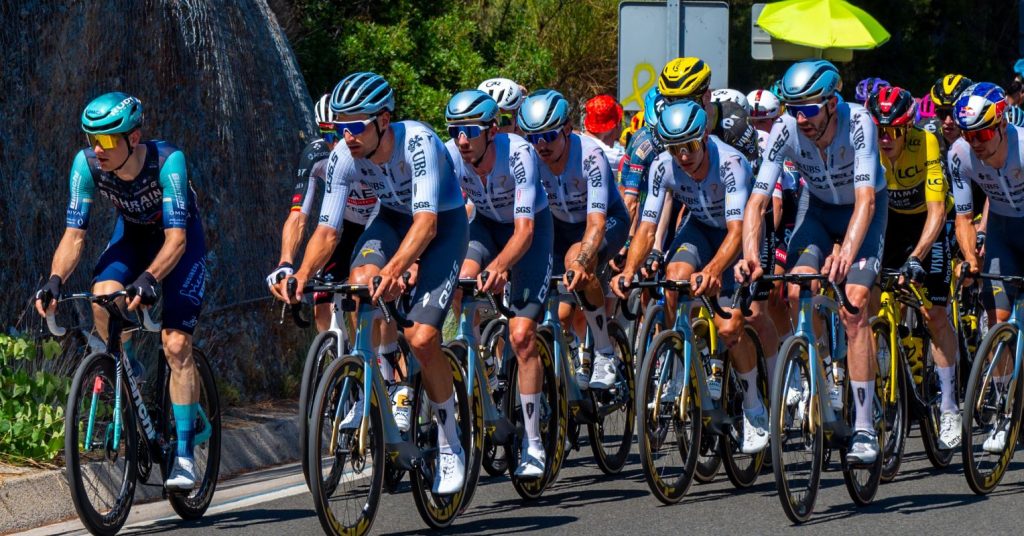
Recently, two-time Tour de France champion Jonas Vingegaard was awakened at 2:00 a.m. for a random anti-doping test. The testing process lasted about 40 minutes, and Vingegaard later said it took him additional time to fall back asleep. As a sleep scientist, this came as no surprise. Disrupting sleep in the middle of the night is hardly conducive to quickly falling back asleep, and it can have serious consequences for athletic performance.
During competition later that day, Vingegaard crashed, fracturing his collarbone and ending his Tour. While we can’t say for certain that the disrupted sleep caused the crash, it raises an important question: what is gained by conducting a routine anti-doping test at 2:00 a.m. when decades of research tell us that disrupting sleep impairs reaction time, attention, decision-making, and motor coordination?
Sleep is not negotiable. It’s one of the most powerful recovery tools athletes have. Even a single night of disrupted sleep slows reaction time, increases attentional lapses, impairs judgment, and reduces coordination. These are precisely the functions elite athletes depend on. In a sport like cycling, where split-second decisions can determine both performance and safety, these impairments matter enormously.
Discounting Sleep in Public Policy
This story resonated with me because it feels like yet another example of how easily sleep is discounted when it comes to public policy. Just last week, Congress passed the Sunshine Protection Act despite years of warnings from sleep and circadian scientists that permanent daylight saving time runs counter to human biology.
At first glance, these two events seem entirely unrelated. One involves elite cyclists, while the other concerns our biological clocks. But they share a common assumption: that sleep is somehow negotiable. Whether we’re talking about elite athletes, teenagers starting school before sunrise, physicians working overnight shifts, or U.S. citizens having to wake up in the dark of night in winter due to permanent daylight saving time, the lesson is the same: policies that ignore sleep ignore biology.
And biology always wins. Sleep isn’t a luxury. It isn’t just downtime. It’s a biological necessity and a performance imperative. It’s time our policies started treating it that way.