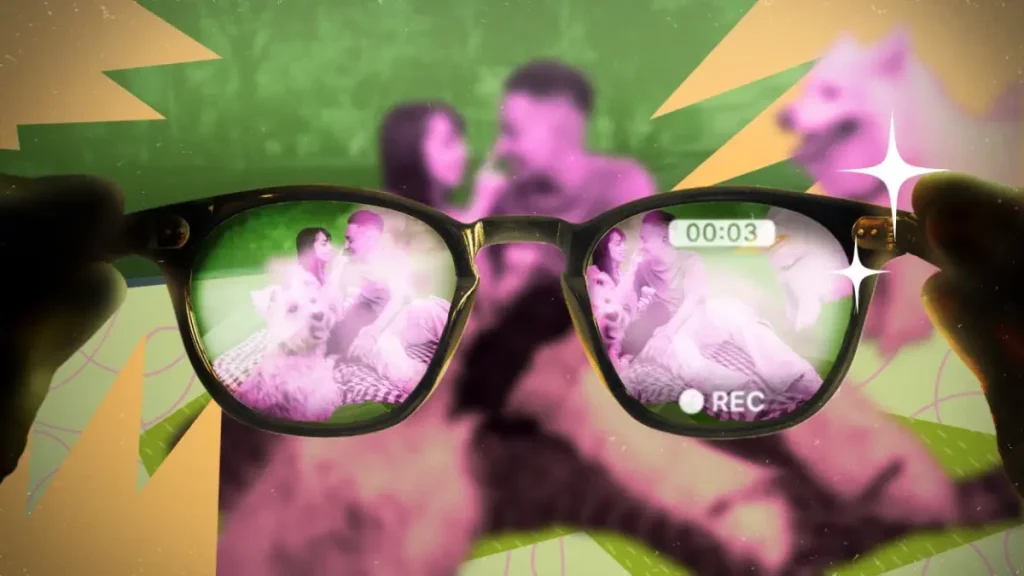
Instagram Takes a Stand Against Creepy Smart Glasses Videos
In a recent move to protect users from harassment and exploitation, Instagram has announced plans to crack down on smart glasses videos that feature people being taken advantage of and harassed for views.
According to a recent story posted on Instagram, the social media platform’s head, Adam Mosseri, revealed that Instagram will be banning smart glasses videos that involve people being harassed and exploited for views. Mosseri stated, ‘If you’re posting content that is taking advantage of people and harassing them, like a lot of these pickup line kind of videos that we’ve heard of and seen, then we’re going to take the content down.’
The decision to ban these types of videos comes after a surge in the popularity of smart glasses, which have made it easier for people to record and share videos of others without their consent. These types of videos often feature people trying to pick up women, pranking retail workers, and other pranks that can be considered harassment.
Business Insider reported that Meta recently pulled two accounts with over a million followers for posting ‘pickup artist’ videos, where women who may not have known they were being filmed have their videos posted online, leading to harassment. A Meta spokesperson confirmed that the accounts were removed in accordance with the company’s existing bullying and harassment policy.
Meta’s official policy on bullying states, ‘We remove content that’s meant to degrade or shame, including, for example, claims about someone’s sexual activity,’ and lists a number of specific examples, such as ‘severe sexualized commentary’ and ‘calls for, or statements of intent to engage in, bullying and/or harassment.’
However, there is a lot of gray area when it comes to what constitutes harassment, and it can be difficult to automate detection. This leaves enforcement up to users who can flag videos and/or victims, who are often unaware their image is being spread online until it’s too late.
The backlash over camera-equipped smart glasses is definitely growing, whether it’s apps designed to detect them in public, condemnation from pop stars, or outright bans on smart glasses in some places. As a privacy safeguard, Meta’s glasses have a front-facing light that comes on when video is being taken or a picture is being snapped, but the light has been an ongoing issue since the glasses launched.
Disabling it has turned into an ongoing game of cat-and-mouse: Meta smart glasses’ cameras won’t work if the light is covered, but hackers found ways to modify the hardware itself, leading Meta to release a mandatory update that will physically disable any glasses if a user tampers with the indicator.
Hidden cameras are generally legal to use in public places in the U.S. (with a few exceptions), and it’s not necessarily against the law to film yourself trying to pick someone up, then post the footage online so weirdos can comment. However, this does not make it right, and Instagram is taking a stand against these types of videos.
How to Spot Hidden Cameras in Glasses
Unless you’re really eagle-eyed, it’s tough to spot someone with a hacked pair of glasses with no recording indicator light, but it’s not impossible. Here are a few things to look for:
- The rivet: Most standard glasses have decoration of some kind to cover the glasses’ hinge. On Meta Ray-Bans and most other camera glasses, they’re round and slightly oversized with a glass inner circle.
- Thick frames: While the technology is getting smaller, camera-equipped glasses tend to have thicker frames to hide the gear.
- The tap: There are two ways to trigger an off-the-shelf pair of Meta smart glasses, saying ‘Hey, Meta, take video’ or tapping the side of the glasses.
- Head movement: Meta glasses have a pretty wide lens, so they don’t require a ton of movement to capture a scene, but still, if someone is moving their head when they could just be moving their eyes, they might be trying to keep something in frame.
All that said, despite the growing popularity of the nickname ‘pervert glasses,’ camera-equipped smart glasses have a variety of legitimate uses and I assume the vast majority of wearers want a quick way to upload content to Instagram, answer texts, or take a picture without having to pull out their phones, so just spotting the glasses in the wild doesn’t mean you’ve spotted a creeper. Usually.