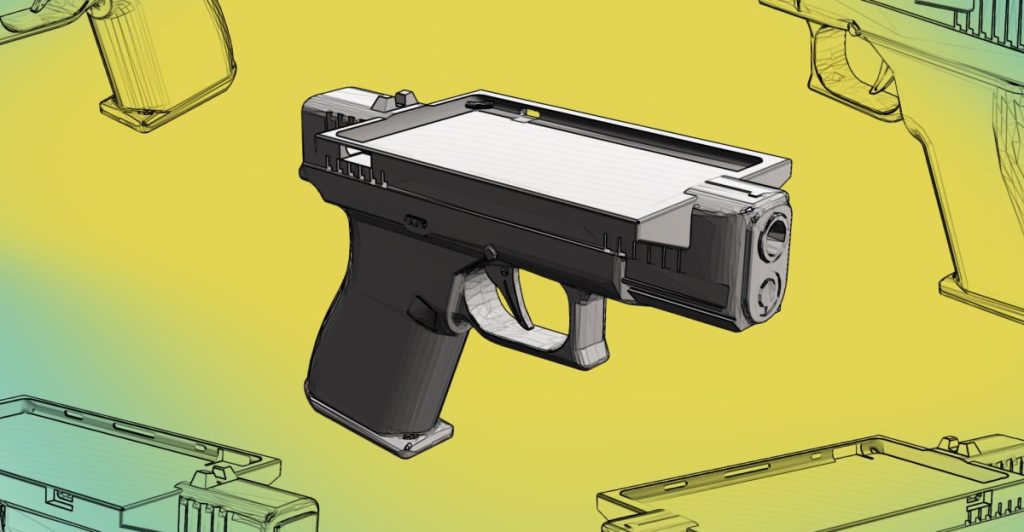
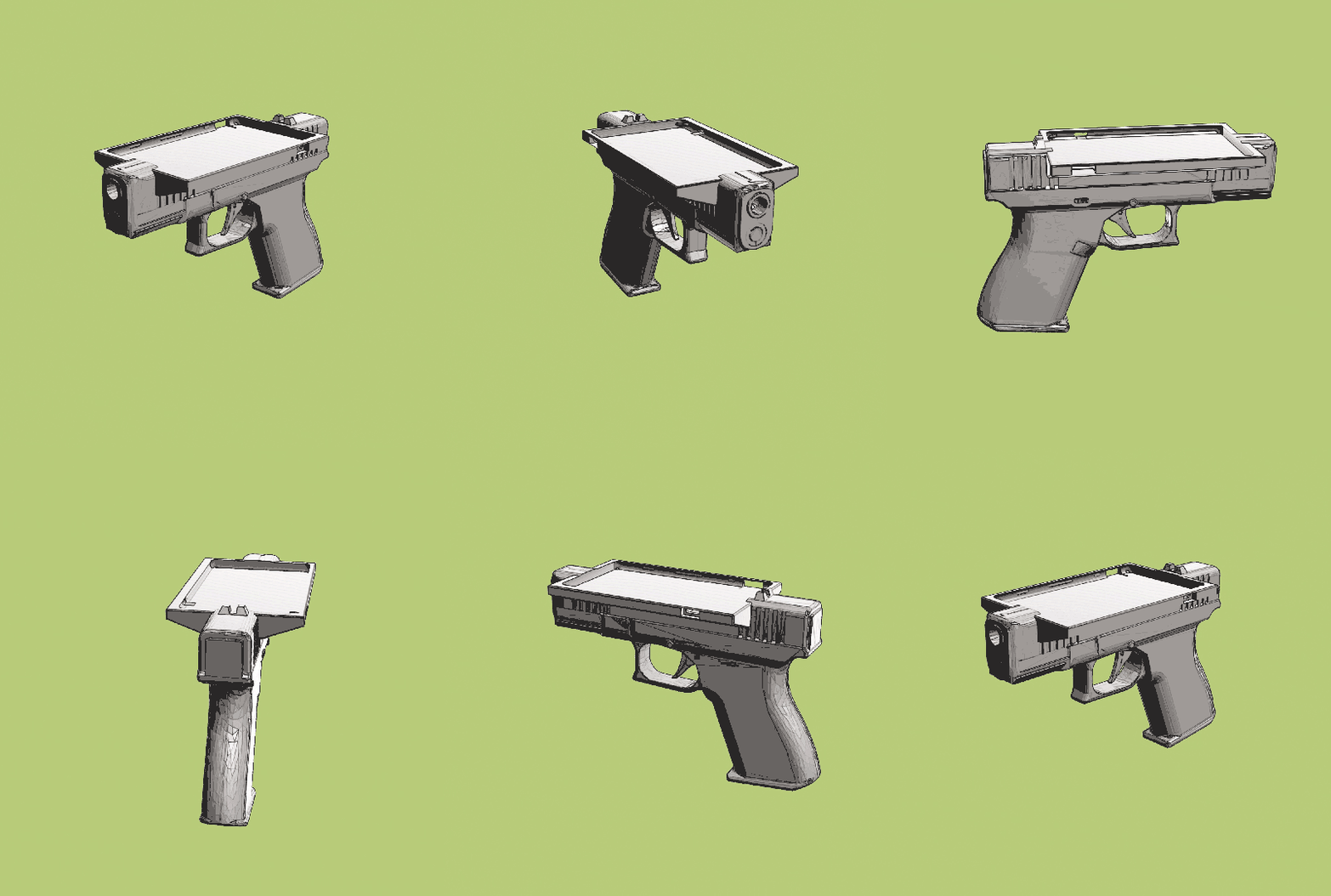
A recent 3D-printed case for the Xteink X4 e-reader has sparked a debate about the effectiveness of gun-blocking software in 3D printing. The case, designed by Luke The Maker, is shaped like a pistol and has a cutout on the side to access the e-reader’s buttons. Although it can’t shoot bullets, the design raises concerns about the challenges of implementing gun-blocking software in 3D printers.
Source: platform.theverge.com
The Proposed Solution: Gun-Blocking Software
Mandating gun-blocking software on 3D printers is a proposal being considered by lawmakers in several states, including New York and California. The software would scan every file before it’s printed and try to determine whether it’s a firearm or firearm part. If the software decides that the file looks like a gun, it would stop the printer from completing the job.
However, critics argue that this technology is underdeveloped and risks introducing false positives, where non-guns that look gun-like get unnecessarily blocked. Luke The Maker’s e-reader case is a perfect example of this problem, as it could be mistaken for a real gun.
False Positives: A Major Concern
Experts in the field, including Cliff Braun, associate director of technology policy and research at the Electronic Frontier Foundation, and Solomon Diamond, associate professor of engineering at Dartmouth College, have expressed concerns about the potential for false positives. They argue that the software could be fooled by designs that resemble guns but are not functional firearms.
Braun notes that the shapes of receivers in AR-15s and other long guns are relatively unique and distinguishable, but the part that requires a serial number in handguns is the frame, which is visually far more ambiguous. This makes it difficult to develop software that can accurately distinguish between guns and non-guns.
Diamond suggests that a more conservative approach, using hashing to flag known firearms and parts from a database, could be easily sidestepped by making small changes to a file’s design. A more expansive approach using AI to analyze a file’s geometry and predict if it’s a gun may be more prone to mistakes.
Geometric Identification: A Potential Solution
Geometric identification, which is currently being used to guide quality control in manufacturing, could potentially thread the needle. This approach can be fine-tuned for exact geometric matches, where a zero false-positive rate is at least theoretically possible.
However, this approach is still relatively new when it comes to 3D print blocking tech, and it’s unclear whether it would be effective in practice.
Limitations and Trade-Offs
Implementing gun-blocking software on 3D printers would necessarily mean some non-guns get caught in the crossfire. This would limit how makers, hobbyists, and artists can express themselves, as they would have to navigate the complexities of the software’s detection system.
Braun notes that if you’re going to try and block all of those wonderfully creative humans, you’re going to make it very hard to print props or make social commentary.
For now, the debate continues, with lawmakers and experts weighing the pros and cons of implementing gun-blocking software on 3D printers.