China and Japan at Odds Over Diplomatic Meeting
Beijing and Tokyo are giving conflicting accounts of whether their foreign ministers briefly spoke at last week’s ASEAN regional meeting in the Philippines.
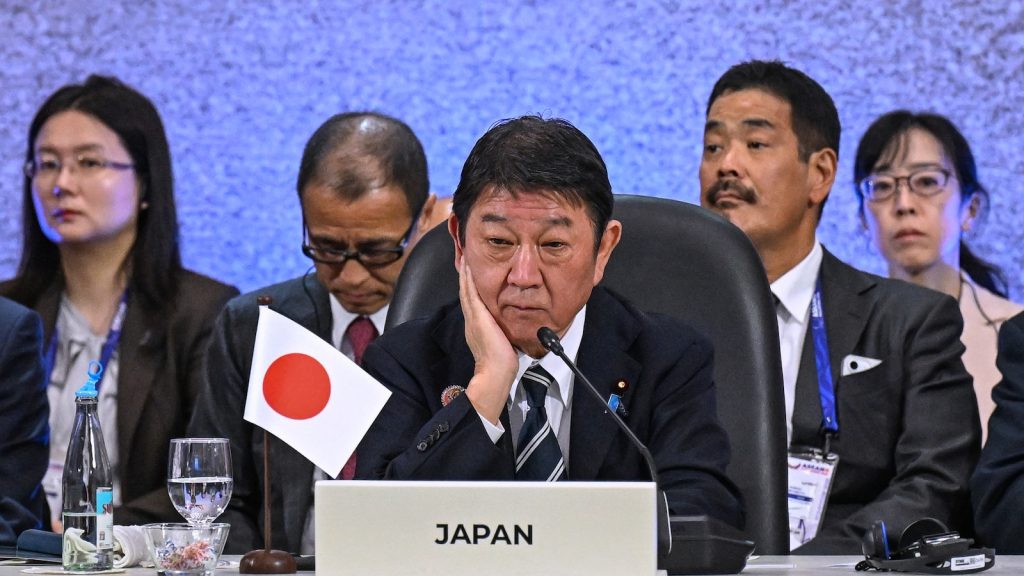
According to Japanese Foreign Minister Toshimitsu Motegi, he had a brief discussion with his Chinese counterpart, Wang Yi, about bilateral relations when they crossed paths during the meeting. However, a Chinese Foreign Ministry spokesperson contradicted this claim on Monday, stating that Wang Yi did not have a scheduled meeting with the Japanese side and that there were no brief exchanges between the two.
The differing accounts reflect the deteriorating ties between the two nations since November, when Japan’s Prime Minister Sanae Takaichi made a comment about Taiwan that angered China. Since then, Japan has been looking for opportunities to rebuild relations, but China has been giving its neighbor the cold shoulder.
The tensions between China and Japan have spilled over into the economy, with a decrease in Chinese tourists visiting Japan. The heightened unease in both countries has also led to concerns about the expansion of each other’s militaries.
Japan’s Prime Minister Sanae Takaichi has been trying to downplay the situation, saying that the two sides are holding dialogue at various levels, including Motegi’s exchange with Wang. However, Chinese officials have been more direct in their criticism, with some labeling Takaichi’s comments as a ‘red line’ in relations with other countries.
Takaichi’s comments about Taiwan were made in response to a question about whether Japan could get involved in a scenario where China blockaded the island or took other military action. She replied that the Taiwan example could meet the criteria for Japan’s military to help an ally, such as the United States, under a policy known as collective self-defense.
The policy allows Japan’s military to help an ally if certain conditions are met, such as ensuring Japan’s survival. Takaichi’s comments crossed what China considers a red line in its relations with other countries, as it opposes any words or actions that encourage what it labels Taiwan independence forces.
The situation between China and Japan is complex and multifaceted, with both sides having different perspectives on the issues at hand. However, one thing is clear: the tensions between the two nations are not going away anytime soon.
Background on the Issue
The tensions between China and Japan began to escalate in November, when Japan’s Prime Minister Sanae Takaichi made a comment about Taiwan that angered China. Since then, Japan has been looking for opportunities to rebuild relations, but China has been giving its neighbor the cold shoulder.
The situation has spilled over into the economy, with a decrease in Chinese tourists visiting Japan. The heightened unease in both countries has also led to concerns about the expansion of each other’s militaries.
Key Quotes and Statements
Japan’s Foreign Minister Toshimitsu Motegi: ‘As we have repeatedly noted, Japan is open to dialogue at all levels, and that I believe it is extremely important that we continue our dialogue as both Japan and China hold a major responsibility for regional peace.’
Chinese Foreign Ministry spokesperson: ‘Let me make it clear once again that during his visit to Manila, Foreign Minister Wang Yi did not have a meeting with the Japanese side on his schedule, nor did any brief exchanges take place on the site.’
Japan’s Prime Minister Sanae Takaichi: ‘If it involves the use of warships and military actions, it could by all means become a survival-threatening situation.’
Conclusion
The situation between China and Japan is complex and multifaceted, with both sides having different perspectives on the issues at hand. However, one thing is clear: the tensions between the two nations are not going away anytime soon.
The two countries have a long history of tension, and it’s unlikely that this situation will be resolved anytime soon. However, it’s worth noting that both sides are engaging in dialogue at various levels, including Motegi’s exchange with Wang.
Only time will tell if this dialogue will lead to any positive developments in the relationship between China and Japan.