Haiti’s Long-Awaited General Elections: A Critical Milestone Amidst Chaos
Haiti has taken a significant step towards holding long-overdue general elections, with voter registration commencing in the capital and beyond. However, concerns over rampant gang violence persist, casting a shadow over the electoral process.
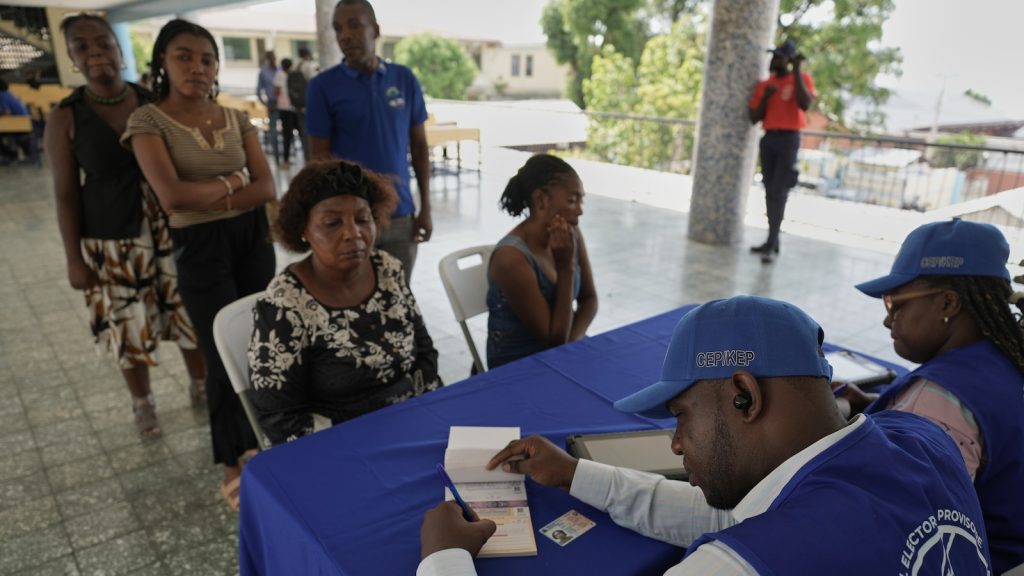
The Haitian government has opened 10 registration centers in Port-au-Prince, with dozens of hopeful citizens trickling through. Among them was 34-year-old construction worker Vadley Bernadel, who expressed his determination to cast his vote for the first time. ‘Haiti needs someone with a vision, someone who can lead the country in a better direction,’ he said, deploring the country’s multiple crises.
Gang violence has ravaged Haiti since the assassination of President Jovenel Moïse in July 2021, displacing over 1.4 million people and leaving an estimated 70% of Port-au-Prince under armed control. The situation has become increasingly dire, with more than 50% of the electorate living in the affected regions. The International Crisis Group’s analyst, Diego Da Rin, warned that if the government insists on holding elections on December 13, ‘a large part of the electorate will be left out.’
Da Rin emphasized that the authorities face a daunting challenge in organizing elections without defeating the gangs and minimizing their influence. He noted that long-standing links between gangs and powerful elites in Haiti remain active, with gangs frequently used to intimidate voters or convince them to select certain candidates. ‘Gangs have been a very important tool for elites to help their candidates win elections,’ he said.
Lawyer Francky Cavetan expressed his skepticism about the elections, citing concerns over safety and the lack of awareness about the referendum that will take place on the same day. ‘They’re not even explaining to people what they’re planning to change in the Constitution,’ he said, echoing Da Rin’s sentiment that the public remains unaware of the government’s proposed changes.
The Haitian Provisional Electoral Council plans to open more voter registration centers, including 20 in Pétion-Ville, one of the safest areas. However, the ultimate decision to open centers in other communities lies with the Haitian government. The situation remains precarious, with over 5,900 people killed last year and 5,500 gender-based violent incidents reported in the first half of the year.
As the electoral process unfolds, the people of Haiti face a daunting task: to exercise their right to vote in a country plagued by violence and uncertainty. The question remains: can the government ensure a safe and fair electoral process, or will the gangs’ influence prevail?