A Shift in Focus for America’s Biggest Automakers
Just a few years ago, General Motors (GM) and Ford were leading the charge in the electric vehicle (EV) market, investing billions of dollars in their respective EV initiatives. However, a recent analysis of their quarterly earnings calls reveals a stark shift in focus: both companies are now talking less about EVs with their investors.
According to an analysis by TechCrunch and Hudson Labs, a New York-based financial research firm, GM and Ford are discussing EVs at a lower rate than they did before the pandemic. This trend is not surprising, given the companies’ recent decisions to alter, delay, or abandon plans for new EV models.
Jim Cain, a spokesperson for GM, emphasized the importance of quality over quantity in their EV efforts. ‘We’ve been very clear and consistent in communicating our view that EVs are the end game, the strength of our portfolio today, the loyalty of EV customers to the technology, awards we’ve won, our growing EV market share, and our commitment to continue investing in technologies like LMR (lithium manganese-rich) to improve profitability,’ he stated in an emailed response.
However, Cain also acknowledged that the company devotes a significant portion of their earnings calls to discussing other growth opportunities, such as software and services, autonomous technology, and trade and regulatory policy impacts.
Meanwhile, Ford spokesperson David Tovar pointed to the company’s planned launch of its Universal Electric Vehicle platform next year. ‘We think the first product rolling off the line, a midsize pickup truck, will hit the sweet spot of the EV market for cost, price, and technology,’ he said.
For this analysis, TechCrunch excluded Stellantis, the ostensible third of the Detroit Big Three, due to its traditional lag behind its U.S. counterparts in EV adoption. Stellantis also held comprehensive earnings calls only twice a year, instead of four times annually, like most public companies.
General Motors’ Shift in Focus
GM was once a leader in the EV market, debuting the Bolt EV at the Consumer Electronics Show in January 2016 and putting the car on sale by the end of that year. However, as the company’s investment in EVs ramped up in 2019 and 2020, their focus began to shift. Despite selling EVs and having new models in their product pipelines, GM’s collective focus has shifted, and it shows in the data.
According to the analysis, GM spent nearly four years dedicating around a quarter of each earnings call to discussing EVs. However, after President Trump took office, his environmental regulations were slashed, and the $7,500 federal tax credit for new EVs was repealed. As a result, GM’s talk of EVs dropped significantly, from 82 mentions on the second-quarter call in 2025 to just 21 on their most recent call covering Q2 2026.
Ford’s Shift in Focus
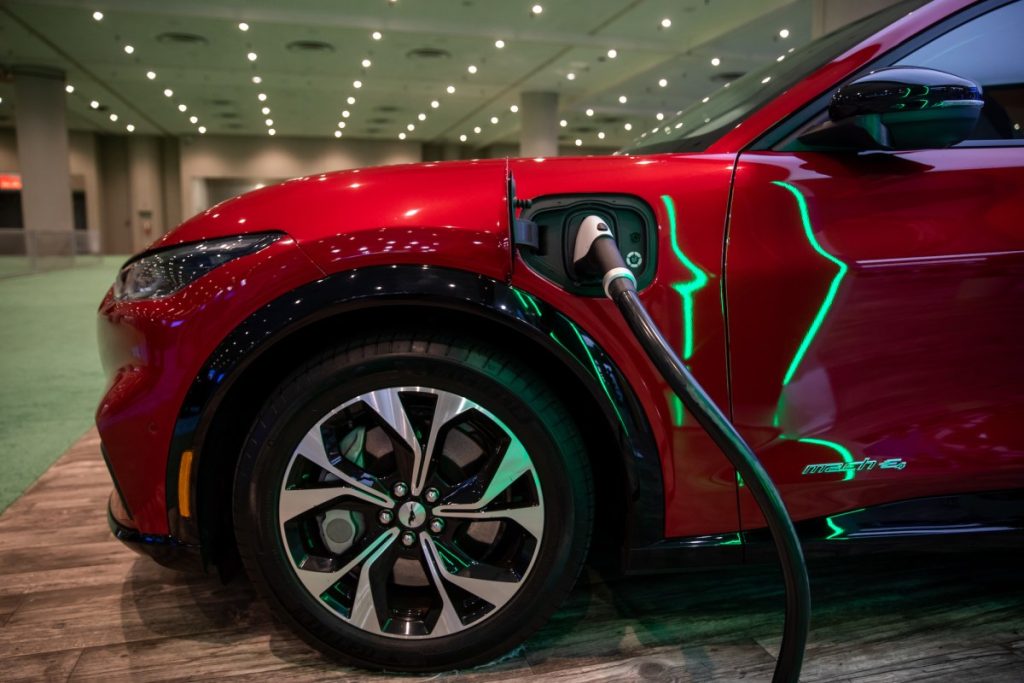
Ford’s first serious entry into the world of mass-market EVs was the Mustang Mach-E, which debuted in late 2019. As the company got closer to delivering the first models in late 2020, they started talking more and more about electric vehicles on their earnings calls. However, after the 2024 election, Ford began talking less about EVs, instead focusing on their higher-margin gas F-Series trucks.
Despite this shift, Ford’s CEO, Jim Farley, still talked up the idea that the company ‘will become a major scaled competitor as we invest in affordable, versatile EVs.’ However, investors will have to wait until at least next year to see the fruits of this labor.
A Shift in Focus for America’s Biggest Automakers
The analysis by TechCrunch and Hudson Labs reveals a stark shift in focus for America’s biggest automakers. While GM and Ford still sell EVs and have new models in their product pipelines, their collective focus has shifted, and it shows in the data. As the companies continue to navigate the ever-changing landscape of the EV market, one thing is clear: the future of electric vehicles is uncertain, and only time will tell how these shifts in focus will play out.