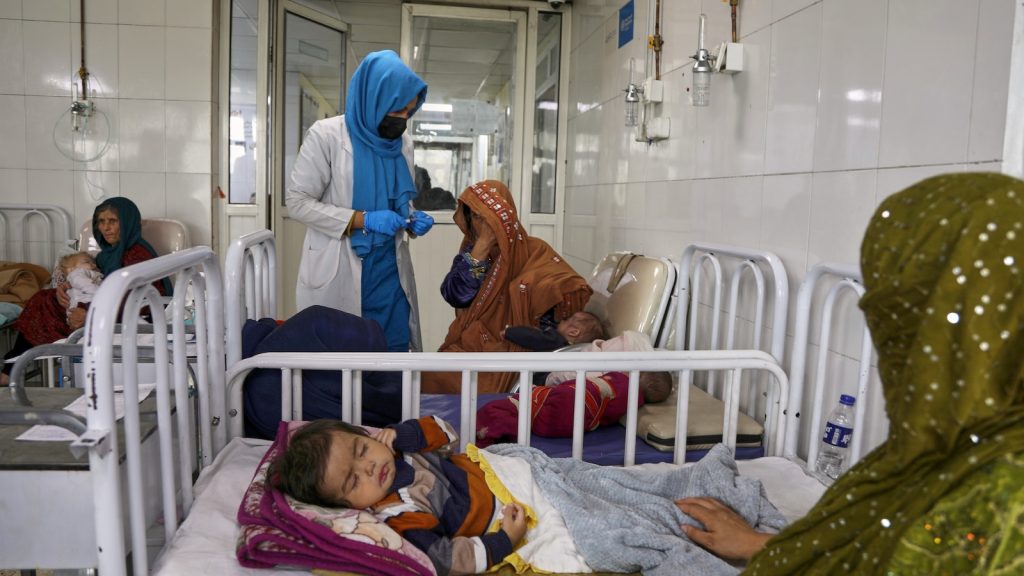
The situation in Afghanistan continues to deteriorate as child malnutrition reaches critical levels in a third of the country’s provinces, with a record 12 provinces now affected. The United Nations World Food Programme (WFP) has reported that nearly 3.7 million Afghan children are projected to suffer from acute malnutrition this year, along with 1.2 million pregnant and breastfeeding women.
Humanitarian Crisis Unfolding
The WFP has warned that funding shortfalls are forcing cuts in food distributions and other support, exacerbating the crisis. John Aylieff, WFP’s country director in Afghanistan, has stated that ‘it is already too late for too many’ children, emphasizing the urgent need for action to stem the rise in child deaths.
Olga Cherevko, spokesperson for the U.N. humanitarian office in Afghanistan, has reported that wasting among children has worsened this year in over three-quarters of the country. Children suffering from wasting are acutely malnourished, become very thin for their height, and require immediate therapeutic feeding.
The WFP has cited a combination of factors contributing to the crisis, including conflict, unemployment, rising food prices, disease outbreaks, poor water and sanitation, and reduced humanitarian funding. The agency has also highlighted the impact of supply shortages linked to conflict in the Middle East and the nine-month closure of Pakistan’s border due to fighting between the neighbors, which have disrupted deliveries of nutrition products and left nearly one million malnourished women and children without essential nutrition services for five months.
From August to October, WFP said food distributions aimed at preventing famine in the worst-hit areas are being suspended due to lack of funding, even though the annual peak season for malnutrition is between July and October. The agency urgently needs $540 million over the next six months to continue its critical work.
The WFP has reported that 142 health centers closed in 2025 because of aid reductions and more than 13,000 children lost access to nutrition treatment. This has resulted in a devastating impact on the lives of vulnerable children and their families, who are struggling to survive in a country plagued by conflict and poverty.
Funding for food assistance has dropped sharply – by about 59% since 2022 – even as needs have surged, according to a recent WFP report. The U.S. pledged $800 million to WFP in June, which will help more than 38 million people in at least 37 countries. However, the larger $1.71 billion humanitarian appeal for Afghanistan is just over 26% funded, which is ‘alarming,’ especially since malnutrition and other indicators are worsening.