Revolutionary Image Upgrade of the First-Ever Black Hole Photo
The historic image of the supermassive black hole at the center of the galaxy Messier 87, captured in 2019, has undergone a significant transformation. Initially released as a ‘fuzzy, orange donut,’ the image now boasts a sharper and more defined appearance, thanks to the application of machine learning technology.
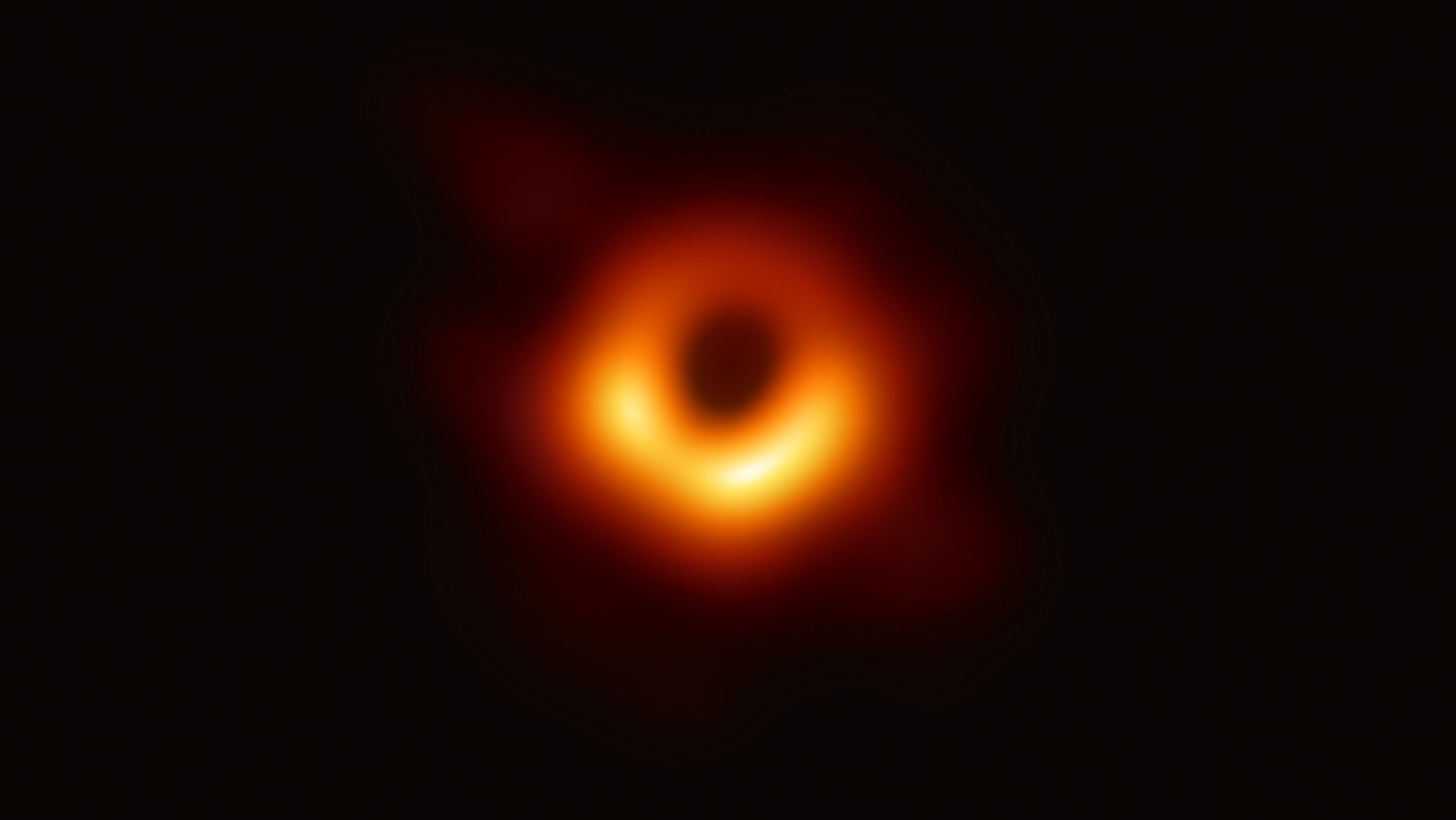
Source: media.cnn.com
The Event Horizon Telescope Collaboration, a global network of telescopes, worked tirelessly for over a decade to capture the first-ever photograph of a black hole. The project, which involved more than 200 researchers, utilized Very-Long-Baseline-Interferometry to combine the power of seven radio telescopes around the world. This innovative approach effectively created a virtual telescope the size of Earth, allowing scientists to capture the image of the black hole.
According to Lia Medeiros, lead study author and astrophysics postdoctoral fellow, the new machine learning technique, PRIMO, enabled the team to achieve the maximum resolution of the current array. PRIMO relies on dictionary learning, where computers create rules based on large amounts of material. By analyzing over 30,000 high-resolution simulated images of black holes, the algorithm was able to pick out common structural details and fill in the gaps of the original image.
The new image, which has been released in The Astrophysical Journal Letters, showcases a central dark region surrounded by a bright ring. This visual confirmation of black holes also serves as a testament to Albert Einstein’s theory of general relativity. The theory predicts that dense, compact regions of space would have such intense gravity that nothing could escape them.
Researchers believe that the new image can help scientists make more accurate measurements of the black hole’s mass. Additionally, PRIMO can be applied to other EHT observations, including those of the black hole at the center of our Milky Way galaxy. As Medeiros noted, ‘The 2019 image was just the beginning. If a picture is worth a thousand words, the data underlying that image have many more stories to tell.’
The Event Horizon Telescope Collaboration’s groundbreaking work has significantly advanced our understanding of black holes. By applying machine learning techniques to their data, scientists can now gain a more detailed and accurate understanding of these enigmatic objects.
Key Findings and Quotes:
- The new image of the black hole has a sharper and more defined appearance, thanks to the application of machine learning technology.
- PRIMO, the machine learning technique used, relies on dictionary learning and analyzed over 30,000 high-resolution simulated images of black holes.
- The new image can help scientists make more accurate measurements of the black hole’s mass.
- PRIMO can be applied to other EHT observations, including those of the black hole at the center of our Milky Way galaxy.