Thousands Struggle to Access Clean Water and Sanitation Services After Devastating Earthquakes
MAIQUETÍA, Venezuela — Thousands of people affected by the devastating back-to-back earthquakes that struck Venezuela on June 24 are increasingly facing challenges accessing clean water and sanitation services. The earthquakes, which killed 3,685 people and damaged 856 buildings, have left many families without a reliable source of potable water, forcing them to improvise showers and toilets on the once-crowded Caribbean beaches.
According to Venezuelan officials, 190 buildings collapsed, and 856 others were damaged in the earthquakes. The affected communities are now struggling to access basic necessities like clean water, sanitation, and hygiene services. Many families are living in temporary shelters or outdoors, and the little water that remains is being used for essential tasks like cleaning dishes and personal hygiene.
Juliani Herrera, a 20-year-old resident of Maiquetía, explained that many families rely on large blue plastic tanks to store water on days when the state-owned utility services the areas. However, after the earthquakes, most of these tanks broke, leaving families without a reliable source of clean water. ‘We always have water in the tank — water reserved — but with the earthquake, most of the tanks in the houses broke,’ Herrera said. ‘Now, we have to wait to see if a tanker comes and fills buckets.’
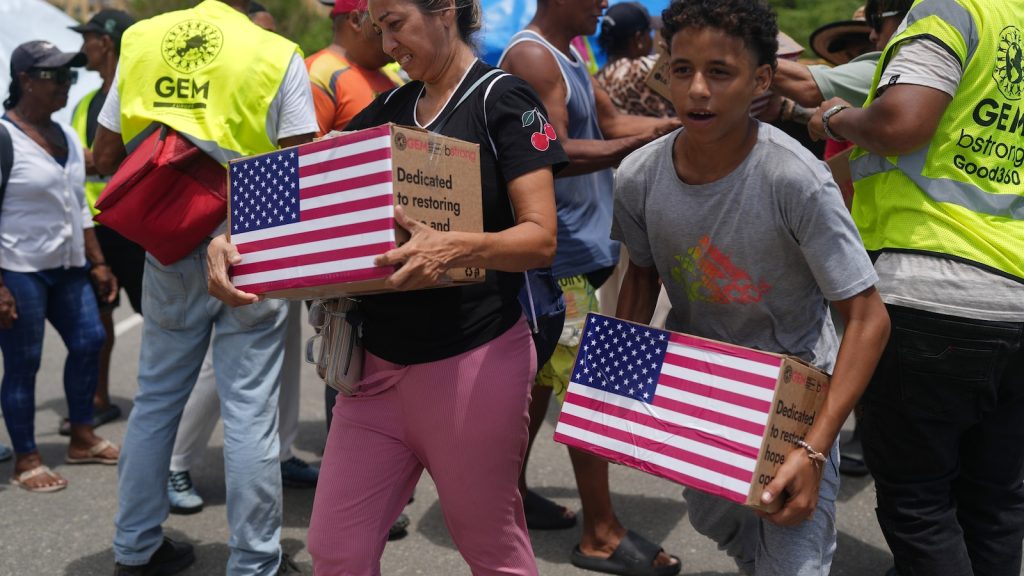
Some affected communities had potable water service only once every month or two even before the earthquakes. In Maiquetía, people lined up to receive boxes containing food, water, and hygiene kits, including soap, toothbrushes, and body cleansing towelettes. The Norwegian Refugee Council’s regional head of advocacy for Latin America, Beatriz Ochoa, emphasized the need for improved conditions to prevent the spread of diseases in densely populated settings under high temperatures and seasonal rains.
‘I have seen families doing everything they can to maintain dignity in extremely difficult conditions,’ Ochoa said. ‘In one temporary shelter, I saw families organizing themselves to keep common spaces clean, including through makeshift toilets and basic waste management arrangements. Their determination is remarkable, but families should not have to shoulder this burden alone.’
The situation is particularly dire in La Guaira, where families are forced to use the beach as a makeshift toilet and shower area. Excrement now dots parts of the once-crowded Caribbean beaches, and the smell of human waste fills the air. Many families are living in fear of contracting diseases, and the lack of sanitation services is exacerbating the crisis.
As the situation continues to unfold, humanitarian organizations and government officials are working to provide aid and support to affected communities. However, much more needs to be done to address the scale of the crisis and provide basic necessities like clean water and sanitation services to those in need.
In the meantime, families like Juliani Herrera’s are left to rely on makeshift solutions and wait for aid to arrive. ‘We have to be strong and find ways to cope with the situation,’ Herrera said. ‘But it’s not easy, and we need help to get through this.’
The situation in Venezuela is a stark reminder of the importance of investing in disaster preparedness and response measures. As the country continues to grapple with the aftermath of the earthquakes, it is essential to prioritize the needs of affected communities and provide them with the support they require to rebuild and recover.
Humanitarian organizations and government officials must work together to address the scale of the crisis and provide basic necessities like clean water and sanitation services to those in need. Only through collective action and a commitment to supporting affected communities can we hope to mitigate the impact of this disaster and prevent further suffering.