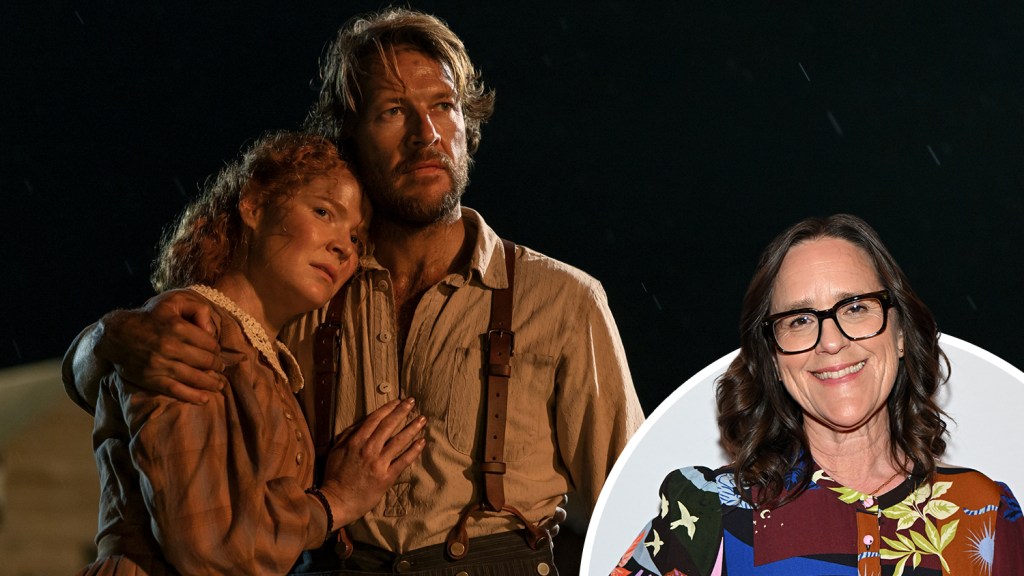
Season 1 of Netflix’s Little House on the Prairie: A Journey of Self-Discovery and Growth
Season 1 of Netflix’s Little House on the Prairie reimagining had no shortage of obstacles for the Ingalls family, and Season 2 will present its own challenges as those who’ve read the books know.
The first season of the TV series adaptation follows the events of Laura Ingalls Wilder’s book of the same name, tracing her family’s journey to Independence, Kansas, and ultimate decision to move on from the small town to better pastures in Minnesota.
According to showrunner Rebecca Sonnenshine, the main takeaway from Season 1 was that mistakes were made, and Charles acknowledging those mistakes is important. A lot of it was about Laura realizing that her father is not perfect and makes mistakes, taking him off his pedestal and seeing him as a human being, which all kids eventually come to do.
The thing they take away from their time, even though they have failed at hanging on to their homestead in Kansas, is that, in the process, they started to discover who they really are and who they wanted to be, and that this life they had chosen, while very difficult and uncertain, was something that made them into people they wanted to be.
The Ingalls Family’s Journey of Self-Discovery and Growth
Throughout the series, the Ingalls family faces various challenges, including a prairie fire, wolves, and a journey down unpredictable river chutes. However, despite these obstacles, they continue to learn and grow, discovering new things about themselves and the world around them.
Just as Mary and Laura are navigating society and trying to make friends in the small town, their parents share similar situations in evaluating residents of Independence. And if Romanzy and Edith Jones, daughters of Eli and Gemma Jones, seemed like nemeses, just wait for Nellie Oleson in Season 2.
‘I guess their kids were a little bit Nellie Oleson in a way, although they weren’t mean in the same way, they’re just different mean kids,’ Sonnenshine said. ‘With Gemma, we really talked a lot about how women get things done, and so she’s one of these people who — she’s a little bit of a viper, but she’s also a person who gets things done.’
Gemma is a very snobby person who is all about the right person, finding the right person to lead the church or finding the right person to be a part of the women’s society. However, according to Sonnenshine, Caroline changes Gemma by the end of the season, making her say, ‘We’re all growing in the same direction, so [Gemma] kind of makes an arc.’
The Railroad Grift and the Osage’s Departure/Removal
Throughout the series, the question is asked of who the land up for grabs in Kansas really belongs to, creating tension between the Osage Native Americans who already lived there and men and their families looking for better lives. The main instigator of the debate turns out to be Eli James, whose empty promises for monetary gain end up sending parts of both parties away from Independence after it’s revealed that the government would want money from landowners after the removal of the Native Americans.
‘Eli is there to represent the forces of capitalism, the forces of boosterism. He is doing some good things, he’s doing a lot of bad things. He’s a bit of a charming character who’s a real proponent of boosterism and has a very confident and bombastic speaking style, and who seems like he’s everyone’s friend, and yet has ulterior motives,’ Sonnenshine said.
Eli relied on many posters, like the one Pa saw and kept as motivation to build his family a new home, to incentivize settlers to provide enough reason for the government to get involved in Independence so that he could eventually benefit from building a railroad connecting the town to other cities.
‘Villains are complicated, and people are complicated. Villains don’t see themselves as villains. He sees himself as trying to create this new thing in America,’ she added.
The Osage’s departure/ removal is a significant event in the series, and it is handled in a way that is different from Wilder’s book. According to Sonnenshine, the treaty signing is essentially drawing upon historical fact, and the show is trying to explore the real story to the best they could on the scale that they could produce it.
From everything I’ve read about Laura Ingalls Wilder, she did try to figure out all these things, but they just didn’t have the space to do it in the book,’ Sonnenshine said.
The showrunner also spoke of Gemma’s instinct to hoard quinine during the fever & ague episode as one that reflects modern-day pandemic times. She wanted to balance the good intent with ingrained social rules in Gemma’s character.
‘There are those people, who also hold prejudices and biases, and it’s these two things you have to hold in your hand. We talked a lot about these women, who are really good at some things, and they make good things happen, but they also are not always nice people,’ she added.
Or they hold these views that would [make us] consider, ‘I don’t want to be friends with this person,’ and yet they do do a lot of good things. You have to learn how to navigate them, and that’s what Caroline is doing. She’s so alone out there.’
And just as the entire Ingalls family gets shaped by the people they meet in Independence, they make their mark on the residents they leave behind.