South Korea’s Supreme Court Delivers Final Verdict in Yoon Martial Law Case
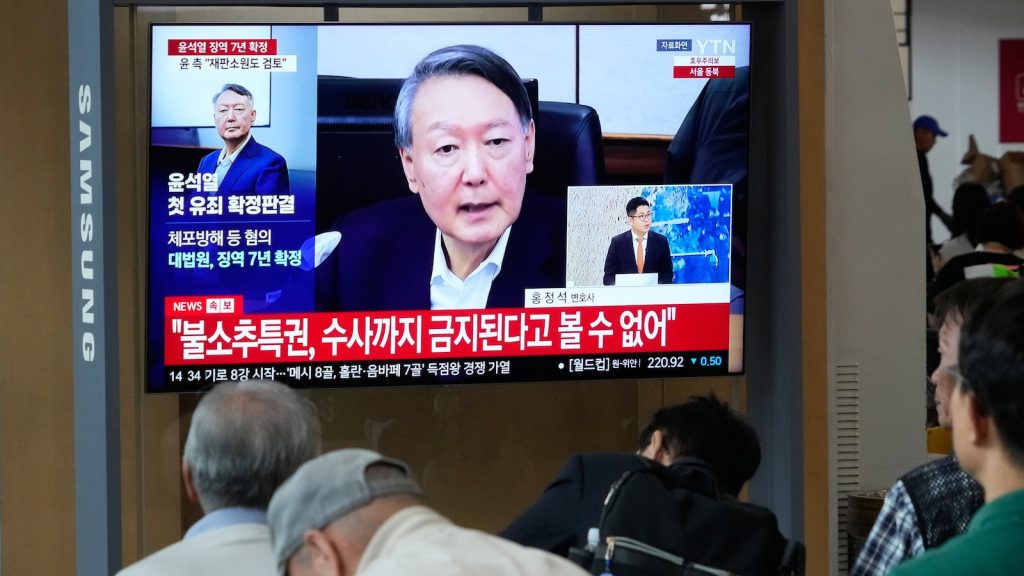
South Korea’s Supreme Court has delivered a decisive verdict in the high-profile case involving former President Yoon Suk Yeol’s imposition of martial law in 2024. In a long-awaited decision, the court has upheld a seven-year prison sentence for Yoon, marking the first case to reach the country’s highest court from several criminal trials related to his brief imposition of martial law.
Yoon’s martial law declaration, which lasted only hours, plunged South Korea into a political crisis, paralyzing politics and high-level diplomacy while rattling financial markets. The turmoil eased only after his liberal rival, Lee Jae Myung, won an early presidential election in June 2025.
The Supreme Court’s ruling aligns with the views of the Constitutional Court, which, in removing Yoon from office in April 2025, found that his martial law decree lacked legal grounds and failed to follow required procedures. In a statement, Yoon’s legal team expressed ‘deep regret’ over the Supreme Court’s ruling, saying the justices concluded a significant case without sufficient review.
Yoon’s lawyers have maintained that the former President called 11 Cabinet members to his office shortly before declaring martial law on late-night television on Dec. 3, 2024. However, several participants, including then-Prime Minister Han Duck-soo, have testified that Yoon unilaterally informed them of his decision rather than inviting deliberation. The Seoul High Court said Yoon also violated the rights of nine other Cabinet members by failing to call them to the meeting or notifying them too late.
Yoon remains in detention and did not attend the ruling, which is final. He is still standing trial in other cases, and he has appealed the life sentence he received for the most serious conviction against him, on the charge of rebellion. In addition to appealing his life sentence for rebellion, Yoon is appealing a 30-year prison term in a case accusing him of ordering drone flights in 2024 to deliberately heighten tensions with North Korea and create justifiable conditions for martial law at home.
The Seoul High Court found Yoon guilty of infringing on Cabinet members’ right to deliberate before he declared martial law, falsifying the official proclamation to cover up the lapse before later destroying the document, and deploying presidential security forces to illegally resist law enforcement efforts to arrest him weeks after his impeachment.
Yoon’s brief martial law declaration was met with swift opposition from lawmakers, who broke through a blockade of heavily armed soldiers and police at Seoul’s National Assembly and voted to repeal it, forcing Yoon’s Cabinet to lift the measure. The turmoil surrounding Yoon’s imposition of martial law has had far-reaching consequences for South Korea’s politics and economy, and the Supreme Court’s ruling is seen as a significant step towards closure.
The case has drawn widespread attention in South Korea, with many citizens following the developments closely. The Supreme Court’s decision is final, and Yoon will now face the consequences of his actions.
Key Points in the Yoon Martial Law Case
- Yoon’s martial law declaration lasted only hours.
- The Supreme Court has upheld a seven-year prison sentence for Yoon.
- Yoon’s lawyers have maintained that he called 11 Cabinet members to his office before declaring martial law.
- Several participants, including then-Prime Minister Han Duck-soo, have testified that Yoon unilaterally informed them of his decision rather than inviting deliberation.
- Yoon remains in detention and did not attend the ruling, which is final.
- He is still standing trial in other cases and has appealed the life sentence he received for the most serious conviction against him, on the charge of rebellion.
- Yoon is also appealing a 30-year prison term in a case accusing him of ordering drone flights in 2024 to deliberately heighten tensions with North Korea and create justifiable conditions for martial law at home.