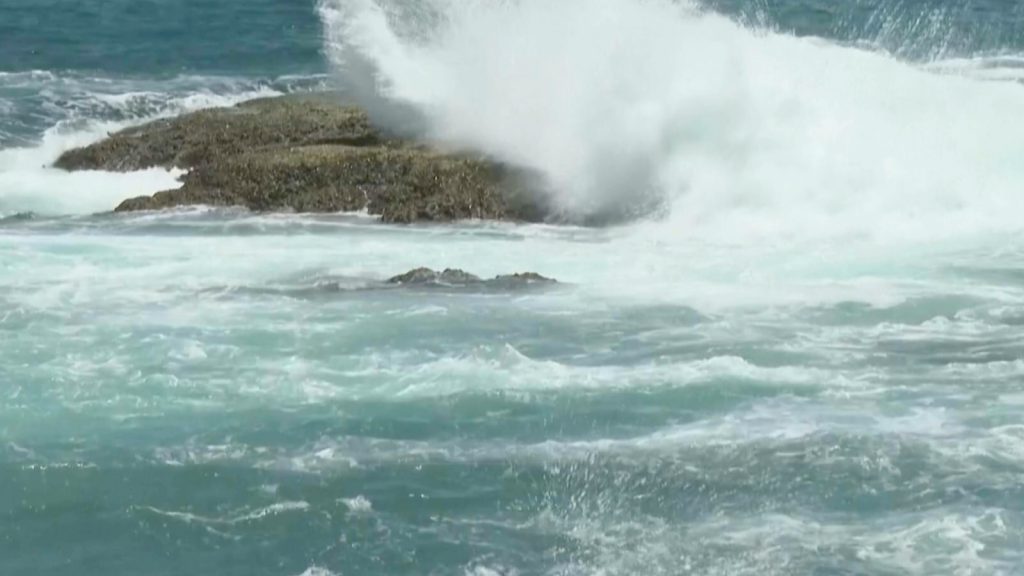
A powerful typhoon is barreling down on China’s east coast, the latest in a series of deadly storms that have already claimed 50 lives this week in two other parts of the country.
Typhoon Bavi: A Force to Be Reckoned With
Typhoon Bavi, with maximum sustained winds of 162 kilometers (101 miles) per hour, is currently heading towards China’s east coast. The storm was first expected to pass north of Taiwan, bringing heavy rains to the island of 23 million people from Friday night into Saturday.
Schools were closed in Taipei, the island’s capital, and fishing boats have been tied up close together in ports in northern Taiwan. Many flights to Japan, Hong Kong, and other destinations have been canceled through Saturday, though some were still scheduled, according to Taiwan’s Central News Agency.
The typhoon’s current northwest track would take it over some remote Japanese islands before passing to Taiwan’s north on Saturday. It is forecast to make landfall Saturday night south of Shanghai, near the border between Fujian and Zhejiang provinces.
Evacuations and Preparations Underway
More than 17,000 people have been evacuated in Zhejiang, and 170,000 rescue workers have been placed on standby, according to the official Xinhua News Agency. Fujian has suspended some ferry routes because of strong winds and rough seas and called for fishing boats to return to port.
Bavi has weakened from supertyphoon strength earlier this week, when it brought violent winds to Saipan and other U.S. territories in the Pacific. The storm’s current strength is still a cause for concern, however, and authorities are taking necessary precautions to ensure public safety.
Recent Storms Have Claimed Dozens of Lives
Just this week, a series of deadly storms has swept through China, claiming dozens of lives. In southern China, authorities announced that 39 people had died in flooding from Tropical Storm Maysak, which drenched parts of the Guangxi region for days with record rainfall.
The rains breached reservoirs, including the dramatic collapse of part of a dam in Hengzhou that inundated a wide area with fast-flowing muddy water. The floods stranded people on the second and higher floors of buildings for days, many without power, until rescuers could reach them.
Another 11 people died in central China when severe thunderstorms and tornadoes wreaked havoc in Hubei province on Monday night. Separately, a landslide killed 21 forestry workers in western China’s Gansu province on Tuesday in a disaster that was not storm-related.
Chronic illness surges in quake-hit Venezuela as humanitarian crisis builds, but this article will focus on the current situation in China.
Preparing for the Worst
As Typhoon Bavi approaches, authorities are taking every precaution to ensure public safety. Schools have been closed, flights have been canceled, and rescue workers are on standby, ready to respond to any situation that may arise.
Residents are being advised to stay indoors and avoid traveling unless absolutely necessary. The government has also set up emergency shelters and provided assistance to those in need.
While the situation is dire, authorities are hopeful that the storm will pass without causing widespread destruction. However, the potential for damage is still high, and residents are being urged to remain vigilant and take necessary precautions.