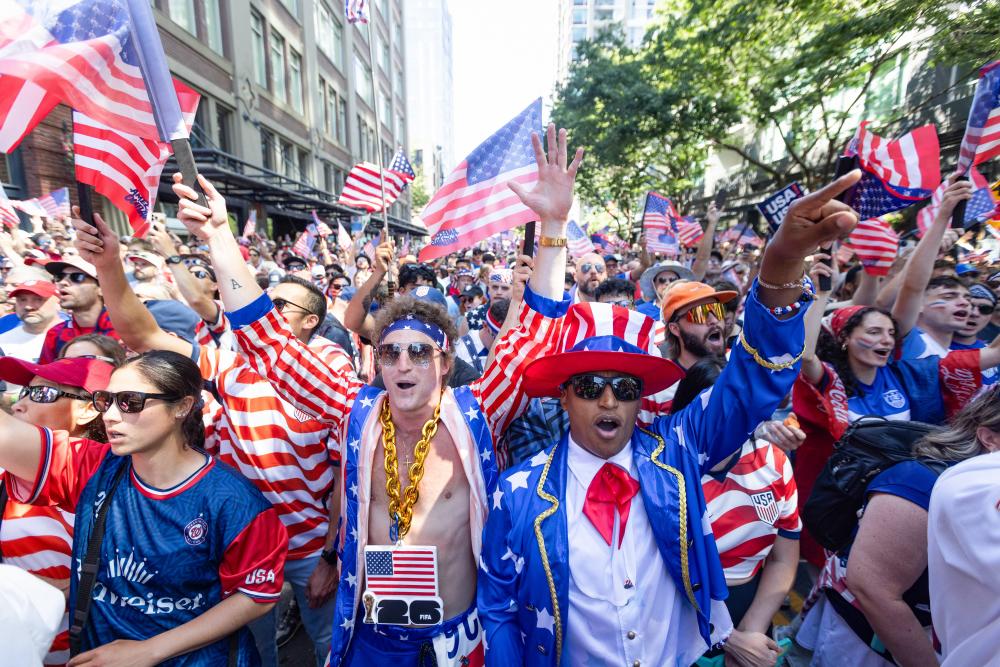
A Nation United in Love for the Beautiful Game
When the United States was awarded the hosting rights for the 2026 FIFA World Cup, many predicted a disaster. However, the tournament has turned out to be a resounding success, captivating the hearts of Americans and defying expectations.
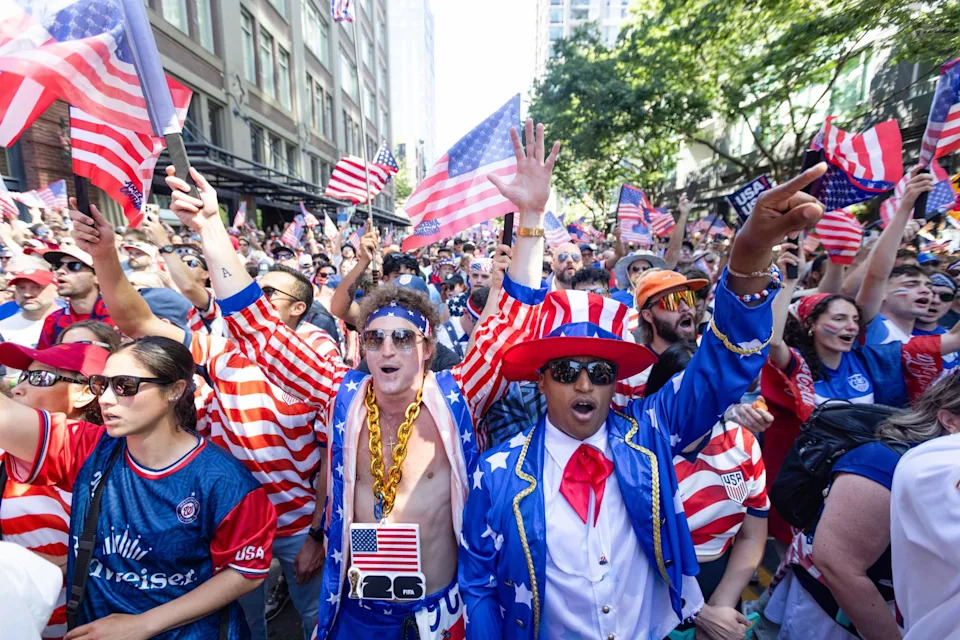
Source: s.yimg.com
The initial concerns centered around Donald Trump’s threats to invade Mexico and Canada, harsh travel restrictions, and high ticket prices. Additionally, the introduction of ‘hydration breaks’ during games sparked controversy, while the White House’s deportation policies targeted immigrant communities, where soccer has traditionally thrived.
Despite these challenges, the soccer started, and the world witnessed a phenomenon. American stadiums were filled with record-breaking crowds, with an average of 64,511 fans attending each game, 10,000 more than the 2022 tournament. Stadiums averaged a 99.7% occupancy rate, and FIFA sold 6.5 million tickets.
TV viewership in the US broke records, with the US men’s national team’s round-of-16 loss to Belgium drawing an average of 33 million viewers, peaking at 41 million in the final 15 minutes. This is higher than the viewership for the 2025 World Series and Game 5 of the NBA finals.
Viewers in the US weren’t just tuning in for US games; Sunday’s thriller between England and Mexico drew 21.7 million viewers on Fox and another 23.2 million on Telemundo. Fox saw a record-breaking average of 5 million viewers over the first 72 matches, with Telemundo averaging 4.6 million.
Alex Lawton, a 32-year-old watching the Spain-Belgium quarter-final in Brooklyn, noted that the World Cup has been a ‘brilliant reprieve and a unifying force’ that has brought people together from different walks of life and backgrounds.
Tangible Reasons Behind the Surge in Fandom
Soccer has long been growing in popularity in the US. The 1994 World Cup helped launch Major League Soccer, and the 1999 Women’s World Cup saw the US women’s national team win the tournament in dramatic fashion. The National Women’s Soccer League was launched in 2012, and the USWNT won the World Cup again in 2019.
US TV networks secured rights to broadcast the Premier League and La Liga, turning millions of Americans into diehard fans. The number of Americans who identified soccer as their favorite sport edged out baseball to become the country’s third-most popular game.
A World Cup Like No Other
The 2026 World Cup has been marked by remarkable Cinderella stories. Curaçao, a tiny Caribbean nation, scored its first-ever World Cup goal against Germany, while Cape Verde tied all its opponents in the group stage and advanced to the knockout round.
The tournament’s expanded format has allowed for more teams to participate, creating a more inclusive and exciting experience for fans. The world’s superstars have been on a tear, with France’s Kylian Mbappé and Argentina’s Lionel Messi tallying eight goals each, Norway’s Erling Haaland netting seven, and England’s Harry Kane putting home six.
The tournament’s goal average is three per game, the most since the 1958 World Cup, addressing the frequent American complaint that soccer doesn’t have enough scoring.
A Nation United in Joy and Multiculturalism
The World Cup has provided a stage for Americans to show the world that they are not their government. The tournament’s inherent internationalism has given Americans an outlet for joyous multiculturalism under attack by nationalism and isolationism.
Lawton noted that the World Cup has been a ‘brilliant reprieve’ that has brought people together from different walks of life and backgrounds. The tournament has created a sense of community and belonging, transcending borders and cultures.