Trilateral Chiefs of Defense Meeting Reinforces Commitment to Security Cooperation
The top military officers of South Korea, the United States, and Japan reaffirmed their commitment to closer security cooperation against North Korea’s nuclear and missile threats during talks in Washington, Seoul’s Joint Chiefs of Staff said Thursday.
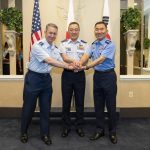
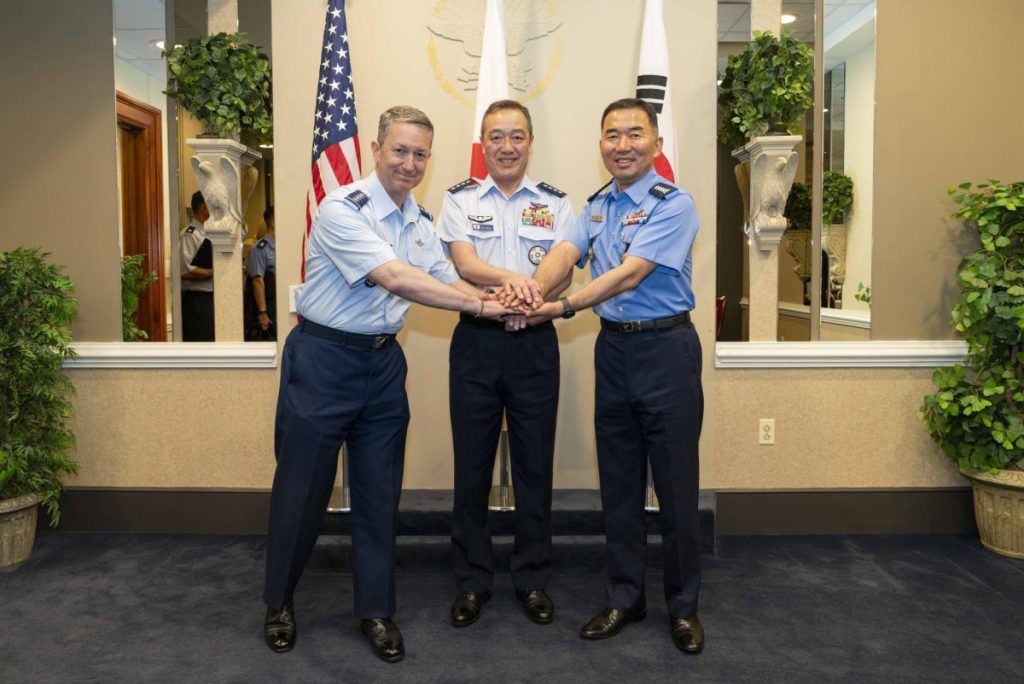
The 23rd Trilateral Chiefs of Defense meeting brought together South Korean Joint Chiefs of Staff Chairman Gen. Jin Yong-sung, U.S. Joint Chiefs Chairman Gen. Dan Caine, and Gen. Hiroaki Uchikura, chief of staff of Japan’s Joint Staff. The meeting was attended by U.S. Forces Korea commander Gen. Xavier Brunson, U.S. Forces Japan commander Lt. Gen. Stephen Jost, and U.S. Indo-Pacific Command deputy commander Lt. Gen. George Rowell.
The chiefs agreed to continue working toward the complete denuclearization of North Korea in accordance with U.N. Security Council resolutions and to maintain the momentum of trilateral cooperation, including through the annual multidomain Freedom Edge exercise, launched in 2024.
The three chiefs emphasized the importance of trilateral security cooperation in effectively responding to North Korea’s nuclear and missile threats, as well as various regional challenges and threats that could affect peace and stability on the Korean Peninsula, in the Indo-Pacific, and in other regions.
They also agreed on the need to deepen cooperation across multiple domains and to continue exploring ways to sustain trilateral security ties. Japan will host the next meeting in 2027.
In separate bilateral talks, Jin held discussions with Caine and Uchikura on the sidelines of the gathering. During the South Korea-U.S. meeting, Jin and Caine emphasized the importance of further strengthening the allies’ combined defense posture in response to North Korea’s continuing nuclear and missile threats and the changing security environment.
The two sides agreed to further develop their combined operational capabilities through a range of combined exercises and high-level military exchanges. The allies highlighted a large-scale logistics exercise conducted this week in South Korea involving thousands of troops, naval vessels, and aircraft.
The drill included the first use of a new South Korean over-the-shore system to receive cargo from U.S. ships when port facilities are unavailable. North Korea has repeatedly condemned allied exercises as rehearsals for invasion, while Seoul and Washington say the drills are defensive and intended to improve readiness and interoperability.
In his bilateral meeting with Uchikura, Jin said North Korea’s nuclear and missile threats posed a shared challenge to security on the Korean Peninsula and in the broader region. The South Korean and Japanese chiefs agreed to strengthen communication and intelligence sharing and expand exchanges between their respective military headquarters through senior-level contacts and working-level cooperation.