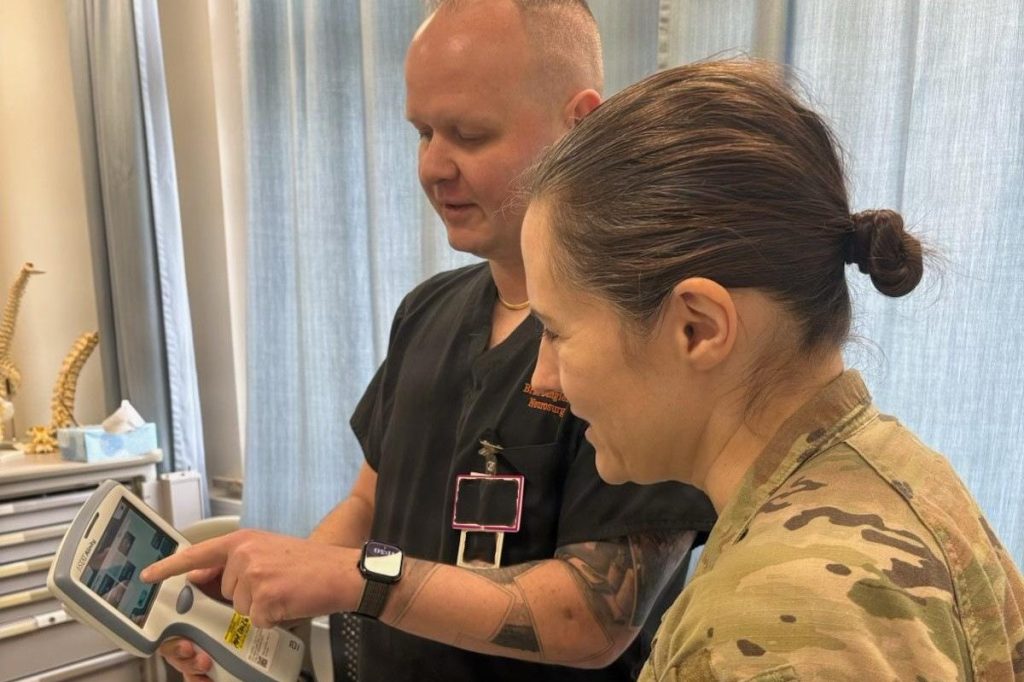
U.S. Army Medics in Europe Testing New Handheld Diagnostic Tool
U.S. Army medics in Europe are currently testing a new handheld diagnostic tool that can identify traumatic brain injuries in as little as 15 minutes. This innovative technology has the potential to revolutionize the way medics detect and treat such injuries quickly in the battlefield environment.
Objective Information for Accurate Diagnosis
Unlike traditional methods of assessing brain injury or concussion, which rely on subjective judgments based on questioning patients, the new i-STAT Alinity device measures unique biomarkers present in the blood of the injured. This allows for objective information and more accurate diagnosis.
The i-STAT Alinity Device: A Game-Changer in Traumatic Brain Injury Care
Lt. Col. Bradley Dengler, the neurosurgery consultant to the Army Surgeon General and director of the Military Traumatic Brain Injury Initiative at the Uniformed Services University, has hailed the development of the i-STAT Alinity as a game-changer in traumatic brain injury care.
According to Lt. Col. Dengler, this is probably the single most important advancement in traumatic brain injury care in the last 15 to 20 years. Historically, many of these injuries have gone undetected.
Clearance from the FDA and Integration into Army Units
Abbott Laboratories received clearance from the Food and Drug Administration to use the device with whole blood two years ago. The company claims that the i-STAT Alinity allows doctors to help assess patients with suspected concussion at the bedside and obtain ‘lab-quality’ results in 15 minutes.
With that approval, the Army is now integrating the devices into air defense forward units under the 10th Army Air and Missile Defense Command. These units were judged to be among the most likely to benefit from the devices because they often operate in far-flung locations, hours away from advanced medical facilities and sophisticated brain scanners.
Measuring Biomarkers for Accurate Diagnosis
The i-Stat device measures two biomarkers from the brain that may be released into the bloodstream indicating a possible brain injury: ubiquitin C-terminal hydrolase L1, or UCH-L1, and glial fibrillary acidic protein, or GFAP.
Dengler explained that the tests are extremely valuable because if the blood biomarkers are not elevated, there is a 99% chance that there is no bleeding in the brain. This is a significant improvement over the widely used Military Acute Concussion Evaluation, a 15-minute standardized cognitive assessment involving memory lists and concentration exercises.