NFL Players’ Push for Natural Grass Fields Hits Roadblock as League Disputes Injury Concerns
The debate over the safety of artificial turf versus natural grass has been a contentious issue in the NFL for years, with players and owners on opposite sides of the argument. The latest development in this ongoing saga comes as the NFL Players Association-sponsored movement for a full adoption of natural grass fields gains momentum, with many players expressing their preference for grass over turf.
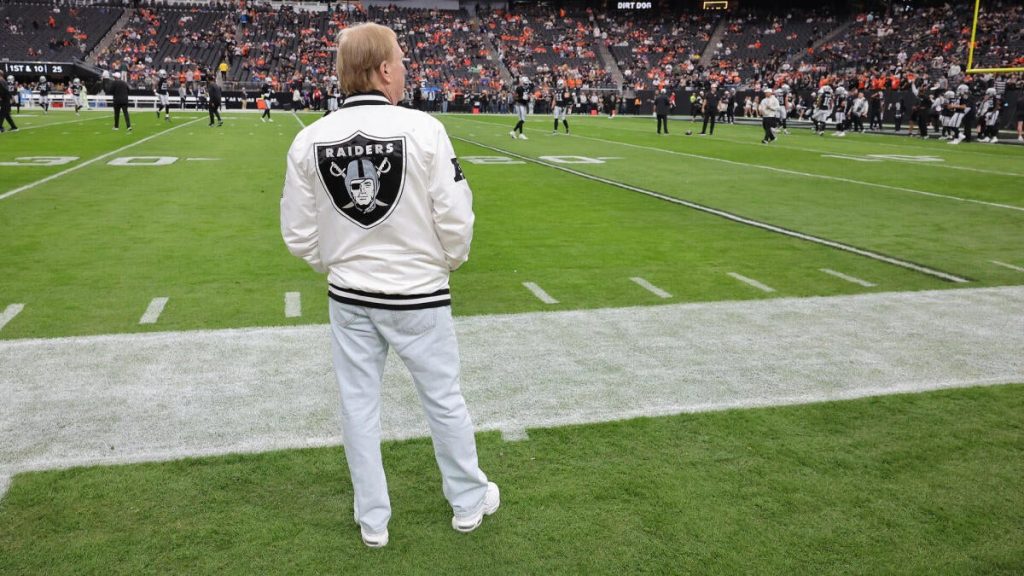
San Francisco 49ers tight end George Kittle recently estimated that 90% of players prefer to play on grass, citing the safety concerns associated with artificial turf. Kittle’s comments have sparked a renewed debate over the issue, with some owners speaking out in support of natural grass. Mark Davis, owner of the Las Vegas Raiders, has been a vocal advocate for grass fields, citing the safety and aesthetic benefits they offer.
‘There was no way I was going to build the stadium or anything else to play on artificial turf,’ Davis told the Las Vegas Review-Journal. ‘I just always felt that the safety issue, number one, and I grew up around football and the grass and mud and the smell of those uniforms after the game that you knew a football game was played. So, it was very important to me that we had grass.’
The safety concerns surrounding artificial turf are well-documented, with studies showing a higher rate of non-contact lower extremity injuries on turf compared to grass. In 2020, NFLPA executive director JC Tretter cited league injury data from 2012-18 that showed a 28% higher rate of non-contact lower extremity injuries on turf compared to grass. The data also highlighted that 32% more non-contact knee injuries and 69% more foot/ankle injuries occurred on turf during that seven-year span.
However, the NFL has pushed back on these findings, arguing that the data is cherry-picked and that advances in turf technology have improved the surface’s playability. NFL field director Nick Pappas made this argument on The Dan Patrick Show, stating that ‘when we look at the injury rate and the severity of injury… it’s a split, grass vs turf.’
But the NFLPA has countered this argument, pointing out that the decrease in turf injuries and severity in 2021 was an outlier. Non-contact injuries occurred at a noticeably higher rate on turf in each of the nine prior years, and that rate rebounded again the year after.
The league’s position is clear: it does not want to ditch artificial turf. The surface requires less maintenance and offers stadiums the ability to host a variety of non-football events with greater ease and at a lower cost. Instead of swapping out the remaining 15 stadiums’ fields, the league would prefer to push for innovation that makes turf more comfortable.
‘From a surface hardness perspective, they’re all within the same compliance,’ Pappas said. ‘What we’re now chasing is how do we get that amount of energy lost to the surface or amount of energy gained back to the surface to feel more like grass? That’s the target margin now, unless for some reason we can determine that there is an injury correlation to it. But that’s what we hear the players say: They want it to feel more like grass. So that’s what we’re chasing now.’
The debate over the safety of artificial turf versus natural grass is likely to continue, with players and owners on opposite sides of the argument. The NFL Players Association-sponsored movement for a full adoption of natural grass fields is gaining momentum, but the league is pushing back, citing the benefits of turf. This could become a sticking point in negotiations during the next collective bargaining cycle, with the current CBA expiring after the 2030 season.