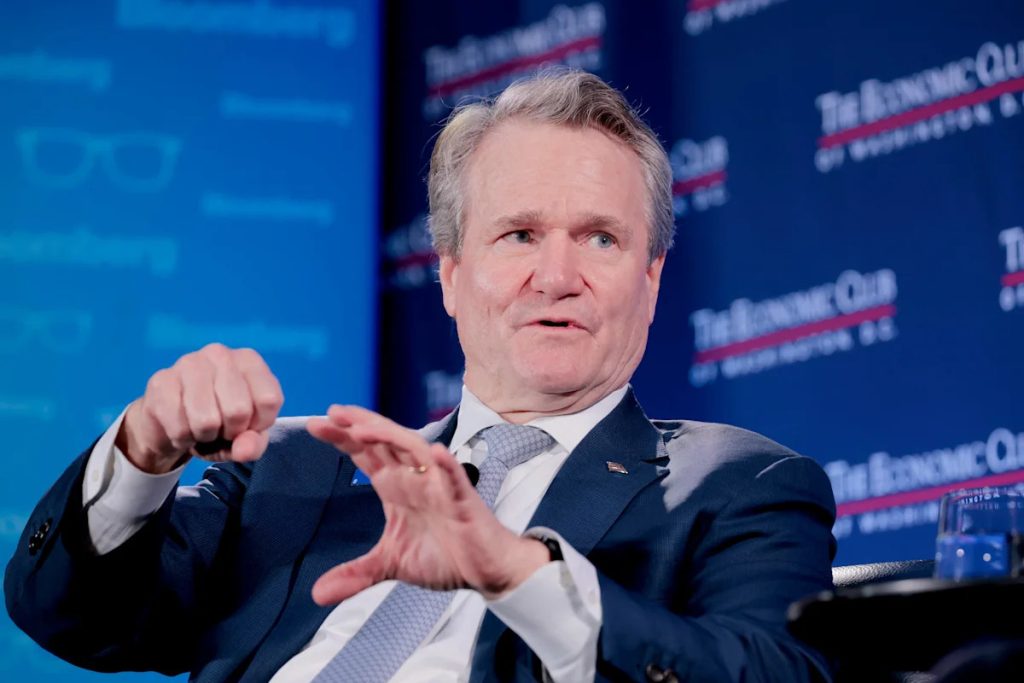
Bank of America CEO Warns of Potential Inflation Crisis
In a recent interview with CBS News’ ‘Face the Nation,’ Bank of America CEO Brian Moynihan expressed concern over the potential for inflation to outlast the economic recovery. While consumer spending and wage gains remain strong, Moynihan pointed out that food, housing, and fuel costs continue to exert pressure on households, with the strongest spending growth coming from consumers with the greatest financial cushions.
Moynihan’s warning highlights the risks of a prolonged period of inflation, which could have far-reaching consequences for the economy. He noted that businesses are worried about the cost of goods coming through the pipeline, driven by higher energy costs, which will feed into plastics, materials, manufacturing, and transportation. This delayed pass-through has complicated the economic outlook, according to Moynihan.
The Bank of America CEO emphasized that inflation is likely to remain sticky, with prices at the pump only part of the problem. He also pointed out that core inflation, which excludes volatile food and energy prices, is still high and may not drop as quickly as expected. This could lead to a steep reversal in the bank’s interest-rate outlook, with Moynihan suggesting that the Federal Reserve may need to raise rates to contain consistent inflation.
Moynihan’s forecast, which suggests that inflation will stay higher through 2027 and 2028, has led to a significant shift in the bank’s interest-rate outlook. Six months ago, the team expected the Federal Reserve to cut rates, but now they believe that the Fed will raise rates to combat inflation. This change in outlook has significant implications for the economy, as it could lead to higher interest rates and a more restrictive monetary policy.
The potential consequences of Moynihan’s forecast are far-reaching and could have significant impacts on household budgets and the broader economy. Higher interest rates could lead to higher borrowing costs, reduced consumer spending, and a slower pace of economic growth. The delayed pass-through of higher energy costs could also lead to a prolonged period of inflation, which would be a major challenge for policymakers.
Moynihan’s warning highlights the need for policymakers to take a proactive approach to managing inflation and ensuring that the economic recovery is sustainable. This could involve a combination of monetary and fiscal policy tools, including interest-rate hikes and targeted fiscal support, to help mitigate the impact of inflation on households and businesses.
The potential for a prolonged period of inflation is a major concern for policymakers and households alike. As Moynihan noted, the economic recovery is not yet complete, and the risks of a prolonged period of inflation are still present. To mitigate these risks, policymakers must take a proactive approach to managing inflation and ensuring that the economic recovery is sustainable.
Implications of Moynihan’s Forecast
Moynihan’s forecast has significant implications for the economy and households. Higher interest rates could lead to higher borrowing costs, reduced consumer spending, and a slower pace of economic growth. The delayed pass-through of higher energy costs could also lead to a prolonged period of inflation, which would be a major challenge for policymakers.
Moynihan’s warning highlights the need for policymakers to take a proactive approach to managing inflation and ensuring that the economic recovery is sustainable. This could involve a combination of monetary and fiscal policy tools, including interest-rate hikes and targeted fiscal support, to help mitigate the impact of inflation on households and businesses.
As Moynihan noted, the economic recovery is not yet complete, and the risks of a prolonged period of inflation are still present. To mitigate these risks, policymakers must take a proactive approach to managing inflation and ensuring that the economic recovery is sustainable.
Key Takeaways
Moynihan’s forecast suggests that inflation will stay higher through 2027 and 2028, leading to a significant shift in the bank’s interest-rate outlook. The potential consequences of this forecast are far-reaching and could have significant impacts on household budgets and the broader economy.
The delayed pass-through of higher energy costs could lead to a prolonged period of inflation, which would be a major challenge for policymakers. To mitigate these risks, policymakers must take a proactive approach to managing inflation and ensuring that the economic recovery is sustainable.
Moynihan’s warning highlights the need for policymakers to take a proactive approach to managing inflation and ensuring that the economic recovery is sustainable. This could involve a combination of monetary and fiscal policy tools, including interest-rate hikes and targeted fiscal support, to help mitigate the impact of inflation on households and businesses.