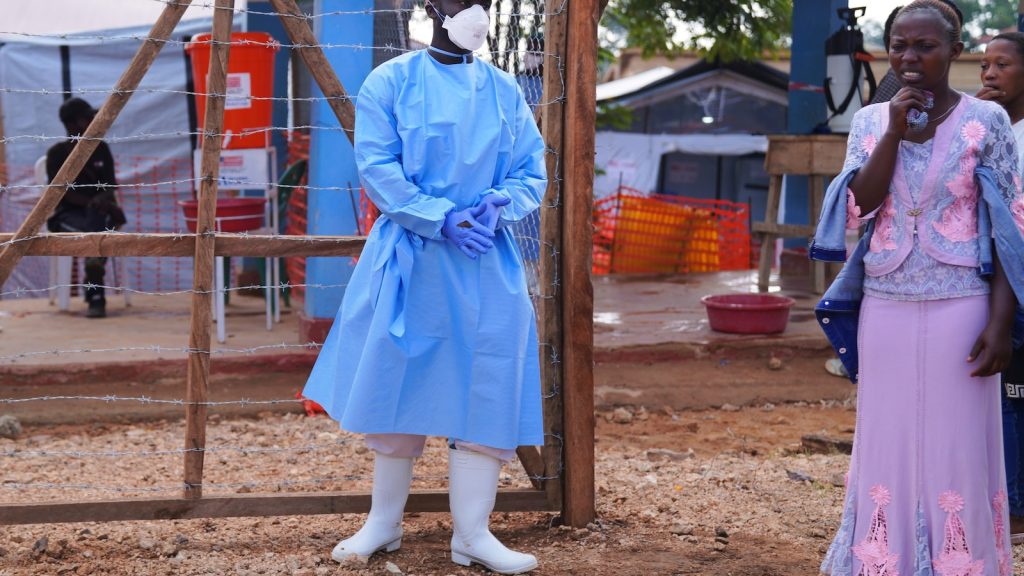
Congo’s Ebola Outbreak Continues to Worsen
The Democratic Republic of Congo is grappling with its worst Ebola outbreak on record, with the number of confirmed cases reaching 2,973, including 1,309 deaths, according to the latest data from the Ministry of Health.
The outbreak, which began on May 15, has spread rapidly in the eastern province of Ituri, accounting for nearly 90% of the confirmed cases. The World Health Organization (WHO) has reported that more than 100 healthcare workers have been infected since the start of the outbreak, highlighting the risks faced by medical staff in the region.
Health workers at the Elikya Ebola Treatment Center in Bunia, Ituri province, went on strike on Saturday over payment issues, disrupting patient care and treatment. The strike was sparked by unpaid bonuses, which have left many healthcare workers struggling to make ends meet. In a statement, the staff said they had unanimously voted to strike until ‘concrete solutions’ were found to resolve the two-month-old arrears.
The situation at the Elikya treatment center is particularly concerning, as it is one of the main facilities providing care to patients in the region. The center’s activities were largely paralyzed after doctors, nurses, and security staff stopped work. About a hundred health workers protested outside the treatment center, calling on the authorities to settle the arrears and resume their work.
The WHO has acknowledged the challenges faced by healthcare workers in the region, including the lack of approved vaccines or treatments for the Bundibugyo virus, which is responsible for the current outbreak. The organization has also highlighted the need for increased funding to support the response efforts, which have been hampered by attacks on health centers, ongoing conflict in eastern Congo, and mistrust among local communities.
Despite these challenges, the WHO remains optimistic about the prospects for controlling the outbreak. The organization has noted that the global risk of the outbreak spreading outside Central Africa is low, citing the fact that Ebola spreads through direct contact with the bodily fluids of an infected person rather than through the air.
Efforts to contain the outbreak are ongoing, with the WHO and other international partners working closely with the Congolese authorities to support the response. The situation remains critical, however, and the international community must continue to provide support to help bring an end to the outbreak.
A key challenge in containing the outbreak is the lack of approved treatments or vaccines for the Bundibugyo virus. Unlike the more common Zaire virus, for which there is a vaccine and which was responsible for most of Congo’s past 16 outbreaks of the disease, the Bundibugyo virus requires alternative approaches to treatment. Researchers are working to develop new treatments and vaccines, but the process is slow and requires significant investment.
Enrollment in a highly anticipated study of two possible Ebola treatments recently started in Ituri, offering hope for a breakthrough in the fight against the disease.