
Reviewed by Kaja Perina
Source: cdn2.psychologytoday.com
What Is Addiction?
For years, I uttered the same line to myself with a tone that resembled self-hatred every time I faced another negative consequence from my drinking: ‘You did this to yourself.’
Whether it was missing work after a night of heavy drinking, an ultimatum from a loved one, or a bad fight with my boyfriend after the second bottle of wine, the same line would echo in my head as I sat with the consequences.
So when I walked out of Zuckerberg San Francisco General Hospital with a diagnosis of Alcohol Use Disorder in my hand, for a moment, I felt relieved. Finally, there was an explanation for my behavior—it was not all my fault.
But the relief only lasted a moment before another feeling crept in: powerlessness.
When it was all my fault, at least I could do something about it. But if it was not my fault, then did it also mean that there was nothing I could do about it?
Two Incomplete Stories About Addiction
We have been told different stories about addiction. Once upon a time, there was the story of blame. We believed that addiction was about weak character, moral failure, and ultimately, bad choices. Over time, our understanding evolved, and we began to call it a disease.
The new narrative offered a much more compassionate view of those who struggle; however, it also came with an unintended implication: it could undermine a person’s sense of agency and dampen hope for healing beyond the diagnosis. Addiction became a condition that could be managed but not cured, and an identity that, while often adopted with the intention of reducing shame, unmistakably came to define the person who carried the diagnosis.
The old story assumed that a person had complete control over their choices, while the new story suggested that they had none at all. For a long time, like many people in my position, I felt that I had to choose between compassion and agency.
A Third Path: Event + Response = Outcome
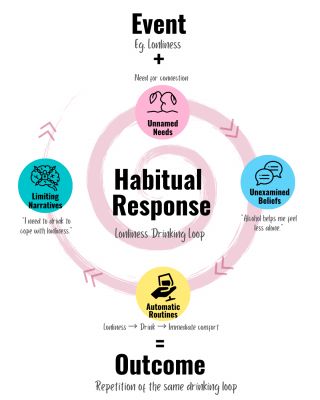
I encountered this formula while I was undergoing my training to become a therapist: Event + Response = Outcome.
The formula states that the life we live today is the outcome of what happens in our lives (events) plus how we respond to those events (responses). It points out that while we can’t change the events, we have the power to change our responses and, therefore, the outcome.
At first glance, this almost seemed like a reiteration of the old ‘You did this to yourself’ narrative. But my therapist training allowed me to see something that was left unspoken in the formula: before our responses began shaping our lives, they were first shaped by our life experiences.
None of us are born with healthy and effective ways to respond to the pain and difficulties that are inherent in life. We learn them through loving, well-adjusted adults who model them for us. And when those figures are unavailable or absent during our years of development, we adapt whatever responses are available to help us cope. For me, one of those responses was drinking.
When we fully grasp that our responses are first shaped by our experiences and our environment, it becomes possible to shift away from blaming ourselves for everything that has happened in our lives.
But here’s the equally important part: while many of our current responses were developed outside our awareness—and often out of necessity—once we become aware of them, we have the opportunity to develop new capacities and choose different responses.
If drinking became one of the responses we learned to life’s challenges, then healing is not simply about removing alcohol. It is about expanding our capacity to respond differently.
In other words, while our past explains our present, it doesn’t have to dictate our future.
When Drinking Becomes Automatic
For most seasoned drinkers, drinking eventually becomes a default response for coping with pain, discomfort, and life’s challenges. From stress to unwanted feelings, from boredom to intimidating tasks, it often becomes the go-to response before our thinking brain can fully engage.
When drinking becomes our automatic response, it often stops being a conscious choice every time we pick up a drink, becoming more of a default strategy for responding to life. I call this Automated Routines, one of the invisible forces that keeps people stuck in what I came to call the Invisible Drinking Loop.
To break a well-practiced drinking routine takes more than just removing alcohol, and it isn’t as simple as replacing one behavior with another. It requires expanding our capacity to respond to life’s challenges emotionally, mentally, and behaviorally. I call this process of developing new ways to respond Skill Expansion. It’s one of the Four Pillars of outgrowing an outdated drinking pattern and rebuilding self-trust beyond alcohol.
The First Step Toward Change
Before we can expand our responses, we first have to become aware of the invisible forces shaping our current ones. If our drinking is an automatic response rather than simply a bad choice, then trying to change it without understanding what’s driving it is like treating the symptom while ignoring the cause.
Only when we recognize the invisible forces that have been shaping our current drinking pattern can we develop new responses to life’s challenges instead of repeating our old drinking patterns. Awareness is the first step toward creating lasting change and reclaiming our agency.