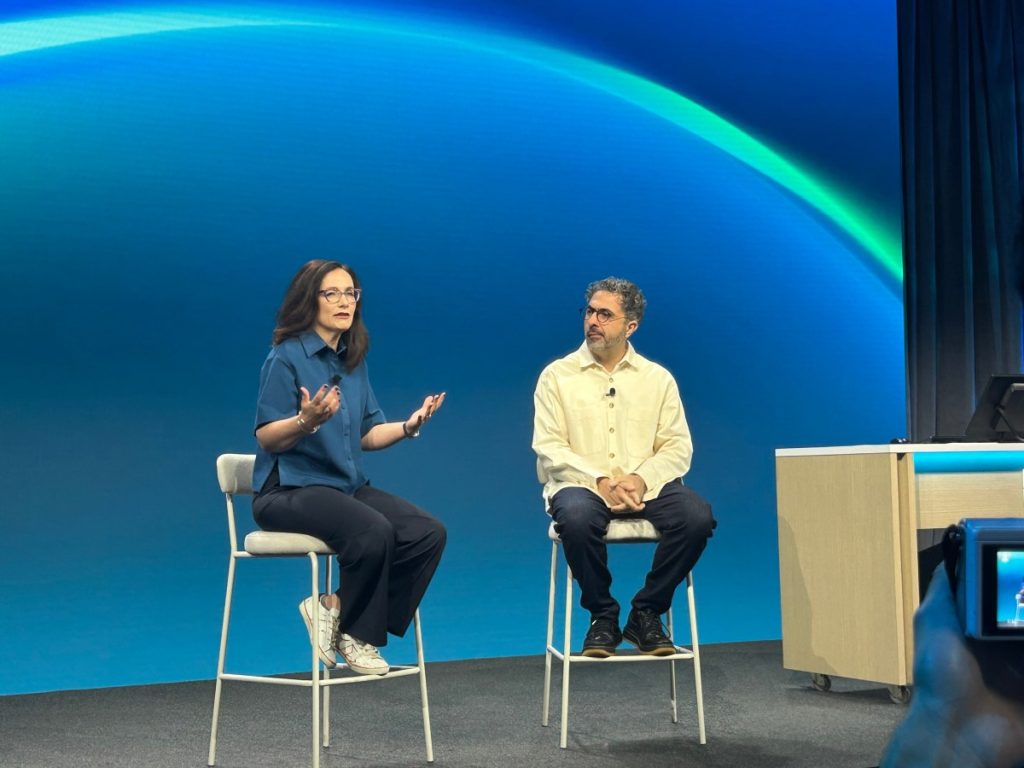
Microsoft has made a significant move in the cybersecurity landscape by launching its first cybersecurity-specialized model, MAI-Cyber-1-Flash, alongside a new AI-powered security platform called Perception. The company has been working on this project for some time and has made significant strides in developing a more powerful and cost-effective model compared to its competitors.
MAI-Cyber-1-Flash is designed to find challenging vulnerabilities in complex codebases and is built to animate MDASH, Microsoft’s harness dedicated to software vulnerability identification and remediation. According to Mustafa Suleyman, the co-founder of DeepMind and current CEO of Microsoft AI, the model is significantly more powerful and cost-effective than its competitors, as demonstrated by its performance on the established AI cybersecurity benchmark, Cyber Gym.
Mustafa Suleyman proudly announced the results of their model, stating, ‘We have MAI-1 Cyber Flash bound with GPT 5.4 inside of the MDASH harness, which beats out Gemini, GPT 5.5 Cyber, GPT 5.6 Sol, and Mythos 5 on Cyber Gym, which is the primary benchmark that we all use.’ He emphasized that this achievement is a significant milestone for Microsoft and its efforts in the cybersecurity space.
The new security platform, Perception, is designed to deploy teams of agents to assist with and automate various security workflows, including identifying and remediating bugs. This platform can also integrate with MDASH, making it a powerful tool for corporate defenders. Hayete Gallot, Microsoft’s vice president for security, described Perception as a way for enterprise defenders to ‘defend against AI with AI at the scale and speed that the attackers have.’ This highlights the growing importance of AI in cybersecurity and the need for companies to develop more sophisticated solutions to stay ahead of potential threats.
Perception uses agentic red teams, blue teams, and green teams to provide a comprehensive security solution. The red teams can provide detailed simulations of potential attacks, providing context about potential threat actors and the likely vulnerabilities that they might exploit. The blue teams are dedicated to detecting and triaging existing bugs, while the green teams take corrective actions against those bugs. This approach enables Perception to provide a more proactive and efficient security solution compared to traditional methods.
According to Dave Weston, the lead engineer for Perception, the platform is a massive efficiency upgrade for corporate defenders. ‘We’ve gone from this taking hours and hours of manual work from multiple specialized folks across the security organization — appsec hunters, remediation engineers, you name it — and in minutes, we have a fix for all of this. Not only do we discover the issues and prioritize them, but we have detection, posture fixing, and even a code fix,’ he explained. This highlights the potential of Perception to revolutionize the way companies approach cybersecurity and improve their overall security posture.
Microsoft’s new security tools will be available in preview on November 3 and will enter an increasingly crowded field of AI cybersecurity solutions. Anthropic has launched its own security platform, Mythos, and OpenAI has released its security solution through a program called Daybreak. This highlights the growing competition in the cybersecurity space and the need for companies to develop more sophisticated solutions to stay ahead of potential threats.
In conclusion, Microsoft’s launch of MAI-Cyber-1-Flash and Perception is a significant development in the cybersecurity landscape. The company’s efforts to develop more powerful and cost-effective models and platforms are likely to have a significant impact on the industry and provide a more efficient and proactive security solution for corporate defenders.