U.S. and Saudi Strikes Put Iraq’s Government in a Delicate Position
Beirut, Lebanon – The recent strikes launched by the U.S. and Saudi Arabia against Iran-allied fighters in Iraq have put Iraq’s government in a precarious situation. This is not the first time Iraq has walked a tightrope between Washington and Tehran, but the balancing act has grown increasingly fraught since the U.S. and Israel went to war with Iran in February.
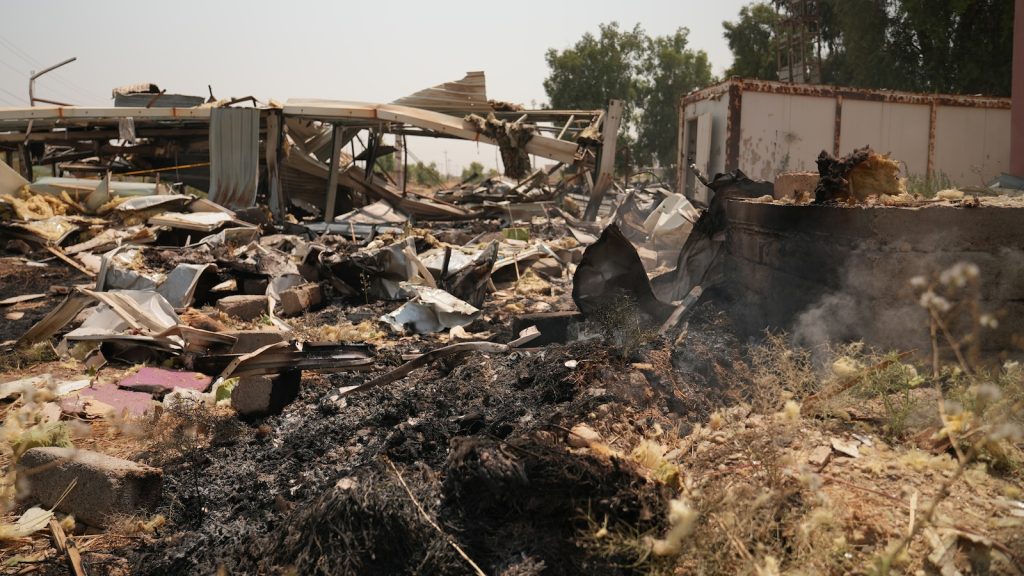
Saudi Arabia accused Iraqi armed groups of using drones to attack its oil facilities, prompting retaliatory strikes in Iraq that targeted bases of the Popular Mobilization Forces (PMF), a collection of armed groups close to Iran that are officially part of Iraq’s security forces but often operate outside of state control. The PMF has also attacked U.S. forces who are in Iraq at the invitation of the government.
The Iraqi government has given non-state armed groups until the end of September to disarm, but some of the most powerful factions, particularly those closest to Iran, have stated they have no intention of doing so. This stance has put the new Prime Minister, Ali al-Zaidi, in a difficult position. The U.S. has been effusive in its praise of al-Zaidi, but the Iraqi leader is likely to face mounting U.S. pressure to rein in the PMF, and confronting them directly could lead to internal unrest.
The PMF is a coalition of primarily Shiite, Iran-backed armed groups that joined the fight against the Islamic State group after it seized large sections of Iraq in 2014. Some of these groups have roots in the Shiite insurgency that erupted after the 2003 invasion. During the war against IS, the PMF were allies of convenience with a U.S.-led international coalition battling the Sunni extremists. In 2016, Iraq designated the PMF as an ‘independent military formation’ within the armed forces, but many of the factions remain largely autonomous.
Lahib Higel, an expert at the International Crisis Group, notes that despite officially reporting to the Iraqi military command, most of the PMF brigades ‘have kind of retained the same command structure as they had when they were their individual groups.’ Since the U.S. and Israel attacked Iran on February 28, Iraqi militias have launched regular attacks on U.S. military bases and diplomatic facilities as well as other sites, including energy infrastructure.
The Iraqi armed groups have denied any role in the attacks, with the Islamic Resistance in Iraq, an umbrella group of Iran-backed armed factions, describing the Saudi claims as ‘fabrications’ and an ‘attempt to justify their inability to respond to the painful Yemeni strikes that have targeted the heart of their infrastructure.’ The situation remains volatile, with the U.S. and Saudi Arabia continuing to exert pressure on Iraq to rein in the PMF.
The Iraqi National Security Council condemned the U.S.-Saudi strikes, saying they had killed and injured ‘a number of innocent people’ and undermined the Iraqi state. The council stated that the strikes came while the Iraqi government was actively investigating and trying to address the Saudi and American concerns. The PMF said the strikes killed at least 20 of its members and wounded 32. The situation is further complicated by the fact that the PMF is seen by some as a necessary force in the fight against terrorism, but by others as a threat to the stability of the country.
The new Prime Minister, Ali al-Zaidi, has vowed to disarm non-state groups, saying they will have no justification to retain their weapons after September 30, the deadline for U.S. troops stationed in Iraq to complete their withdrawal. However, the disarmament process is likely to be a long and difficult one, with some groups refusing to surrender their arms. The situation in Iraq remains precarious, with the government caught in the middle of a complex web of alliances and rivalries.
As Lahib Higel noted, ‘everyone knows that this is a process that is going to take months if not years.’ The Iraqi government faces a daunting task in trying to balance its relationships with both the U.S. and Iran, while also addressing the concerns of its own people. The situation in Iraq is a stark reminder of the complexities and challenges of the Middle East, where rivalries and alliances are constantly shifting.