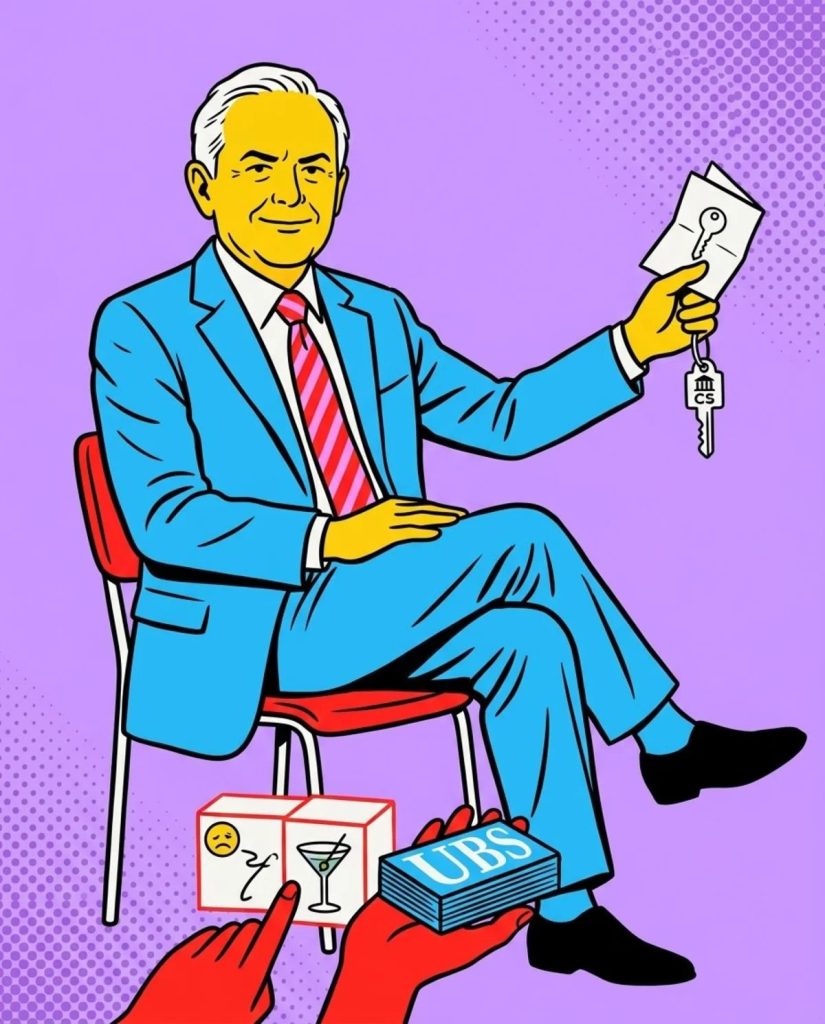
UBS Posts Cleanest Quarter Yet Since Absorbing Credit Suisse
UBS has reported its cleanest quarter yet since absorbing Credit Suisse, with the bank’s second-quarter net profit reaching $2.8 billion, comfortably ahead of the roughly $2.39 billion analysts expected. Underlying pretax profit jumped 70% to $3.89 billion, revenue rose 13% year over year to $13.7 billion.
Wealth Management and Investment Banking Drive Growth
Wealth management and investment banking did the heavy lifting for UBS, with global wealth management pulling in $36 billion of net new assets. The investment bank rode buoyant markets and active trading to a 26% revenue jump.
UBS also announced a new $3 billion buyback, to wrap by mid-2027, with at least $1 billion of that repurchased in just the next three months. Credit Suisse integration is on track to be substantially done by the end of 2026, with another $1.1 billion in cost savings this quarter alone, pushing cumulative savings to $12.6 billion.
Integration Costs Still a Reality
Despite the positive results, UBS still faces challenges related to the integration of Credit Suisse. The bank has cut jobs and is still dealing with political scrutiny, but it’s closing in on the profitability it had before the deal. Integration costs are still real, but UBS is working to mitigate them.
Wealth Management Remains the Crown Jewel
Wealth management remains the crown jewel of UBS, with the bank built to attract rich-client money. The $36 billion in net new assets is a testament to the franchise’s pull, and the kind of sticky, fee-generating business that anchors a bank’s whole identity.
The investment bank supplies the sparkle on top, trading desks cashing in on volatile, active markets, with momentum showing up across M&A, capital markets, equities, and debt. Wealth gives UBS its stability, while the investment bank gives it upside whenever markets get interesting.
Buyback is a Real Tell
The buyback is a real tell here, as banks don’t casually announce $3 billion in repurchases while feeling capital-constrained. UBS already bought back $3 billion earlier this year, and announcing another round is management publicly betting the balance sheet can carry both integration and shareholder returns at once.
Switzerland still gets the final word, though, with the country debating tougher capital rules in the wake of the Credit Suisse collapse. UBS argues that would gut its competitiveness against global peers, and the timing of this buyback reads as much like a political argument as a financial one.