Israeli Explosions Near Historic Castle Spark Condemnation from Lebanon’s President
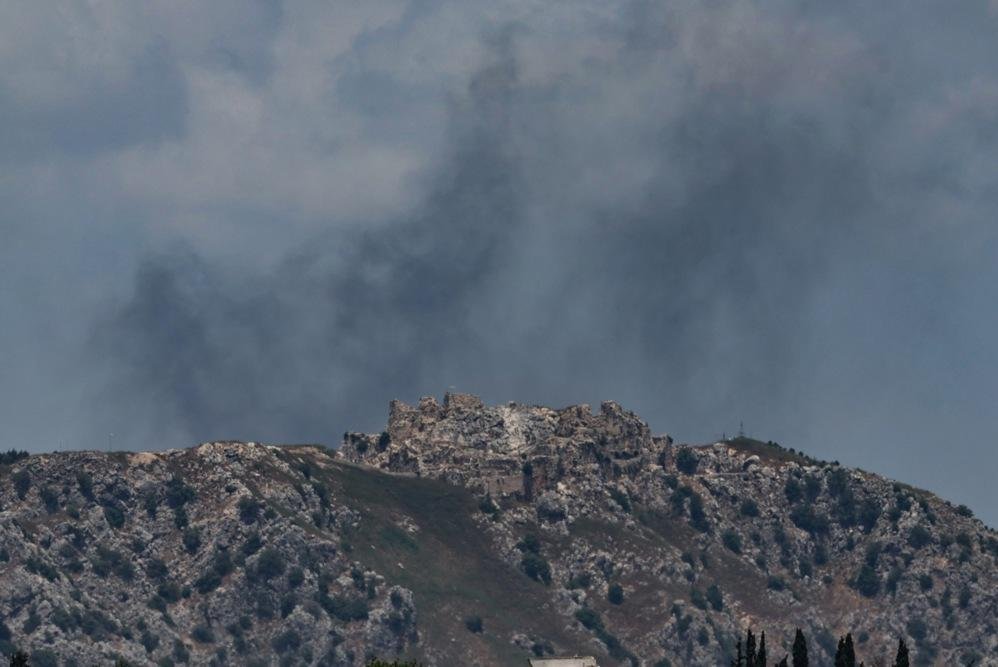
Lebanon’s President Joseph Aoun has strongly condemned the recent Israeli explosions near the historic Beaufort Castle, describing them as a ‘highly dangerous escalation’ and a ‘blatant violation of existing commitments’ with Israel.
Aoun’s statement, released on Friday, comes after Israeli officials confirmed that their military forces used approximately 700 tons of explosives to destroy a significant portion of Hezbollah’s underground tunnel network in the Beaufort area.
The Lebanese president stated that the explosions generated ground tremors equivalent to a 3.8-magnitude earthquake on the Richter scale, causing considerable damage and threatening the safety of residents in nearby villages.
The Beaufort Castle, a UNESCO World Heritage Site, is one of five fortified sites in southern Lebanon that were added to the World Heritage List and the List of World Heritage in Danger just six days before the explosions.
Aoun’s condemnation comes as a new round of direct negotiations between Lebanon and Israel is scheduled to take place in Rome on Tuesday and Wednesday, aimed at continuing discussions on the implementation of the U.S.-brokered framework agreement reached by the two countries on June 26.
The agreement provides for a phased Israeli withdrawal from occupied areas of southern Lebanon, allowing the Lebanese Army to deploy and restore effective sovereign authority in the region.
However, the recent Israeli actions have been met with widespread criticism from Lebanon’s president, who warned that continued violations and aggressions will hinder international efforts to consolidate stability in southern Lebanon.
Aoun called on the United States, as the sponsor of the framework agreement, and the international community to ‘put an end to these violations that threaten the prospects for progress on the diplomatic track.’
The Lebanese Culture Ministry has stated that the vibrations generated by the Israeli explosions may have caused damage in the vicinity of the Beaufort castle, although a direct field inspection is required to assess the full extent of any damage.
The National Center for Geophysics has confirmed that it has not detected any earthquakes after the explosions, and continues to monitor seismic activity around the clock.
Israeli Prime Minister Benjamin Netanyahu and Defense Minister Israel Katz released a joint statement, warning that any attempt by Hezbollah to harm Israeli Army forces ‘will be met with a severe and powerful response that will exact a heavy price from the terror organization.’
The statement comes after Israel accused Hezbollah of launching an explosive drone that struck an Israeli bulldozer on Ali Taher Ridge in southern Lebanon on Wednesday night.
The Iran-backed group has not commented on the allegations.
The recent tensions between Lebanon and Israel have sparked concerns about the prospects for progress on the diplomatic track, and the potential for further escalation in the region.
The situation remains volatile, with both sides engaged in a high-stakes game of diplomatic maneuvering and military posturing.
As the situation continues to unfold, one thing is clear: the recent Israeli explosions near the historic Beaufort Castle have sent a powerful message to the international community, and the implications will be far-reaching.
Will the diplomatic efforts of the United States and other international actors be enough to prevent further escalation in the region, or will the tensions between Lebanon and Israel continue to simmer, threatening the fragile stability of the region?
Only time will tell, but one thing is certain: the situation in southern Lebanon remains a ticking time bomb, waiting to unleash its full fury on the world.