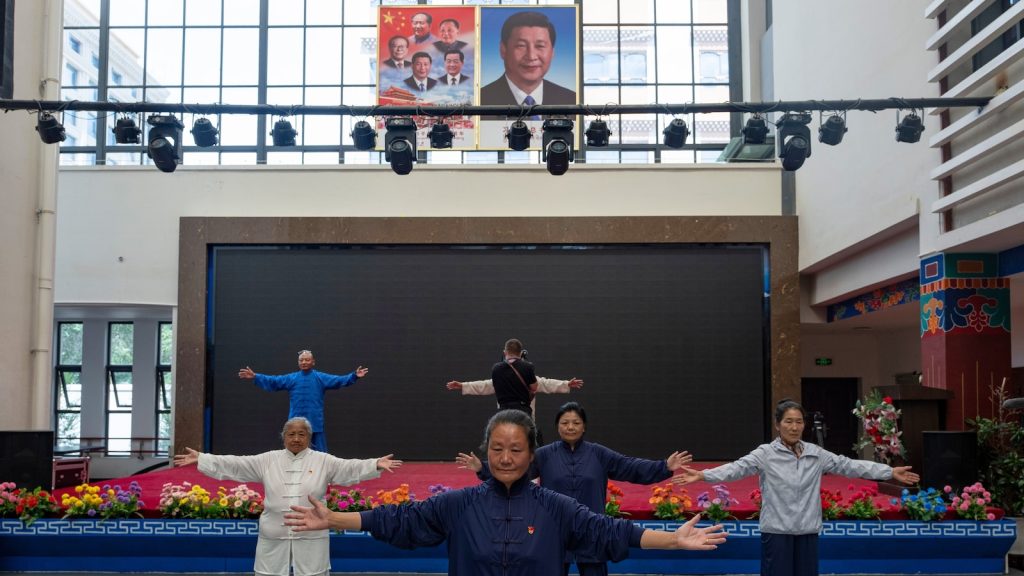
A New Era of Cultural Preservation in Tibet
In a remote Himalayan region, a 73-year-old retired nurse named Kalsang Lhamo is defying the odds by learning to write her native Tibetan language. Lhamo, who has spoken Tibetan all her life, is one of many Tibetans who are determined to preserve their language and culture in the face of China’s new ‘ethnic unity’ law.
The law, which came into effect on July 1, aims to promote national unity and a sense of community among China’s 56 ethnic groups. However, critics argue that it is a thinly veiled attempt to erode the rights of Tibetans and other minorities, forcing them to conform to the majority Han culture.
A Brief History of Tibet’s Struggle for Autonomy
Tibet has a long and complex history, with periods of independence and foreign rule. In 1959, the Dalai Lama, the spiritual leader of Tibetan Buddhism, fled to India after a failed uprising against Chinese rule. The Chinese government has since claimed Tibet as an integral part of China, with the Dalai Lama’s succession being a contentious issue.
Today, Tibet is a tightly controlled region, with access to foreigners restricted. However, for those who do arrive, a first observation is the official welcome messages, which are a constant reminder of the region’s complex history.
Some signs are written in Chinese and Tibetan, while others, like the one outside Lhasa Gonggar International Airport, simply say ‘Xizang welcomes you’ in Mandarin.
The Struggle to Preserve Tibetan Culture
For Tibetans like Lhamo, the new law represents a threat to their very identity. In a region where language and culture are deeply intertwined, the pressure to conform to the majority Han culture is intense.
However, many Tibetans are determined to preserve their language and culture, even in the face of adversity. Lhamo’s story is just one example of the many Tibetans who are fighting to keep their culture alive.
As Benno Weiner, a professor and historian on modern China and Tibet, noted, ‘The law itself doesn’t change things. It sort of codifies and summarizes a trend that’s been going on.’
Weiner’s words are a testament to the complex and often fraught history of Tibet’s struggle for autonomy. Despite the challenges, many Tibetans remain committed to preserving their language and culture, even in the face of China’s new law.
As Qongqiu Quco, a 19-year-old student, said, ‘As a Tibetan, I think it’s important to preserve our language and our culture. Everyone in our ethnic group hopes that our culture can be passed down to future generations.’
Quco’s words are a powerful reminder of the importance of preserving cultural heritage, even in the face of adversity.
At the Jokhang Temple, one of Tibet’s holiest religious sites, Tibetans and Han Chinese visitors coexist peacefully. However, the absence of any signs or references to the current Dalai Lama is a stark reminder of the region’s complex history.
The succession of the 14th Dalai Lama has become a contentious issue, with the Chinese government insisting that the selection must comply with Chinese law and receive government approval.
The Potala Palace, once the winter residence of the Dalai Lamas, now flies the Chinese national flag. Thousands visit daily, including tourists from across China and local Buddhist believers who pray and leave offerings.
For Tibetans like Lhamo, the new law represents a threat to their very identity. However, many Tibetans remain committed to preserving their language and culture, even in the face of adversity.