Kazakhstan’s Top Court Rules President Tokayev Can Seek Another Term
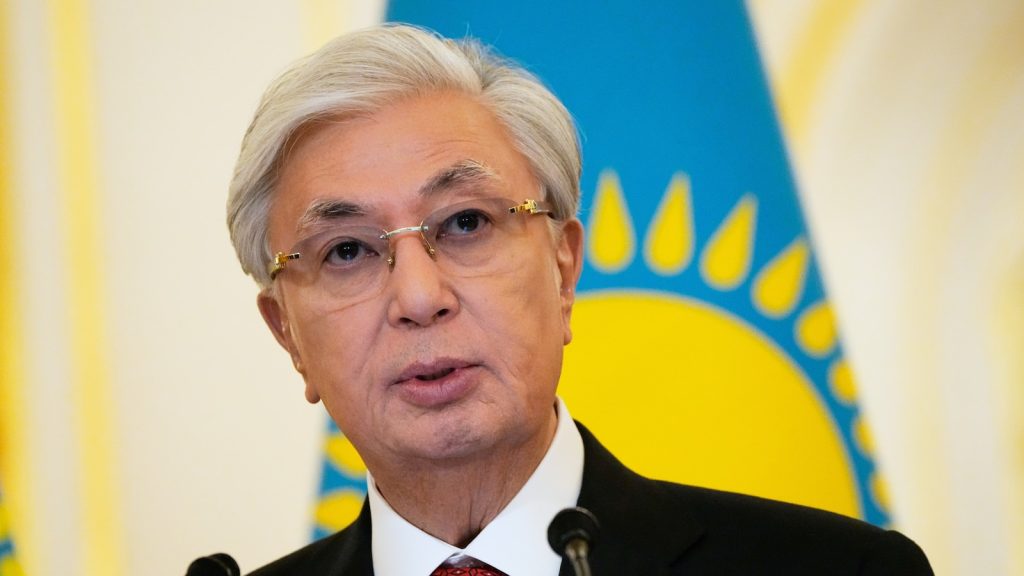
Kazakhstan’s top court has delivered a significant blow to the country’s opposition, ruling that President Kassym-Jomart Tokayev can seek another seven years in office. This decision comes after a referendum on the constitution reset term limits for the office, paving the way for Tokayev to run again in 2029.
The Constitutional Court’s ruling effectively disregards Tokayev’s current tenure, which began in 2019, and instead applies the new term limits to his next term. This means that Tokayev can remain in power until 2036, cementing his grip on the oil-rich Central Asian country.
A Delicate Balance of Power
Tokayev, a 73-year-old former Soviet official and diplomat, has maintained a delicate balance between Russia and the West since the imposition of sanctions on Moscow over its ongoing war in Ukraine. The president has explained that the need to amend the constitution was to enable quick decision-making in a rapidly changing world.
The constitutional amendments, which were approved in a nationwide vote in March, have strengthened Tokayev’s power in several key areas. These include the merging of Kazakhstan’s parliament’s two chambers into one, giving the president the right to appoint key government officials with the approval of lawmakers, and restoring the post of vice president.
Furthermore, the changes envisioned the creation of a new body, the People’s Council, alongside parliament to initiate legislation and referendums. The council’s members are appointed by the president, further consolidating his power.
The opposition in Kazakhstan has been unable to significantly influence public sentiment, and the ruling has been met with little resistance. Tokayev’s grip on power has been reinforced, and his ability to shape the country’s future has been secured.
However, the ruling has raised concerns about the erosion of democratic institutions in Kazakhstan. The country’s transition to independence in 1991 was marked by the collapse of the Soviet Union, and the current president’s actions have been seen as a move to consolidate power and maintain control.
Tokayev’s background as a former Soviet official and diplomat has been seen as a key factor in his ability to navigate the complex web of international relations. His experience has enabled him to maintain a delicate balance between Russia and the West, ensuring that Kazakhstan remains a key player in regional politics.
The ruling has significant implications for the future of Kazakhstan and its people. As the country continues to evolve and grow, the question remains: what does this mean for the opposition and the country’s democratic institutions?
A Legacy of Autocracy
Tokayev’s rise to power was facilitated by his predecessor, Nursultan Nazarbayev, who held power for nearly three decades. Nazarbayev led Kazakhstan’s transition to independence and was seen as a key figure in the country’s development.
However, Tokayev’s tenure has been marked by controversy and repression. In 2022, he harshly suppressed protests that left 238 people dead and thousands injured. The incident was dubbed ‘Bloody January’ by some in Kazakhstan, and it highlighted the president’s willingness to use force to maintain control.
Despite this, Tokayev sought to reinvent himself as a reformer and called an early presidential vote, which he won overwhelmingly. The referendum on the constitution, which reset term limits and strengthened the president’s power, was seen as a key factor in his ability to maintain control.
The ruling has significant implications for Kazakhstan’s future and its people. As the country continues to evolve and grow, the question remains: what does this mean for the opposition and the country’s democratic institutions?
The Constitutional Court’s ruling has been met with little resistance, and the opposition has been unable to significantly influence public sentiment. However, the ruling has raised concerns about the erosion of democratic institutions in Kazakhstan.
The country’s transition to independence in 1991 was marked by the collapse of the Soviet Union, and the current president’s actions have been seen as a move to consolidate power and maintain control. The ruling has significant implications for the future of Kazakhstan and its people.