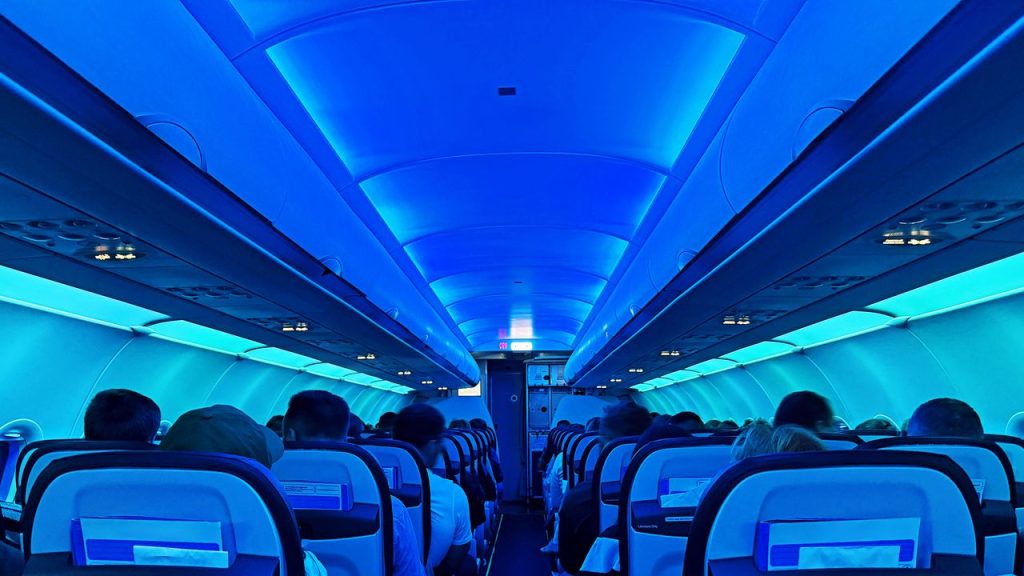
Dimming Cabin Lights: The Safety Measure Behind It
If you’ve ever settled into your seat as a flight prepares to land, you might ask yourself, ‘Why do planes dim the cabin lights?’ It can feel a little dramatic, sort of like the plane is setting a mood, but this isn’t an aesthetic choice. There’s a precise safety reason behind it, and it applies to takeoff too.
The Critical Phases of Flight
Aviation professionals call the moments when most in-flight incidents occur the critical phases of flight. ‘We dim the cabin lights before takeoff and landing mainly for safety,’ says Anubha Jaiswal, a senior cabin attendant with IndiGo. ‘These are the most critical phases of a flight, and if there’s ever a need to evacuate, your eyes need to already be adjusted to the outside lighting conditions, especially if it’s dark outside.’
It comes down to a basic principle of human biology. The eyes take time to adjust from bright light to darkness. In an emergency, that adjustment delay, which can be anywhere from a few seconds to several minutes depending on the contrast, could make a critical difference. ‘When the lights are dimmed, your eyes adapt more quickly, so you can see emergency exit signs, pathways, and instructions clearly without that sudden adjustment delay,’ Jaiswal explains.
There’s an outward-facing benefit too. Dimming the cabin also allows passengers and crew to see outside the aircraft more clearly, which proves helpful for spotting anything unusual on the tarmac or during approach. ‘It’s an important safety measure to ensure a faster and safer response in case of an emergency,’ says Jaiswal.
The practice is mandated by both the FAA (Federal Aviation Administration) and EASA (European Union Aviation Safety Agency) for night operations, and most airlines apply it as standard procedure regardless of time of day, because even on a bright afternoon flight, conditions outside can change quickly on approach. It’s a small adjustment, but with a clear purpose. Because in the 90 seconds that aviation regulators say an aircraft must be fully evacuated in an emergency, every second of preparation counts.
So, why do planes dim the cabin lights before takeoff and landing? It’s not just a matter of aesthetics; it’s a crucial safety measure to ensure a faster and safer response in case of an emergency. By dimming the lights, the eyes adapt more quickly to the outside lighting conditions, allowing passengers and crew to see emergency exit signs, pathways, and instructions clearly.
Furthermore, dimming the cabin also allows passengers and crew to see outside the aircraft more clearly, which proves helpful for spotting anything unusual on the tarmac or during approach. This is particularly important during night operations, when the conditions outside can change quickly.
In addition, the practice of dimming the cabin lights is mandated by both the FAA and EASA for night operations, and most airlines apply it as standard procedure regardless of time of day. This is because even on a bright afternoon flight, conditions outside can change quickly on approach.
So, the next time you’re on a flight and the cabin lights are dimmed before takeoff and landing, remember that it’s not just a matter of aesthetics; it’s a crucial safety measure to ensure a faster and safer response in case of an emergency.