Amazon Rainforest Deforestation Hits Lowest Level in Over a Decade
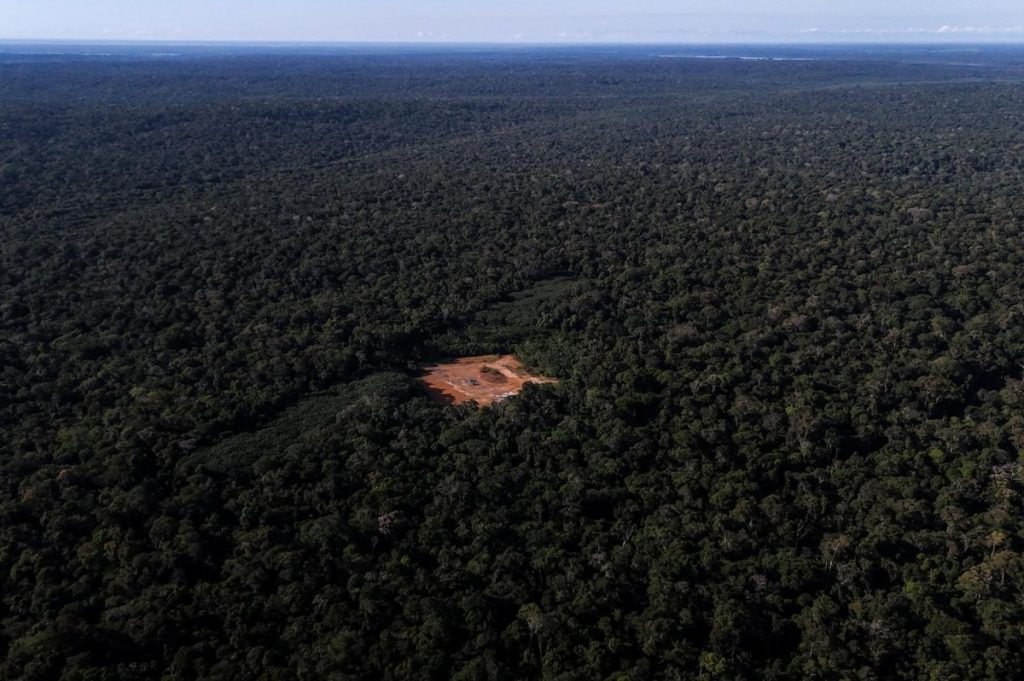
Deforestation of Brazil’s Amazon rainforest has fallen to its lowest levels in more than a decade, officials announced this week. Satellite surveys conducted by the National Space Research Institute (INPE) reveal a significant decrease in the number of trees felled in the world’s largest rainforest over the past year compared to the previous one.

Source: cdnph.upi.com
According to INPE data, deforestation in the Amazon rainforest decreased by 37% in the past year compared to the previous year. This marks the lowest level of Amazon deforestation since 2014, a milestone that is being celebrated by environmentalists and government officials.
Executive secretary Márcio Astrini of the Brazilian environmental collective Observatório do Clima praised the government’s efforts to protect the forest and combat environmental crime. ‘It’s a solid result, stemming from government actions to protect the forest and combat environmental crime,’ Astrini said.
The Amazon rainforest is one of the world’s most important climate regulators, scientists and experts have said. Deforestation of the Amazon in Brazil reached a 15-year high in 2021 under former President Jair Bolsonaro, whose government cut environmental protections and enforcement of conservation laws.
Brazil’s current president, Luiz Inácio Lula da Silva, has vowed to eradicate illegal deforestation by 2030. ‘It is a commitment — otherwise, I will have failed,’ Lula said during an event in Belém do Pará, a city known as the metropolis of the Amazon.
The decrease in deforestation is a result of the government’s efforts to protect the forest and combat environmental crime. The Brazilian government has implemented policies to prevent deforestation, including the creation of protected areas and the deployment of law enforcement agencies to monitor and prevent deforestation.
Indigenous communities and environmental groups have also played a crucial role in protecting the Amazon rainforest. They have worked with the government to monitor and prevent deforestation, and have also taken steps to restore degraded areas of the forest.
The Amazon rainforest is a vital component of the global ecosystem, and its protection is essential for maintaining the health of the planet. The decrease in deforestation is a positive step towards protecting this vital ecosystem, and it is a testament to the power of collaboration and determination.
Government Efforts to Protect the Amazon Rainforest
The Brazilian government has implemented several policies to protect the Amazon rainforest, including the creation of protected areas and the deployment of law enforcement agencies to monitor and prevent deforestation. These efforts have been successful in reducing the rate of deforestation, and they have also helped to restore degraded areas of the forest.
The government has also worked with indigenous communities and environmental groups to protect the Amazon rainforest. These partnerships have been crucial in monitoring and preventing deforestation, and they have also helped to promote sustainable land-use practices in the region.
Despite the progress made in reducing deforestation, there is still much work to be done to protect the Amazon rainforest. The government and other stakeholders must continue to work together to prevent deforestation and promote sustainable land-use practices in the region.