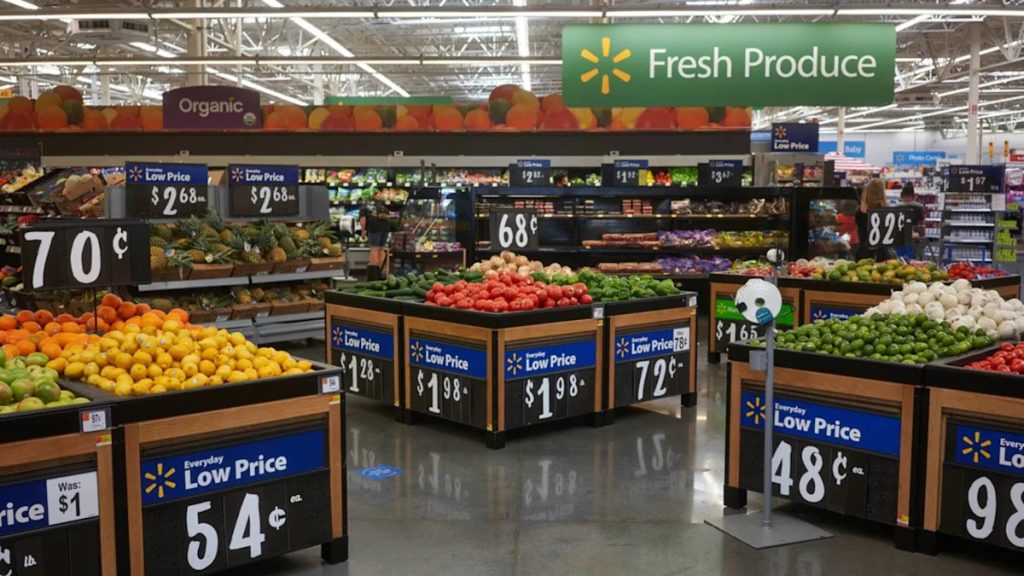
Amid Rising Concerns Over Household Finances, Costco and Walmart Capture Grocery-Store Crowns
As Americans become increasingly cautious about where they buy their groceries, two retail giants, Costco and Walmart, have emerged as the top choices among consumers.
A recent survey conducted by the Food Industry Association (FMI) found that a significant proportion of consumers are struggling to make ends meet, with 71% of respondents expressing extreme concern about inflation and 66% worried about the overall U.S. economy.
Furthermore, the FMI survey revealed that nearly half of grocery shoppers (49%) are concerned about their job security, while 70% reported an increase in gas prices, forcing them to make changes in their spending habits.
Costco: The Preferred Choice Among Higher-Income Americans
A separate survey conducted by YouGov found that 11% of respondents earning at least $150,000 a year preferred Costco as their primary grocery store, followed by 14% who selected ‘other,’ 10% who opted for Kroger, and 8% who chose Walmart Supercenter.
Costco’s success can be attributed to its model of offering bulk goods and discounted prices, which appeals to wealthier households that are larger and shop more frequently.
According to Phil Lempert, a California-based food industry analyst, ‘Wealthier households typically are larger households, so it fits perfectly with the model of Costco having larger sizes. Also, wealthier people shop more often, and what they want is value.’
Shoppers Prioritize Value Over Price
Contrary to popular perception, consumers are not simply looking for lower prices; instead, they are prioritizing value and convenience.
The FMI survey found that 26% of shoppers say they are living comfortably and can save money, while 71% are concerned about inflation and 66% are worried about the overall U.S. economy.
As a result, consumers are increasingly opting for retailers that offer the strongest overall value, even if it requires paying an annual membership fee.
Changes in Shopping Habits
A report by McKinsey’s The State of Grocery North America 2026 found that the U.S. grocery sector grew in 2025, but growth was not volume-led.
Instead, grocery sales increased by 1.2%, driven by price increases of 2.2%, while volume declined.
The report also noted that consumers are no longer shopping one way for all needs but are instead splitting trips across value stock-ups, fresh and prepared-food occasions, convenience-led delivery, wellness-driven baskets, and fill-in missions.
National players continue to benefit from scale, value, innovation, and digital capabilities, while regional players remain powerful where they have distinctive fresh, prepared, and in-store propositions.
Shoppers Make Value-Based Choices
As consumers become more value-conscious, they are making choices that prioritize value over price.
A March survey from Snipp found that 31% of respondents said gas price increases have significantly or extremely impacted their household budget, while 66.4% have already changed their overall spending habits.
The survey also revealed that 37.6% of shoppers report their weekly grocery spend has increased compared to three months ago, yet simultaneously, the majority are actively cutting back.
The explanation lies in the fact that grocery prices are rising faster than shoppers can compensate through behavior change, so many are spending more while still trying to spend less.
Conclusion
In conclusion, Costco and Walmart have emerged as the top grocery-store chains among consumers, who are increasingly prioritizing value and convenience over price.
As consumers continue to navigate the challenges of rising gas prices and household finances, retailers that offer the strongest overall value will likely remain the preferred choice.