El Salvador’s Ruling Party Ratifies President Nayib Bukele’s Candidacy for 2027 Presidential Elections
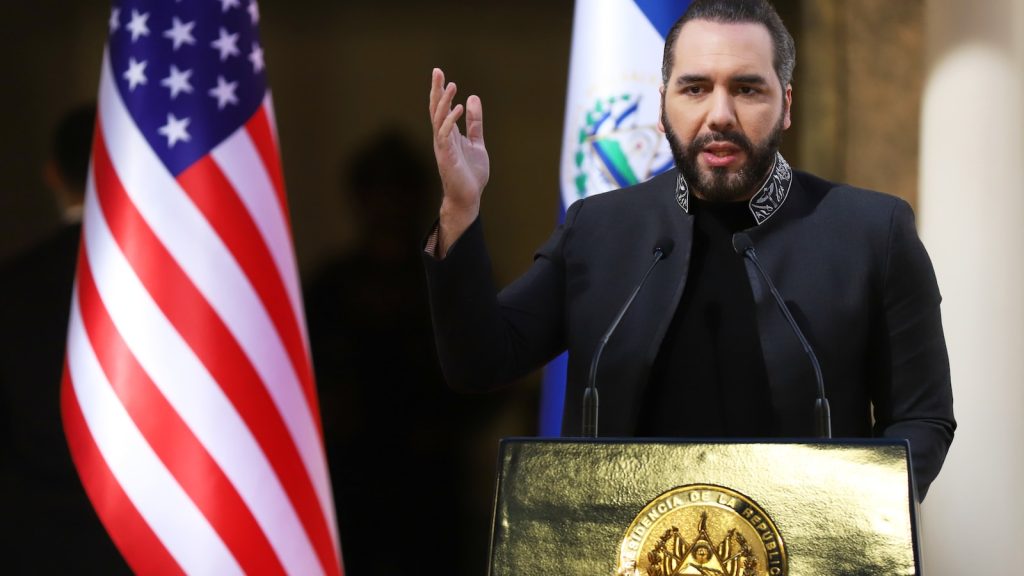
El Salvador’s ruling party, Nuevas Ideas, has ratified President Nayib Bukele’s candidacy for the upcoming February 2027 presidential elections, paving the way for a third consecutive term that has been highly criticized by lawyers and human rights advocates.
On Monday, the ruling party announced the results of their internal elections, which saw Bukele re-elected as the party’s presidential candidate. Vice President Félix Ulloa will once again be Bukele’s running mate.
Bukele, 44, took office in June 2019 as the region’s youngest president and has continued to enjoy high approval ratings. His February 2024 reelection, with nearly 85% of the valid votes, was highly criticized by constitutional scholars for violating a ban on consecutive reelection.
Constitutional scholars have accused Bukele of illegally replacing the country’s constitutional Court judges and attorney general to concentrate his power. They argue that this move is a clear attempt to undermine the country’s democratic institutions and consolidate power.
Ingrid Escobar, a lawyer and director of the Salvadoran group Humanitarian Legal Aid, has spoken out against Bukele’s bid for a third term. ‘Remaining in power is to avoid accountability for grave acts of corruption and crimes against humanity,’ she said. ‘Seeking a third term is unconstitutional and a clear abuse of power.’
The ruling-party controlled Legislative Assembly approved a constitutional reform in July 2025 to allow indefinite presidential reelection. The reform eliminated the penalty of loss of citizenship rights for those who promoted presidential reelection and the ban on presidential candidacy for those who had served as president in the previous term.
The constitutional reform also extended the presidential term from five to six years and moved up the presidential elections to 2027. This move has been widely criticized by human rights organizations and opposition parties, who argue that it undermines the country’s democratic institutions and concentrates power in the hands of the ruling party.
Bukele has defended the constitutional reforms, arguing that they are necessary to ensure the stability and prosperity of the country. He has also pointed out that many developed countries allow indefinite reelection of their heads of government, and that El Salvador is simply following in their footsteps.
However, human rights organizations and opposition parties have disputed this claim, arguing that the reforms are a clear attempt to consolidate power and undermine the country’s democratic institutions. They have also pointed out that the reforms have been passed without proper debate or consultation, and that the ruling party has used its majority in the Legislative Assembly to push through the changes without opposition.
The outcome of the 2027 presidential elections remains uncertain, but one thing is clear: the country is at a crossroads. Will El Salvador continue down the path of democratic backsliding, or will it take a stand against the concentration of power and the erosion of democratic institutions?