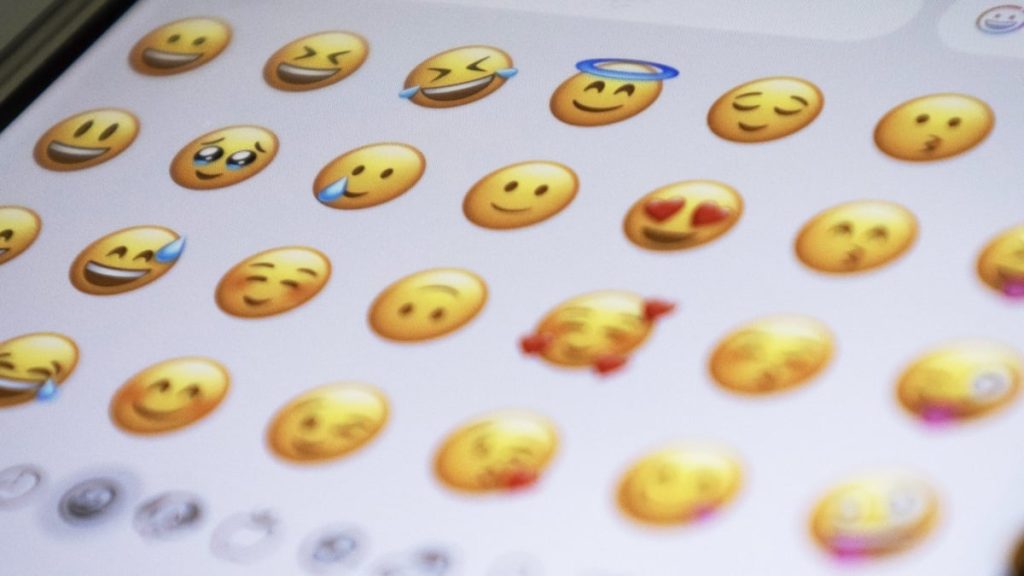
As we eagerly await the arrival of new emojis on our iPhones and Android devices next spring, it’s intriguing to learn about the process behind creating these digital icons. The Unicode Emoji Subcommittee Chair Jennifer Daniel has shared that nine new emojis, including ‘Cracking Face,’ ‘Leftwards Thumb Sign,’ ‘Rightwards Thumb Sign,’ ‘Monarch Butterfly,’ ‘Pickle,’ ‘Lighthouse,’ ‘Meteor,’ ‘Eraser,’ and ‘Net With Handle,’ will be added in 2027.
The development of emojis is often attributed to tech companies like Apple and Google, but the truth is that it’s not organizations, but rather individuals, who decide which emojis come next. The Unicode Consortium, established in 1991, is responsible for developing and maintaining emojis, but it doesn’t actually come up with new ideas.
So, who are these individuals responsible for creating new emojis? The ideas come from real people outside the Unicode Consortium, not from inside the consortium itself. The process of suggesting new emojis is more complex than just sending an email with a list of ideas. If you want the organization to take your emoji recommendations seriously, you’ll have to follow a strict set of guidelines.
The first step is to ensure that the emoji hasn’t already been approved or declined. You can scroll through the consortium’s official ‘Emoji Proposals Status’ page to see all of the emojis that have been formally submitted since 2015—more than a decade of entries. There’s a lot to see here: ‘Acne’ was declined in 2020; ‘Cannabis’ was declined in 2019; ‘mRNA’ was declined in 2022. It’s an interesting scroll to be sure. Anything the consortium declined in the past four years is ineligible for re-review, which means if you see something that was declined more than four years ago, it’s fair game.
Your proposal itself needs to follow a formal format. The consortium has an outline on that guidelines page, which roughly equates to:
Title: Proposal for Emoji [enter name here]
Submitter: [your name here]
Date: [today’s date here]
Identification: Keywords for your emoji, and its proposed category
Include example images per a specific set of rules, as well as your licenses to prove you own the rights or have permissions to them
Factors for inclusion: including evidence that the proposed emoji expresses multiple concepts, can be used with other emojis, introduces something new, is legible and distinct from other emojis, could be used frequently, completes a category that is incomplete, and is needed for compatibility with other platforms.
You also need to argue with evidence how your emoji proposal is not any of the following:
- Already represented
- Overly specific
- Open-ended
- Covered by an existing emoji
This is a brief overview of the rules. If you’re going to submit a proposal, read the consortium’s rules carefully.
Time is running out to submit an emoji. Submissions aren’t open year-round. For 2026, the consortium opened up its doors on April 2 and it plans to close them on July 31. That means you only have a couple of weeks from the time of this article to get your submissions in. Seeing as the submission process is quite complicated, I’d recommend getting started ASAP if you’re serious.