Tesla Driver’s Actions Under Scrutiny After Fatal Crash
The National Transportation Safety Board (NTSB) has released a preliminary report on a fatal crash involving a Tesla vehicle in Texas, shedding light on the actions of the driver and the company’s advanced driver assistance system, Full Self-Driving (Supervised).
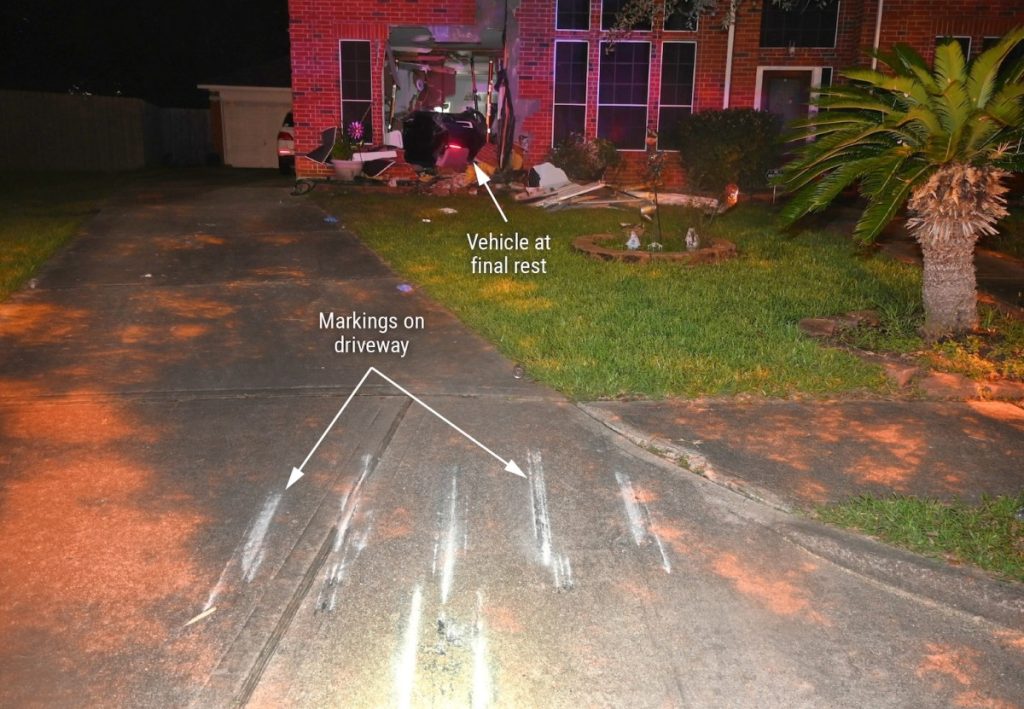
According to the NTSB, the driver of the Tesla, identified as 44-year-old Michael Butler, had pressed the accelerator pedal to 100% while using the Full Self-Driving (Supervised) feature on Rose Hollow Lane, a residential two-lane road with a speed limit of 30 miles per hour. The vehicle was traveling at over 70 miles per hour when it struck a house, killing 76-year-old resident Martha Avila.
The NTSB’s findings confirm Tesla’s account of the crash, which the company shared in the days following the incident to demonstrate that its advanced driver assistance system was not to blame. Tesla CEO Elon Musk had previously taken to social media to address the allegations, stating, ‘This [allegation] makes no sense. FSD drives slowly through neighborhood streets and this was a high-speed crash!’
The data recovered from the Tesla vehicle showed that the vehicle was traveling at an excessive speed, despite the road conditions being clear and dry. The NTSB also noted that the driver had been using the Full Self-Driving (Supervised) feature, which requires drivers to pay attention to the road and be ready to take control at any moment.
Security camera footage obtained by the safety board showed the car accelerating through an intersection, leaving the road, and hitting the house. The footage provides a clear picture of the events leading up to the crash, highlighting the driver’s actions and the vehicle’s performance.
The family of the victim, Martha Avila, has since sued Michael Butler and Tesla, alleging negligence. Butler has also been charged with manslaughter. The National Highway Traffic Safety Administration is also investigating the incident.
Butler’s Google searches, which included terms such as ‘Tesla FSD not aggressive enough 2026,’ ‘Tesla not aggressive enough,’ and ‘Tesla FSD too timid,’ suggest that he may have been seeking to modify the vehicle’s behavior. However, it remains unclear whether these searches were related to the crash.
The NTSB’s preliminary report highlights the importance of driver attention and responsibility when using advanced driver assistance systems. The incident serves as a reminder that even with the latest technology, human error can still occur, and it is crucial for drivers to stay engaged and attentive while behind the wheel.
The investigation into the fatal crash is ongoing, and it is expected that further information will be released as the safety board continues to gather data and evidence.