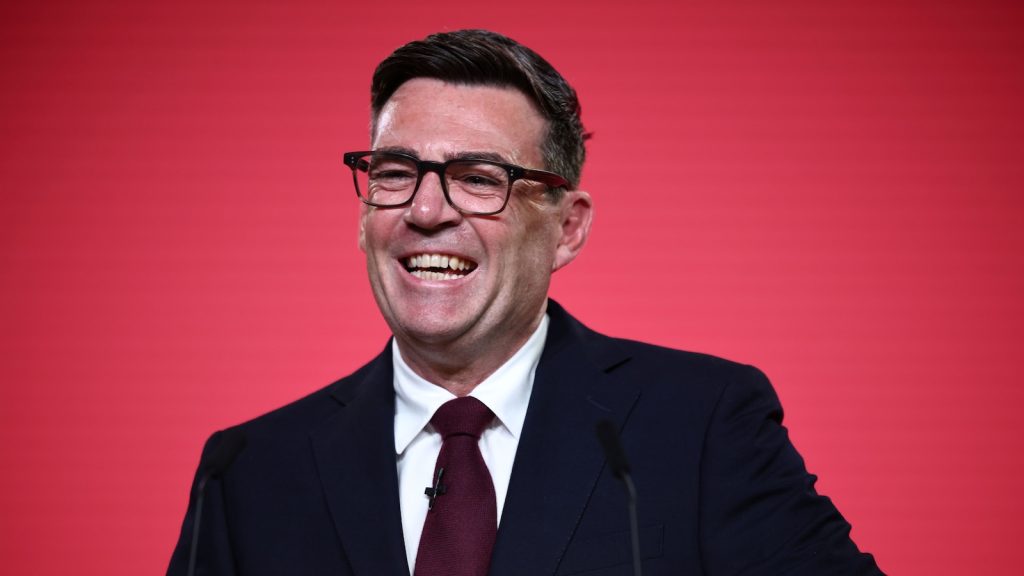
Andy Burnham has officially been declared the leader of Britain’s governing Labour Party, marking a significant milestone in his journey to becoming the country’s next prime minister. This development comes after he secured the required nominations from 379 Labour lawmakers in the House of Commons, clearing his final hurdle to take office as prime minister next week.
The former mayor of Greater Manchester, Andy Burnham, has been prime minister-in-waiting for weeks since winning a special election for a seat in Parliament a month ago. However, he has been relatively tight-lipped about his policy priorities, leaving many wondering what he plans to achieve in his tenure as prime minister.
During his first speech as leader, Burnham promised to bring hope to the British people and purpose to the floundering government. He emphasized the need for a new politics that prioritizes the needs of the people and pledged to take power back from Westminster and Whitehall, giving it to local leaders in cities and regions. This move is aimed at addressing the pressing issues affecting the country, including the sluggish economy, the cost-of-living squeeze, and overstretched public services.
Burnham’s vision for a new politics is centered around economic renewal, more public control of key sectors, and creating new modern industrial jobs. He argued that Britain took a series of wrong turns in the 1980s when political power was centralized and economic power privatized. This, he believes, led to the country’s economic woes and the decline of its industrial base.
One of the key issues that Burnham plans to address is the patchy access to social care for those who need it due to age, illness, or disability. This is a pressing concern in a country with an aging population, and one that has foxed previous Labour and Conservative governments. Burnham has promised to have the courage to fix the big things that politics has neglected and to tackle the pressing issues affecting the country.
Despite facing many of the same problems as his predecessor, Keir Starmer, Burnham is regarded as one of the Labour Party’s best communicators. He brings a more relaxed style of leadership compared to Starmer, who was seen as rather stern. However, Burnham still faces an uphill task in restoring the party’s popularity and addressing the country’s economic woes.
Burnham’s victory is seen as a significant change moment in British politics, marking the sixth change of prime minister in a decade. The country’s parliamentary democracy allows governing parties to change leaders without the need for a general election, which means that the next national election does not have to be held until 2029. Despite this, Burnham is expected to face significant challenges in his tenure as prime minister, including a sluggish economy, a cost-of-living squeeze, and overstretched public services.