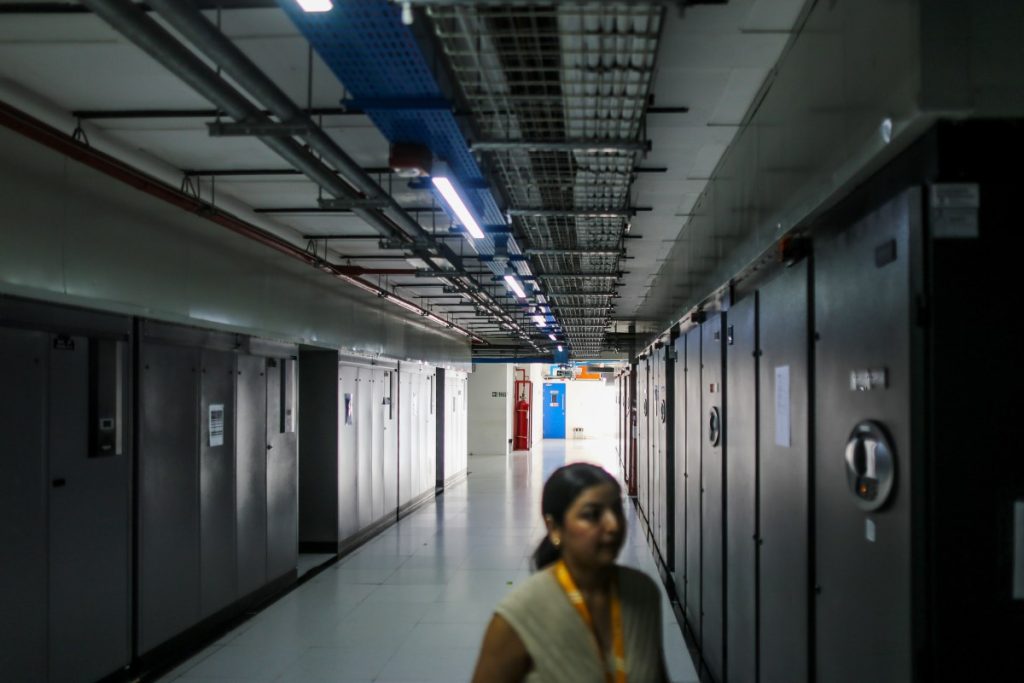
Surging Electricity Demand from Data Centers
A new report from BloombergNEF has revealed that data centers are expected to use one-fifth of the electricity generated in the U.S. by 2035, a four-fold increase from the current levels. This surge in electricity demand is primarily driven by the growing need for artificial intelligence (AI) compute, which will push data center capacity to nearly 200 gigawatts over the next decade.
According to the report, nearly half of this capacity will be devoted to training and inference, with most of it concentrated in the U.S. By 2033, the country will host 64% of AI chips by power demand, reflecting the country’s leading position in AI adoption.
However, previous forecasts may be conservative, and the actual figures could be even higher. BloombergNEF’s new estimate for electricity demand in 2035 is 83% higher than its previous prediction in December. Other organizations, such as EPRI and S&P, have also revised their forecasts, with EPRI more than doubling its 2024 estimate and S&P’s forecast rising by over a third between October and April.
The rapid growth of data centers across the U.S. is putting a strain on electrical grids, with the majority of new data centers expected to connect to grids that are already strained. The PJM Interconnection, which spans Virginia to Illinois, will see 34% of its electricity go to data centers, while ERCOT, which covers most of Texas, will have to devote 22% of its generating capacity. PJM has struggled to cope with connection requests from both large generators and large loads, and has even paused applications for new sources to connect to the grid for four years.
Despite the challenges, data centers continue to grow in demand, with data centers wanting to connect to PJM representing 38% of charges in the grid manager’s most recent capacity auction. Even with congestion, data centers will continue to drive electricity demand, with data centers creating 1,935 terawatt-hours of new electricity demand worldwide by 2033, nearly as much as India uses annually.
The impact of data centers on global energy demand is significant, and it is essential to address the challenges posed by the rapid growth of data centers. The electrical industry, policymakers, and data center operators must work together to ensure that the increasing demand for electricity is met in a sustainable and efficient manner.
The situation is dire, with electricity prices up 76% over the past year. The supply-demand imbalance has pushed the utility, American Electric Power, to threaten to pull out of the interconnection. The strain on electrical grids is evident, and it is crucial to address the issue before it’s too late.
As data centers continue to grow, it is essential to prioritize sustainability and efficiency in their development. This includes investing in renewable energy sources, improving energy efficiency, and implementing smart grid technologies to manage the increasing demand for electricity.
The future of data centers and their impact on global energy demand will depend on the collective efforts of the industry, policymakers, and data center operators. It is crucial to address the challenges posed by the rapid growth of data centers and ensure that the increasing demand for electricity is met in a sustainable and efficient manner.