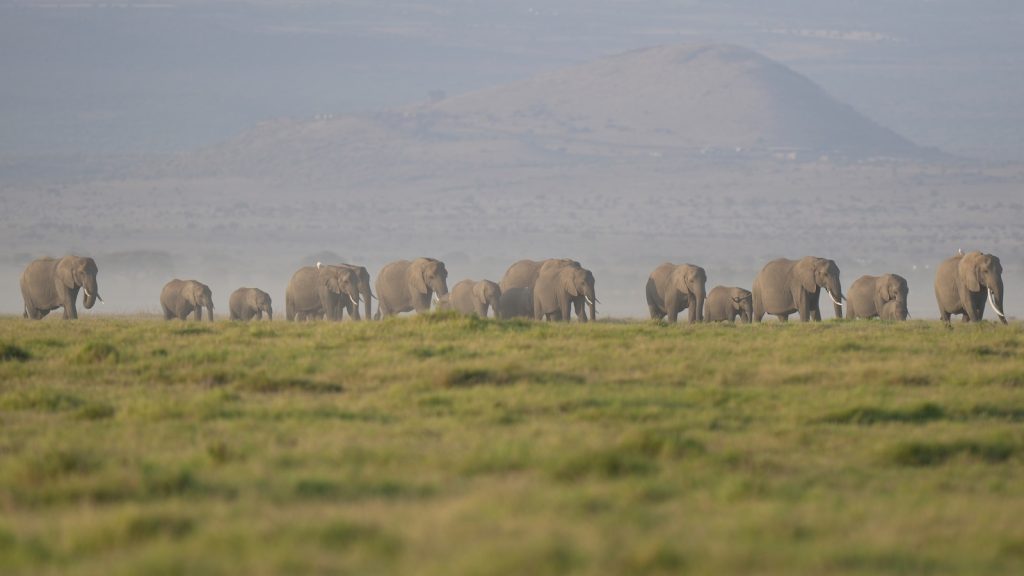
Kenya’s Wildlife Authorities Launch Investigation into the Deaths of 15 Elephants
In a devastating turn of events, Kenya’s wildlife authorities are currently investigating the deaths of 15 elephants over the past month in Amboseli National Park. This tragic incident has sent shockwaves throughout the conservation community, and the authorities are working tirelessly to determine the cause of the elephants’ demise.
According to the Kenya Wildlife Service, 10 of the pachyderms showed signs of partial paralysis before dying within two days, while the remaining five were found dead, with their carcasses partially consumed by scavengers. The affected elephants were primarily female and their calves, with only one male among the dead. The deaths occurred in the Kimana Sanctuary and Kuku Ranch areas surrounding the park.
The Kenya Wildlife Service has assured the public that there is no evidence to suggest that the condition could be transmitted to humans. However, the authorities are taking a cautious approach and are conducting a thorough investigation to determine the cause of the elephants’ deaths.
Preliminary tests on samples collected from the elephants by a laboratory at the University of Nairobi detected a ‘potential toxic substance,’ while separate analyses by the Government Chemist were negative for the toxins tested. Further tests are underway to confirm the findings.
Environmental investigations are also being undertaken, including the analysis of water sources and other potential environmental contaminants within the affected areas, to establish whether the elephants were exposed to a common source. The authorities are working closely with local communities and conservation organizations to gather more information and determine the cause of the elephants’ deaths.
Investigation into the Cause of the Elephants’ Deaths
The Kenya Wildlife Service has launched a comprehensive investigation into the cause of the elephants’ deaths. The investigation includes the collection of samples from the affected areas, including water and soil samples, as well as interviews with local communities and conservation organizations.
The authorities are also working to identify potential sources of poisoning, including human-wildlife conflict and poaching. Kenya has previously recorded incidents of elephants being poisoned as a result of poaching and human-wildlife conflict.
The investigation is ongoing, and the authorities are working to determine the cause of the elephants’ deaths. The Kenya Wildlife Service has assured the public that they will provide regular updates on the investigation and will take all necessary steps to prevent further incidents.
Conservation Efforts in Kenya’s National Parks
Kenya’s national parks are home to a diverse range of wildlife, including elephants, lions, and leopards. However, the country’s wildlife is facing numerous threats, including human-wildlife conflict, poaching, and habitat loss.
The Kenya Wildlife Service is working tirelessly to protect the country’s wildlife and their habitats. This includes the implementation of conservation programs, such as the creation of wildlife corridors and the protection of critical habitats.
The authorities are also working closely with local communities and conservation organizations to develop and implement effective conservation strategies. This includes the provision of education and training to local communities on the importance of wildlife conservation and the role they can play in protecting the country’s wildlife.
By working together, the authorities and conservation organizations can help to protect Kenya’s wildlife and their habitats for future generations.