Iran’s Leadership Unites Against the US, but Divided on the Endgame
With escalating attacks against US bases and its allies over the past week, Iran’s leaders are showing considerable unity in their war strategy: hanging tough, determined to show Iran can endure more than America and its allies can.
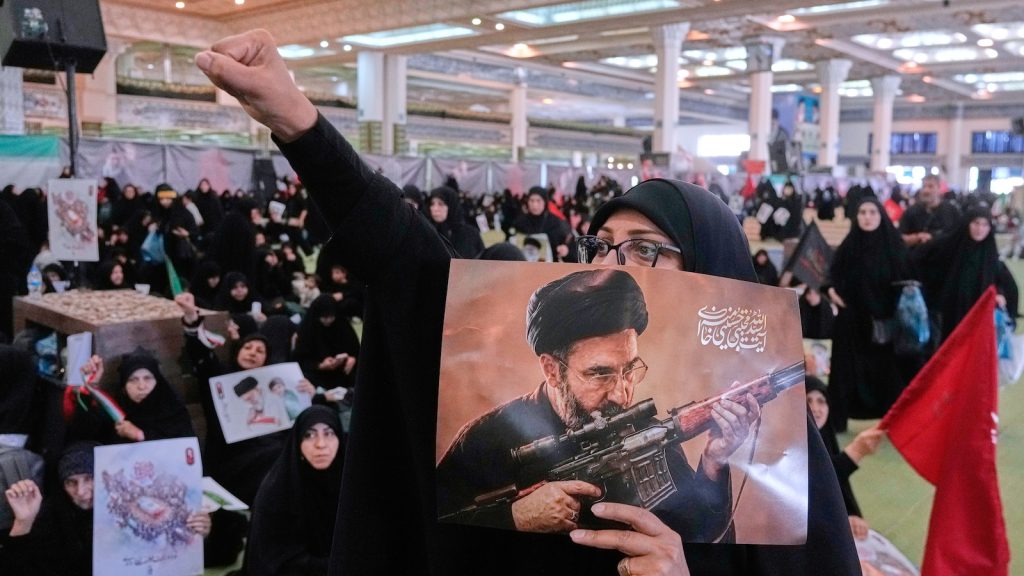
However, within the leadership, there are sharp differences over what the endgame should be. On one side, the ultra-hardliners who oppose any negotiations with the United States are pressing for total victory in the war. Known as the “Paydari” movement – Persian for “stability” – they are hard-core ideologues who want to enforce the Islamic Republic’s control over society.
On the other hand, those who support President Masoud Pezeshkian and powerful parliament speaker Mohammad Bagher Qalibaf – who doubles as Iran’s chief negotiator – see military pressure as a way to win a negotiated deal with the United States. This camp is also spurred by concern over the economic toll Iran is suffering from the war and the need to adapt to social change in the country.
“Negotiation is a political tool and a complement to military action to force the enemy to a point of compulsion and extract real concessions,” an adviser to Qalibaf, Mahdi Mohammadi, wrote on his Telegram channel Thursday.
The unusually open rivalry within the theocracy’s leadership points to a struggle for control over Iran’s post-war future. A huge question mark is where the new supreme leader, Ayatollah Mojtaba Khamenei, stands. Reportedly injured in the strike that killed his father in the opening minutes of the war on February 28, Khamenei remains in hiding, and both sides have claimed his support.
In a boost for Qalibaf and Pezeshkian, the ceasefire deal reached with the US in April received strong backing in Iran’s top leadership body, the Supreme National Security Council. Twelve of its 13 members approved it, including senior figures in the Revolutionary Guard and the military.
The lone vote against the deal is widely believed to have come from Saeed Jalili, the most prominent figure in the Paydari movement. However, the ceasefire crumbled as the two sides traded strikes and as Iran pressed for control over passage through the Strait of Hormuz, which carried a fifth of the world’s traded oil and gas before the war.
Iran was also frustrated that financial promises under the deal – including the release of billions of frozen assets – didn’t materialize, and now the American blockade is back in place.
The Pragmatic Camp’s Argument
The more pragmatic camp argues that maintaining unity during the war requires addressing the public’s unhappiness over the economy as well as political and social repression. This, as Iran’s currency continues to slide, inflation spirals, and unemployment rises. A final agreement with the US could bring Iran a huge windfall with the lifting of sanctions and the return of billions in assets.
Small flashes of impatience with the war have emerged. In July, over 250 former lawmakers, clerics, professors, and other public figures signed an anti-war petition warning of the costs of the conflict.
“We believe that the overwhelming majority of the Iranian people want peace and the right to a decent life,” the statement read. Others have spoken out against stepped-up executions of protesters following wide-scale anti-government protests in January.
A top reformist party that assisted Pezeshkian’s presidential campaign warned that the war’s domestic toll was “undermining internal social cohesion.” That brought a rebuke from Tasnim, a news agency close to the Revolutionary Guard, which said the statement amounted to blaming Iran for a war started by the United States.
The Struggle for Power After the War
Ultimately, both sides are jockeying for power after the war, given the unusual uncertainty brought on by the change in the supreme leadership. Abtahi, the reformist cleric, said Mojtaba Khamenei’s real views are still not known, so while some believe he could be more radical than his father, others see the potential for him to bring moderate change.
The supreme leader, because of the power invested in him, could act as a “brake” to restrain the more extremist factions, Abtahi said. But over time, the confrontation with more radical factions could grow more dangerous “if that brake isn’t used.”
AP correspondents Nasser Karimi in Tehran and Sarah El Deeb in Beirut contributed to this report.