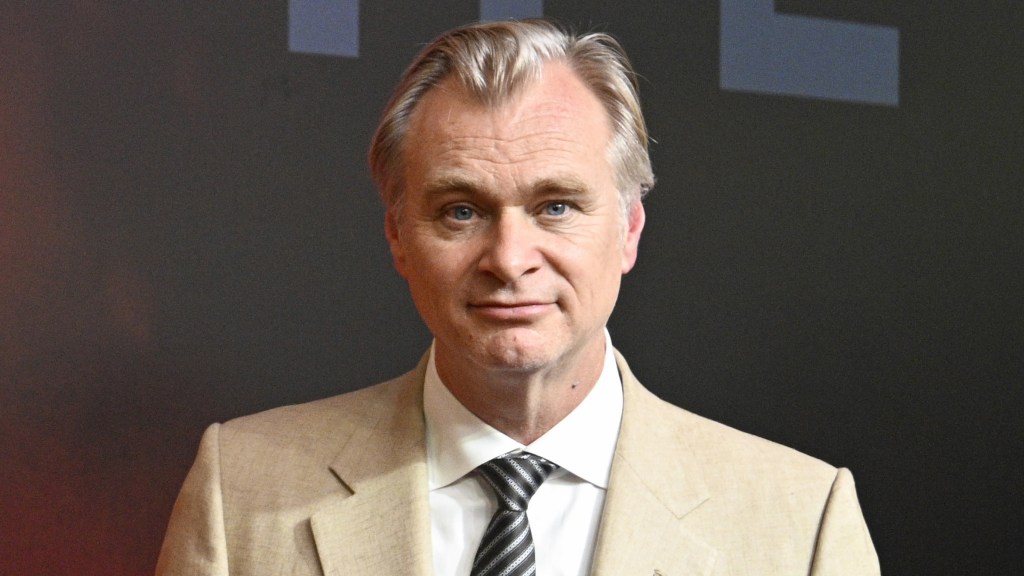
Christopher Nolan Critiques Amateur Film Critics
Acclaimed director Christopher Nolan has expressed his frustration with the current state of amateur film criticism, labeling it ‘a real problem.’ In a recent interview, Nolan emphasized the importance of understanding the fundamental mechanisms of storytelling, which he believes are often overlooked by amateur critics.
Nolan pointed out that amateur critics frequently level criticism at movies, stating that characters must be made sympathetic or that the narrative is overly manipulative. However, he argued that this approach is flawed, as it fails to consider the complexities of storytelling.
‘The criticism that’s often leveled at movies in general is, ‘Oh, the character has to be made sympathetic, so the character is manipulated in different ways or changed in different ways,” Nolan explained. ‘And that’s a fundamental flaw of film criticism in a way, or storytelling criticism. Because to be able to identify the mechanism does not invalidate the mechanism.’
Nolan further elaborated on his thoughts, stating that amateur critics often mistake their own understanding of a story’s mechanisms as a reason for its failure. He emphasized that storytelling is a collaborative process between the storyteller and the audience, and that the audience’s energy and interaction with the story are essential components of its impact.
‘When we create a heroic figure in a story, as storytellers, we have to be mindful of the energy that the audience brings to that story and the interaction between our intention and the way the audience receives that,’ Nolan said. ‘And the fact that that mechanism is identifiable to people doesn’t invalidate it.’
Nolan’s comments come in the wake of his latest film, ‘The Odyssey,’ which has received widespread critical acclaim. Despite some online discourse surrounding the film, ‘The Odyssey’ currently holds a solid 94% critic rating and a 97% audience score on Rotten Tomatoes.
The film follows Odysseus on his decade-long journey home to his wife Penelope and son Telemachus after the Trojan War, featuring an all-star cast including Matt Damon, Anne Hathaway, Tom Holland, and Zendaya.
Nolan’s emphasis on the importance of understanding storytelling mechanisms highlights the need for a more nuanced approach to film criticism. By recognizing the complexities of storytelling and the role of the audience, amateur critics can provide more insightful and thoughtful reviews that better serve the film community.
As the film industry continues to evolve, it will be interesting to see how amateur critics adapt to Nolan’s critique and develop a more sophisticated understanding of storytelling.
With his latest film, ‘The Odyssey,’ Christopher Nolan has once again proven himself to be a master storyteller, and his comments on amateur film criticism serve as a valuable reminder of the importance of considering the complexities of storytelling.
A Closer Look at Nolan’s Comments
Nolan’s comments on amateur film criticism are worth examining in more detail. He emphasized that amateur critics often focus on identifying the mechanisms of a story, rather than considering the impact of those mechanisms on the audience. This approach can lead to a narrow and superficial understanding of storytelling, which neglects the complexities and nuances of the medium.
Nolan’s critique is not a rejection of amateur film criticism, but rather a call to action for critics to develop a more sophisticated understanding of storytelling. By recognizing the importance of the audience’s energy and interaction with the story, amateur critics can provide more insightful and thoughtful reviews that better serve the film community.
A Response to Nolan’s Critique
Nolan’s comments have sparked a lively online discussion, with many amateur critics defending their approach to film criticism. While some have argued that Nolan’s critique is overly harsh, others have acknowledged the value of considering the complexities of storytelling.
One commenter noted that Nolan’s emphasis on the importance of understanding storytelling mechanisms is not a new concept, and that many critics have been advocating for a more nuanced approach to film criticism for years.
Another commenter argued that Nolan’s critique is not a rejection of amateur film criticism, but rather a call to action for critics to develop a more sophisticated understanding of storytelling.
The Importance of Storytelling Mechanisms
Nolan’s emphasis on the importance of understanding storytelling mechanisms is a crucial aspect of film criticism. By recognizing the complexities of storytelling, critics can provide more insightful and thoughtful reviews that better serve the film community.
Storytelling mechanisms are the building blocks of a story, and they play a crucial role in shaping the narrative and its impact on the audience. By considering the mechanisms of a story, critics can gain a deeper understanding of the film’s themes, characters, and plot.
Moreover, understanding storytelling mechanisms can help critics identify areas for improvement in a film, and provide recommendations for how to enhance the narrative and its impact on the audience.
The Future of Film Criticism
Nolan’s critique of amateur film criticism serves as a valuable reminder of the importance of considering the complexities of storytelling. As the film industry continues to evolve, it will be interesting to see how amateur critics adapt to Nolan’s critique and develop a more sophisticated understanding of storytelling.
By recognizing the importance of understanding storytelling mechanisms, amateur critics can provide more insightful and thoughtful reviews that better serve the film community. This, in turn, can lead to a more nuanced and sophisticated approach to film criticism, which better reflects the complexities and nuances of the medium.