South Korea’s Ambitious Plan for Nuclear-Powered Submarines
South Korea is racing to develop its first nuclear-powered submarine, with the ambitious goal of launching the Jang Bogo-N by the mid-2030s. The project, backed by the United States, aims to create a vessel that can operate underwater for extended periods, giving it greater speed, endurance, and flexibility in tracking North Korean submarines armed with ballistic missiles.
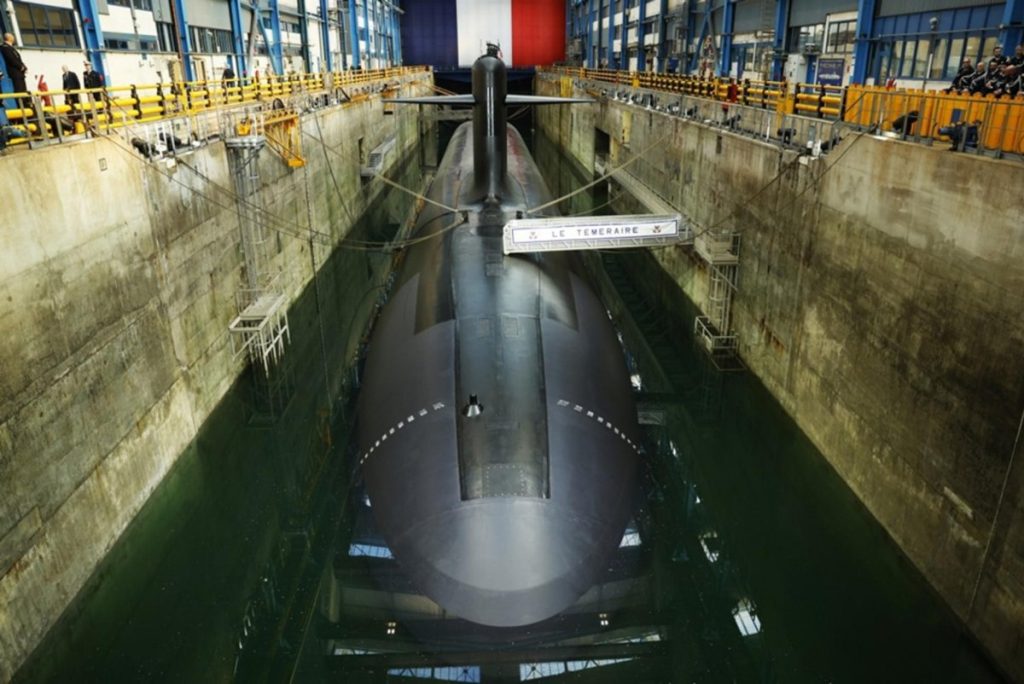
The Jang Bogo-N will use low-enriched uranium containing less than 20% uranium-235, following the model adopted by France for its Barracuda-class nuclear-powered attack submarines. This approach is seen as a way to limit nuclear proliferation concerns while still achieving the benefits of nuclear propulsion.
The submarine’s planned displacement has increased to between 7,000 and 8,000 tons, placing it near the size of the U.S. Navy’s Virginia-class nuclear-powered attack submarines. Building a submarine of this size will require expanded shipyard infrastructure and new facilities designed to provide radiation shielding and support nuclear-reactor installation and maintenance.
The decision to use low-enriched uranium was made to follow the French model, which is seen as a more sustainable and proliferation-resistant approach. This move is also in line with South Korea’s efforts to limit its reliance on highly enriched uranium, which is used in U.S. and British naval reactors.
North Korea, on the other hand, is also pursuing nuclear-powered submarines, with its own project reportedly using highly enriched uranium. While North Korea has displayed a full-size submarine hull, analysts have questioned whether it has developed a functioning compact naval reactor and the systems needed to integrate it safely into a submarine.
The undersea arms competition in Northeast Asia is heating up, with both South and North Korea vying for dominance. The success of the Jang Bogo-N program will depend not only on South Korea’s engineering capabilities but also on its ability to reach a detailed agreement with Washington.
The development of nuclear-powered submarines by either Korea could alter naval operations across the region, particularly as China rapidly expands its own nuclear submarine fleet and the United States seeks greater defense contributions from its allies.
Technical Challenges and International Implications
Miniaturizing and sealing a reactor, reducing underwater noise and vibration, and integrating the reactor safely into a submarine are considered among the most difficult technical challenges. A nuclear-powered submarine that produces excessive mechanical noise could be detected early by anti-submarine surveillance systems, negating much of the operational advantage provided by nuclear propulsion.
North Korea could seek assistance from Russia in exchange for its military support for Moscow’s war in Ukraine, analysts said. Pyongyang could also attempt to obtain submarine technology through cyberattacks.
The undersea arms competition in Northeast Asia is moving beyond the conceptual stage as both Koreas pursue vessels intended for eventual operational deployment. North Korea must still demonstrate that its planned 8,700-ton submarine has an operational reactor and reliable propulsion system.
South Korea faces a different set of obstacles, including the need to revise or supplement its civilian nuclear cooperation arrangements with Washington and secure a stable supply of low-enriched uranium for military propulsion.