The Hunt for the World’s Most Elusive Shipwrecks
The discovery of the remarkably preserved shipwreck of Ernest Shackleton’s HMS Endurance in March 2022 sent shockwaves around the world. However, scores more sunken vessels remain on the ocean floor, awaiting rediscovery.

Source: media.cnn.com
One of the most infamous shipwrecks is that of Christopher Columbus’s Santa Maria flagship, which sank off the coast of Haiti on Christmas Eve in 1492. The experienced sailor who took the wheel after Columbus went for a nap is said to have written off the ship by crashing it into a coral reef. However, the Italian explorer’s ship met its fate, and the wreckage was never found.

Source: media.cnn.com
Fast-forward to May 2014, when archaeologist Barry Clifford claimed he’d chanced upon the long-lost wreck. However, UNESCO poured cold water on the claim, saying the ship that’d been found was from a much later period. The Santa Maria is still down there, somewhere.

Source: media.cnn.com
Another shipwreck that has garnered significant attention is the 16th-century merchant ship, Flor de la Mar. This 118-foot-long and 111-foot-high vessel shuttled between India and its home in Portugal. However, given its mammoth size, it was an unwieldy beast to captain. The Flor de la Mar went down in a heavy storm off Sumatra, Indonesia in 1511, taking most of the crew with it. Its booty, said to include the entire personal fortune of a Portuguese governor, worth a cool $2.6 billion in today’s money, was lost.
The SS Waratah, known as ‘Australia’s Titanic’, is another shipwreck that has captured the imagination of many. A passenger cargo ship built to travel between Europe and Australia with a stopover in Africa, the Waratah disappeared shortly after steaming off from the city of Durban in present-day South Africa in 1909. As for the cause, theories abound. The entire liner, complete with eight staterooms, music lounge, and all 211 passengers and crew, was never found. Ninety years after the Waratah went down, the National Underwater and Marine Agency thought they’d finally found it, but it was a false alarm.
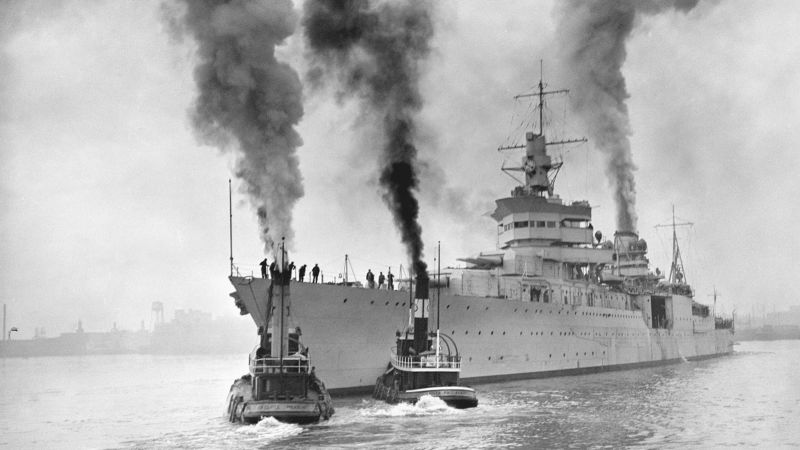
Another shipwreck that has been the subject of much speculation is the Indianapolis. This warship played a game-ending role in World War II, transporting the uranium core of the ‘Little Boy’ nuclear bomb to Tinian Island, where the weapon was assembled shortly before being used to devastating effect on Hiroshima. The drop-off of the deadly cargo went without a hitch, but on its return journey, the Indianapolis was hit by a Japanese sub, with many crew members perishing from shark attacks and salt poisoning.
The exact whereabouts of the warship remained a mystery for decades, but was finally located by a team led by Microsoft co-founder Paul Allen, in 2017 – 18,000 feet below the surface of the Pacific.
Not just one shipwreck, but an entire ghastly genre of them. It’s estimated that some 1,000 ships now on the bottom of the ocean were complicit in the wicked ‘triangular trade’ across the Atlantic that saw some 12-13 million Africans forced into slavery. Many of these ships sank in turbulent weather, such as the São José, which went down off the coast of South Africa in 1794. Others, like the Clotilda, were purposefully scuttled by their owners, to cover up evidence of slave trading, long after the 1807 Act Prohibiting Importation of Slaves.
The wrecks of both these vessels have now been located – the São José thanks to the work of Diving With a Purpose (DWP), a group of largely Black scuba divers who dive on the sites of sunken slave ships, and bring the likes of rusted manacles and iron ballasts to the surface.
Still, such ships are notoriously elusive, and many may never see the light of day again.
There are many other shipwrecks around the world that have been discovered, but remain shrouded in mystery. One such ship is the Vasa, a 17th-century warship that first set sail in 1628. The Swedish behemoth made it about 1,300 meters out of port before it went down, and was only pulled from its silty grave some 333 years later. A crew of archaeologists discovered a hull bristling with 700 sculptures and decorations of mermaids, lions, and Biblical figures – what has been described as essentially a ‘gigantic billboard for Sweden and Gustav II Adolf,’ the country’s redoubtable king of the time.