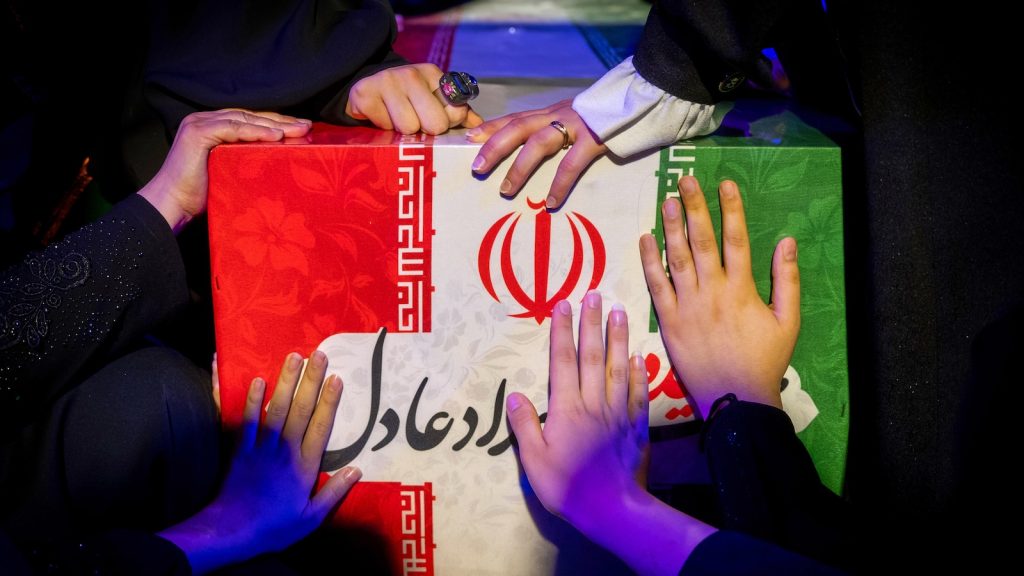
Mourners in Iran are preparing for a dayslong funeral for the late Ayatollah Ali Khamenei, who was killed at the start of the war with the U.S. and Israel.
A Complex Funeral Process
The mourning period will see Khamenei’s body carried through cities in both Iran and neighboring Iraq. Iran’s theocracy likely will encourage the public, government employees, and paramilitary forces to fill the streets in his honor.
Khamenei, who led Iran for nearly four decades, was killed on February 28 when the U.S. and Israel jointly launched the war. The funeral was delayed as the war raged.
A Test for Iran’s Theocracy
The funeral will serve as a test for Iran’s battered theocracy and its ability to summon a mass show of support, particularly as the funeral comes six months after security forces’ crackdown on nationwide protests against Khamenei’s rule.
A large turnout also could raise the risk of deadly stampedes. One marred the funeral of Iran’s first supreme leader, Ayatollah Ruhollah Khomeini.
The Funeral Schedule
Khamenei’s body will be on display at Tehran’s Grand Mosalla on Saturday and Sunday. On Monday, it will be paraded through the streets of Tehran before being taken to the Shiite seminary city of Qom, some 120 kilometers (75 miles) to the south. Tuesday will see Khamenei honored there.
On Wednesday, Khamenei’s body will be taken to Karbala, Iraq, home to the shrine of Imam Hussein, the grandson of the Prophet Muhammad who long has been a symbol of resistance for the Shiite faithful. Wednesday also will mark the anniversary of the protests against Khamenei’s rule, which saw thousands killed by security forces.
Khamenei finally will be brought to Mashhad, Iran’s second-largest city, where he will be buried at the Imam Reza shrine. Imam Reza was Shiite Islam’s eighth imam. Millions of pilgrims visit the shrine each year.
Risks and Concerns
Many prominent Shiite clerics have been buried there, as was Iran’s late President Ebrahim Raisi, who was killed in a helicopter crash in 2024. On June 6, 1989, millions of Iranians turned out in the streets to bury Khomeini, who led the 1979 Islamic Revolution. The situation quickly got out of control.
There’s concern that a similar stampede may break out during Khamenei’s funeral, should the crowds be into the millions. The burial of the late Revolutionary Guard Gen. Qassem Soleimani saw a stampede that killed at least 56 people and hurt more than 2,000 in 2020.
Background and Context
The interim deal reached in June created a 60-day window to negotiate terms of a final deal to end the Iran war, including the issues of Iran’s nuclear program and the Strait of Hormuz.
Technical talks began in Qatar this week, but they have been complicated by deep disagreements, and several days of crossfire between the U.S. and Iran, over the future of the strait.